Proton Workspace Review (2026): The Real Cost of Switching from Google Workspace
2026 Proton Workspace review with plan-by-plan buyer guide. We test Proton Sheets, Docs, and Meet. Includes pricing breakdown, migration guidance, HIPAA compliance details, and Workspace Standard vs Premium comparison. SOC 2 Type II certified. $12.99/user/month.

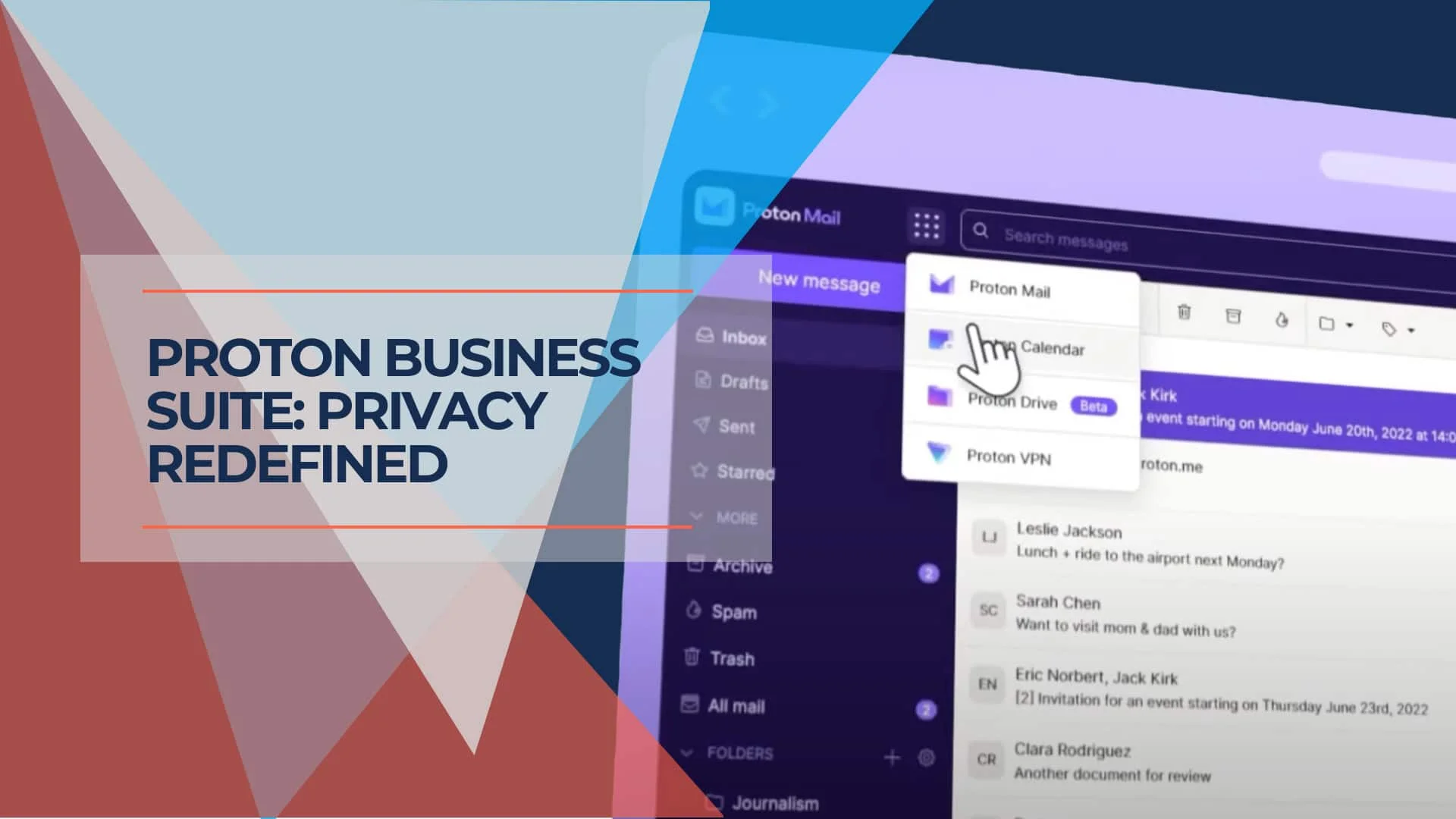
Proton Workspace (formerly Proton Business Suite, rebranded March 31, 2026) is a privacy-first productivity platform built around end-to-end, zero-knowledge encryption — meaning Proton's servers store only encrypted data and the company holds no keys to read it. All processing happens on your device or in an encrypted enclave, so your files, emails, and documents remain private even from Proton itself. This review covers what the suite includes, how it compares to Google Workspace, and whether it's the right fit for your organization in 2026.
Quick Facts: Proton Workspace (April 2026)
- Launched: March 31, 2026 (rebranded from Proton Business Suite)
- Workspace Standard: $12.99/user/month (annual) — email, calendar, Docs, Sheets, Meet (100 participants), 1TB storage, VPN, Pass
- Workspace Premium: $19.99/user/month (annual) — adds 3TB storage, 250-participant Meet, Lumo AI (unlimited), Proton Scribe, data retention policies
- Certifications: SOC 2 Type II, ISO 27001; HIPAA BAA available
- Uptime SLA: 99.95% (published; vs. Google Workspace's 99.9% guarantee)
- Key limitation: No presentation software; no native Linux GUI for Drive; limited offline editing
- Support: Live chat + 24/7 support on both plans; no phone support
Verdict: Is Proton Workspace Worth It?
Proton Workspace is now a viable Google Workspace alternative for privacy-focused organizations. The December 2025 release of Proton Sheets addressed the most significant feature gap, and the suite's SOC 2 Type II certification makes it suitable for regulated industries. At $12.99/user/month (annual billing), it includes email, calendar, Docs, Sheets, video meetings (100 participants), 1TB storage, VPN, and password management—all under Swiss privacy protections.
Current limitations: No presentation software (Proton has not confirmed a release date for Slides), no native Linux GUI for Drive, and limited offline editing capabilities for Docs/Sheets compared to Google.
Affiliate Disclosure: This article contains affiliate links. If you make a purchase through these links, we may earn a small commission at no extra cost to you.
Is Proton Workspace a Real Google Workspace Alternative?
Proton Workspace is a viable Google Workspace alternative for privacy-focused organizations, offering core productivity tools under Swiss legal protection.
Following the March 31, 2026 launch of Proton Workspace and the December 2025 release of Sheets, the platform covers essential business needs: email, documents, spreadsheets, calendar, video meetings, and cloud storage. Its SOC 2 Type II certification makes it ideal for healthcare, legal, and finance sectors. However, Google Workspace remains the stronger choice for teams requiring extensive third-party app integrations, advanced spreadsheet macros, or robust offline editing capabilities. It is a practical compliance solution, not a feature-for-feature replacement.
| Aspect | Details |
|---|---|
| Rating | 4.5/5 |
| Best For | Privacy-conscious organizations, regulated industries (HIPAA, GDPR), remote teams |
| Price | $12.99/user/month (annual) or $14.99/month |
| Storage | 1 TB per user (Standard); 3 TB (Premium) |
| Key Strength | End-to-end encryption with SOC 2 Type II and ISO 27001 certifications |
| Main Limitation | Limited offline editing; no presentation software; no native Linux GUI for Drive |
What Are the Features and Limitations of Proton Sheets?
Proton Sheets is an encrypted spreadsheet tool supporting real-time collaboration, standard formulas, and Excel file imports.
Introducing Proton Sheets - Encrypted Spreadsheets
Released in December 2025, Proton Sheets covers standard business requirements like data tracking and budget management. It fully supports standard functions like SUM, VLOOKUP, and XLOOKUP. However, it is not a direct replacement for advanced Excel or Google Sheets workflows. It currently lacks support for pivot tables, complex macros, and Apps Script. Mobile editing remains basic, and robust offline editing is not yet supported.
Proton Sheets enables seamless .xlsx import/export between Excel and Google Workspace, and supports real-time co-authoring while maintaining zero-knowledge encryption.
Mobile & Offline Limitations
The Proton Sheets mobile app supports viewing and basic editing, but complex formatting and advanced formulas require the web interface. Offline editing for both Docs and Sheets is currently limited compared to Google's mature offline mode—plan to have internet access when working in Proton.
How Does Proton Lumo AI Work?
Proton Lumo is a privacy-focused AI assistant that uses zero-access encryption to process queries without training external models on your data.
Unlike standard commercial AI tools, Proton Lumo processes prompts entirely within Proton's encrypted infrastructure. The system allows users to summarize sensitive legal documents, analyze spreadsheets, or draft text without risking data exposure.
- Workspace Standard: Includes basic Lumo access with standard chat history and prompt limits.
- Workspace Premium: Provides unlimited prompts, access to advanced AI models, and extended chat history retention.
Key capabilities:
- Encrypted processing: Queries are handled through zero-access infrastructure — Proton cannot read your inputs or responses
- Projects (Lumo 1.3): Encrypted workspaces that retain context across sessions — useful for ongoing tasks like summarizing contracts, managing legal briefs, or tracking research materials
- Web Search toggle: Choose to let Lumo search the web (proxied) for fresh information, or keep it strictly offline for analyzing internal sensitive documents
- Document and spreadsheet assistance: Ask questions about files stored in Proton Drive
Why Lumo Matters for Search
Because Proton encrypts file contents, the standard Drive search bar mostly scans filenames — not the text inside documents. If you're used to Google's "search inside PDF" capability, this is a significant adjustment. Lumo Projects help bridge this gap by indexing and querying content that standard search can't access.
Lumo Access by Tier
Workspace Standard ($12.99/user/month) includes Lumo with limited prompts and basic chat history. Workspace Premium ($19.99/user/month) unlocks unlimited prompts, extended chat history, and access to advanced AI models. For most SMB use cases — occasional document queries, drafting help, search within encrypted files — the Standard tier's Lumo access is sufficient. Teams running heavy AI workloads across large document libraries should evaluate whether the $7/user upgrade to Premium is warranted.
How Proton's privacy services work together
How Does Proton Workspace Compare to Google Workspace?
| Feature | Proton Workspace | Google Workspace Business |
|---|---|---|
| Proton Mail (end-to-end encrypted) | Gmail (encrypted at rest/transit) | |
| Documents | Proton Docs | Google Docs |
| Spreadsheets | Proton Sheets (basic-to-moderate use) | Google Sheets (advanced features) |
| Presentations | Not available (no confirmed release date) | Google Slides |
| Storage | 1 TB per user (admin-reallocatable) | Starter: 30 GB; Standard ($14/mo): 2 TB |
| Video Conferencing | Proton Meet (E2EE; 100 participants on Standard, 250 on Premium) | Google Meet (full-featured) |
| VPN | Proton VPN included | Not included |
| Password Manager | Proton Pass included | Not included |
| AI Assistant | Lumo (included; limited prompts on Standard, unlimited on Premium) | Gemini (included; data may be used for training) |
| Encryption | End-to-end (zero-knowledge) | At rest / in transit |
| Collaboration Latency | Slight delay (encryption overhead) | Near-instant |
| Offline Editing | Limited | Robust |
| File Content Search | Filenames only (use Lumo for content) | Full-text search |
| Email Groups | Distribution lists (Mail Professional+) | Google Groups |
| Team Chat | Not available (use Signal or Wire) | Google Chat included |
| Voice/Telephony | Not available | Google Voice (add-on) |
| Price | $12.99/user/month (annual) | $7.00/user/month (Business Starter) |
Two categories where Proton has no equivalent: team chat (organizations typically pair Proton with Signal for Business or Wire) and VoIP/telephony (Google Voice is an add-on, but Proton has nothing comparable).
Use-Case Verdicts
| Use Case | Better Fit | Why |
|---|---|---|
| Healthcare / HIPAA | Proton | BAA available, encryption-by-default, Swiss jurisdiction limits government data requests |
| Legal / Finance | Proton | Zero-knowledge architecture means Proton cannot produce content under subpoena; Swiss MLAT requirements slow external requests |
| Remote-first startup | Proton | Bundled VPN + password manager enables tool consolidation; 1TB storage vs. 30GB on Google Starter |
| Sales / CRM-heavy team | Google Workspace | Deep Salesforce, HubSpot, Zendesk integrations that Proton's encryption model cannot support |
| Large enterprise with MDM | Google Workspace | Context-Aware Access, native MDM, Google Vault for eDiscovery — no equivalents in Proton |
| SMB consolidating vendors | Proton | Often cheaper than Google Starter once VPN and password manager costs are included — see pricing comparison below |
How Does Proton Workspace Pricing Compare to Google Workspace?
Proton Workspace Standard costs $12.99 per user per month annually, while Google Workspace Starter costs $7.00 before third-party security tools.
When evaluating the true cost of Google Workspace, organizations must factor in the price of standalone security tools. A standard Google Starter deployment paired with a business VPN (approx. $8.00/user) and an enterprise password manager (approx. $8.00/user) raises the effective cost to roughly $23.00 per user per month. Because Proton Workspace natively includes Proton VPN and Proton Pass, it often results in a lower total vendor cost for security-conscious organizations.
| Scenario | Monthly Cost/User |
|---|---|
| Google Workspace Starter ($7) + NordLayer business VPN (~$8) + 1Password Business ($7.99) | ~$23 |
| Google Workspace Standard ($14) + same security stack | ~$30 |
| Proton Workspace Standard — email, storage, VPN, password manager, Docs, Sheets, Meet | $12.99 |
For teams already paying for a VPN and a password manager, Proton Workspace Standard is routinely cheaper than Google Workspace Starter when the full security stack is compared. The $10 headline difference typically reverses in Proton's favor once all tools are counted.
Core Services Overview
Here is a closer look at each service included in Proton Workspace.
Proton Mail
E2EE email with 20 addresses per user and support for 15 custom domains. Features include:
- Email Groups: Create encrypted distribution lists for teams or departments, available on Mail Professional and Workspace plans
- Proton Scribe AI: Email writing assistant for drafting and refining messages. Included in Workspace Premium; available as a paid add-on (with free trial) on Workspace Standard.
- Password-protected and self-destructing emails
- IMAP/SMTP via Proton Bridge for use with Outlook, Thunderbird, or Apple Mail
Proton Calendar
E2EE scheduling with availability sharing and team coordination. Recently updated to include robust appointment scheduling (up to 25 booking pages per user), providing a native alternative to tools like Calendly. All event data remains encrypted.
Proton Drive
The suite includes 1 TB of encrypted cloud storage per user for Docs, Sheets, and file storage, with 365-day version history. Proton Docs launched in July 2024 following Proton's acquisition of the encrypted note-taking app Standard Notes — the Standard Notes team contributed core editing technology to the Docs platform. While storage is initially assigned per account, administrators have the flexibility to reallocate this total storage pool across the organization based on individual team member needs. For comparisons with other encrypted storage options, see Tresorit vs Proton Drive. For a broader look at business cloud storage, see our secure cloud storage for business guide.
Proton VPN
Business VPN with 10 connections per user across 140 countries and 20,000+ servers. Secure Core servers route traffic through privacy-friendly jurisdictions. For context on business VPN needs, see our business VPN vs consumer VPN guide.
Proton Pass
E2EE password manager with 50 vaults per user, built-in 2FA authenticator, and secure team sharing. For a detailed review, see our Proton Pass Business review.
Proton Meet
Proton Meet is Proton's E2EE video conferencing tool, fully launched on March 31, 2026 alongside the Proton Workspace rebrand. It uses Messaging Layer Security (MLS) to encrypt all meeting content, including video, screen shares, and chat messages. Web, iOS, Android, Windows, macOS, and Linux apps are available.
For Workspace users, Proton Meet provides a privacy-preserving alternative to Google Meet — Proton cannot access meeting content at any point. Workspace Standard supports up to 100 participants per meeting with 24-hour duration limits, local recording, and screen sharing. Workspace Premium raises the participant cap to 250.
Proton Meet integrates with Proton Calendar, Google Calendar, and Microsoft Calendar for scheduling. Guests can join without a Proton account by clicking a link. Current gaps compared to Google Meet include no cloud recording or AI transcription (recording is local-only), no breakout rooms, and no polling or Q&A features.
How Does Proton Meet Compare to Google Meet?
Proton Meet provides end-to-end encrypted video conferencing that Google Meet cannot offer architecturally — Google Meet encrypts in transit but not end-to-end.
| Feature | Proton Meet | Google Meet |
|---|---|---|
| End-to-end encryption | Yes (MLS-based) | No (in-transit / at-rest only) |
| Participants (Standard plan) | 100 | 100 (Starter) / 150 (Standard) |
| Participants (Premium plan) | 250 | 500+ (with higher-tier plans) |
| Meeting duration | 24 hours (Workspace plans) | 24 hours (paid plans) |
| Local recording | Yes (both Workspace plans) | Yes |
| Cloud recording + AI transcription | No | Yes (paid plans) |
| Breakout rooms | No | Yes |
| Polls / Q&A | No | Yes |
| Calendar integration | Proton, Google, Microsoft Calendar | Google Calendar (deep integration) |
| Guest access (no account needed) | Yes — link-based | Yes |
| Linux desktop app | Yes | Browser only |
The core tradeoff: Google Meet offers richer features and deep Workspace integration (AI transcription, breakout rooms, polling), while Proton Meet provides genuine E2EE that Google cannot match architecturally. For organizations where meeting content confidentiality is a compliance requirement — not just a preference — Proton Meet's encryption model is a meaningful differentiator. For teams that need cloud transcription, breakout rooms, or large-scale webinars (500+ participants), Google Meet remains the stronger option for now.
Proton Meet: No Account Required for Guests
External participants — clients, contractors, or partners — can join a Proton Meet call by clicking a link. They do not need to create a Proton account or install any software. This removes the main friction point for client-facing meetings.
How Do You Share Proton Drive Files with Non-Proton Users?
Proton Drive supports two sharing methods for external recipients: shareable links (no account required) and email invitations (requires a free Proton account).
This is a common evaluation point for IT buyers: how hard is it for a Gmail user to access a file you share?
Option 1: Shareable Link — No Account Needed
- In Proton Drive, select the file and click the Share icon
- Toggle on Create public link and choose Viewer or Editor access
- Optionally set a link password and/or expiration date for additional security
- Share the link — recipients open it in any browser, no Proton account required
This is the lowest-friction method for client-facing sharing. Recipients see a clean web interface and can download (Viewer) or upload files (Editor). Adding a link password is optional but recommended for sensitive content — just remember to share the password separately.
Option 2: Email Invitation — Requires Free Proton Account
- Enter the recipient's email address in Proton Drive's share dialog
- Proton sends the recipient a secure invitation link
- If the recipient does not have a Proton account, they must create a free account to accept
- The invitation expires after 60 days if not accepted
- The file owner may be asked to confirm access as an additional security step
The email method provides a stronger end-to-end encrypted handshake but adds a one-time signup step for new recipients.
Friction summary for IT buyers:
| Scenario | Friction Level |
|---|---|
| Share a read-only file with a client | Low — link works without any account |
| Collaborate on a document with a Gmail user | Medium — they need a free Proton account (one-time) |
| Real-time co-editing with multiple external parties | Medium — each external user needs a free Proton account |
This differs from Google Drive, where any Google account holder can edit a shared doc without additional setup. For one-off client sharing, Proton's link method is seamless. For ongoing external collaboration, external participants need to create a free account once.
Proton Workspace Pricing Tiers
Proton Workspace Standard costs $12.99 per user per month when billed annually and includes 1 TB of storage, Proton VPN, and Proton Pass.
| Plan | Annual Rate | Monthly Rate | Includes |
|---|---|---|---|
| Mail Essentials | $6.99/mo | $7.99/mo | Email, Calendar, 15 GB storage, 10 addresses |
| Workspace Standard (formerly Business Suite) | $12.99/mo | $14.99/mo | All services, 1 TB storage, Meet (100 participants, 24hr), VPN, Pass, Lumo (limited) |
| Workspace Premium | $19.99/mo | $24.99/mo | All Standard + Lumo unlimited, Proton Scribe included, advanced AI models, 3 TB storage, 250-participant Meet, data retention policies |
| Enterprise | Custom | Custom | Dedicated support, custom infrastructure |
Note: Mail Professional has been deprecated by Proton. Existing subscribers are not affected, but it is no longer available for new sign-ups.
For organizations opting for month-to-month billing, the Workspace Standard rate is $14.99 per user. Because this tier natively includes Proton VPN (typically ~$8/month standalone) and Proton Pass (typically ~$4/month), it heavily offsets the cost of purchasing standalone corporate security tools. Organizations that also need Lumo AI, Proton Scribe, or data retention policies should evaluate Workspace Premium at $19.99/user — the additional $7/user also adds 3 TB storage per user and 250-participant video meetings.
Smaller Teams and Partnerships
For two-person teams or partnerships, Proton offers a few options:
- Proton Duo: Covers two users with all Proton services and 1 TB of shared storage. A good fit for partnerships that do not need admin controls or HIPAA compliance.
- Proton Family: Supports up to 6 users with 3 TB of shared storage. Suitable for small teams without regulatory requirements.
- Workspace Standard (2 seats): Required if you need administrative controls, audit logs, or HIPAA compliance. Minimum two seats.
Which Proton Workspace Plan Is Right for You?
Proton offers four business tiers. The right choice depends on what your organization needs beyond encrypted email.
Mail Essentials — $6.99/user/month (annual)
Best for teams that need secure email and calendar only. Includes 15 GB storage per user, 10 email addresses, spam and phishing protection, and Proton Scribe as a paid add-on. Choose this if your organization already has separate solutions for VPN, cloud storage, and password management and you want to keep costs low.
Typical fit: Small professional firms, freelance teams, organizations migrating from basic email hosting.
Workspace Standard — $12.99/user/month (annual)
Best for organizations that want a complete Google Workspace alternative under one roof. Includes Proton Mail, Drive (Docs and Sheets), Calendar, VPN (10 connections per user across 140 countries), Pass password manager, Meet (100-participant E2EE video conferencing, 24-hour calls, local recording), and Lumo AI with limited prompts. 1 TB storage per user. Proton Scribe is available as a paid add-on. This is the plan reviewed in this article.
Typical fit: Privacy-focused organizations, regulated industries (HIPAA, GDPR, finance), remote-first teams, organizations consolidating multiple security vendors into one platform.
Workspace Premium — $19.99/user/month (annual)
Best for organizations that also need Lumo AI, Proton Scribe, and expanded capacity. Includes everything in Workspace Standard plus Lumo AI (unlimited prompts, advanced models), Proton Scribe email writing assistant (included, no add-on needed), 3 TB storage per user, 250-participant video meetings, and data retention policies. The $7/user premium is worth evaluating if your team actively uses AI for document analysis, contract review, or research — and you want that AI to operate without training on your corporate data.
Typical fit: Organizations that need Lumo for internal document search and analysis, legal or compliance teams with large file libraries, teams requiring email writing AI, growing teams that need higher storage and meeting capacity.
Enterprise — Custom Pricing
Best for organizations with 50+ users or specialized compliance requirements. Includes everything in Workspace Standard plus a dedicated account manager, custom infrastructure options, and negotiable SLAs. Contact Proton's sales team to discuss data residency, deployment support, and volume pricing.
Typical fit: Large organizations, government agencies, enterprises requiring formal SLAs and dedicated support.
Proton Pass: Standalone vs. Workspace Plans
If your organization primarily needs a password manager, Proton offers standalone Pass plans that cost significantly less than Proton Workspace. Here is how the options compare.
| Pass Essentials | Pass Professional | Workspace Standard (includes Pass) | |
|---|---|---|---|
| Price | $1.99/user/mo | $4.49/user/mo | $12.99/user/mo |
| Vaults | 50 per user | 50 per user | 50 per user |
| 2FA authenticator | Built-in | Built-in | Built-in |
| Dark Web Monitoring | Yes | Yes | Yes |
| Proton Sentinel | No | Yes | Yes |
| SSO/SCIM | No | Yes | Yes |
| Email, Calendar, Drive | No | No | Yes |
| VPN (10 connections) | No | No | Yes |
| Lumo AI | No | No | Yes (limited on Standard; unlimited on Premium) |
Pricing as of early 2026; verify current rates at proton.me/business/pass.
When standalone Pass makes sense: Your team already uses Google Workspace or Microsoft 365 for email and storage but needs an encrypted, auditable password manager at a competitive price. Pass Essentials at $1.99/user/month is less than a quarter of what 1Password Business charges ($7.99/user/month).
When Workspace plans make sense: Your organization wants to consolidate email, storage, VPN, password management, and collaboration tools under a single encrypted platform. Purchasing these tools separately (VPN ~$8/mo, storage ~$10/mo, password manager ~$4/mo, email ~$8/mo) would cost roughly $30/user/month — the Suite delivers the full stack for $12.99.
For a detailed review of Proton Pass deployment, vault organization, and the secure notes workflow, see our Proton Pass Business review.
Is Proton Workspace HIPAA Compliant?
Proton is SOC 2 Type II and ISO 27001 certified and offers a Business Associate Agreement (BAA) to any paid Proton user — meeting the core structural requirements for HIPAA-regulated organizations.
Which plans include BAA access? Proton offers a BAA to any paid Proton user — it is not restricted to Workspace plans. To request a signed copy, email legal@proton.ch with the subject "HIPAA BAA." Proton will send a countersigned copy of their model BAA, which you can review at proton.me/legal/baa-model before requesting. Enterprise customers can negotiate custom BAA terms with Proton's sales team.
What the BAA covers:
| Service | BAA Coverage | Notes |
|---|---|---|
| Proton Mail | ✅ Yes | End-to-end encrypted; Proton cannot read message content |
| Proton Drive (Docs, Sheets) | ✅ Yes | Files encrypted before storage; server holds no plaintext |
| Proton Calendar | ✅ Yes | Event data encrypted at rest |
| Proton Pass | ✅ Yes | Passwords and notes zero-knowledge encrypted |
| Proton VPN | ✅ Yes | Traffic routing; no content logging |
| Proton Lumo AI | ⚠️ Confirm with Proton | AI queries processed through encrypted infrastructure; verify BAA scope with Proton sales before using Lumo for PHI analysis |
Encryption by default as a compliance advantage: Because zero-knowledge encryption is enforced at the infrastructure level, employees cannot accidentally make a PHI file publicly accessible without an explicit admin override. This is a meaningful difference from Google Drive, where a misclick can expose a file. The risk surface for accidental PHI disclosure is structurally smaller in Proton.
Swiss jurisdiction: HIPAA data requests that would normally go to a US-based provider must route through Swiss courts when targeting Proton's infrastructure. Swiss mutual legal assistance treaty (MLAT) requirements create a higher evidentiary bar for data access than US subpoenas typically face. This protects patient data against broad legal requests but does not exempt your organization from domestic HIPAA audit requirements.
Proton vs. Google Workspace for HIPAA: Google Workspace also offers a HIPAA BAA on paid business plans (at no additional cost). The key difference is architecture: Google's BAA acknowledges that Google's systems can technically access your data with appropriate legal process. Proton's zero-knowledge design means Proton cannot produce PHI content even under compulsion — only your organization holds the decryption keys. For organizations where that distinction matters (high-sensitivity clinical data, behavioral health, legal proceedings involving PHI), Proton's architecture provides a stronger technical safeguard.
Data residency: Proton's infrastructure is based in Switzerland and Germany. Workspace customers cannot currently select a specific country for data storage — data may reside in either jurisdiction depending on Proton's infrastructure allocation. Organizations with strict data residency requirements (e.g., data must remain exclusively in Switzerland) should confirm current options with Proton's sales team before signing a BAA, as Enterprise plans may offer additional controls.
For a broader look at compliance tooling, see our NIST CSF 2.0 cybersecurity tools guide.
Migration: What Should You Expect?
Email and calendar data migrates in 1–2 weeks; large Drive libraries take 3–6 weeks due to encryption processing overhead.
Proton's Easy Switch tool handles email, calendar, and contact imports efficiently. Migrating large file libraries is slower due to encryption overhead:
| Data Type | Typical Timeline |
|---|---|
| Email, calendar, contacts | 1-2 weeks |
| Drive (under 500 GB) | 2-3 weeks |
| Drive (500 GB - 1 TB) | 3-4 weeks |
| Drive (over 1 TB) | 4-6 weeks (consider phased migration) |
The Search Adjustment
Because Proton encrypts file contents, the standard search bar mostly scans filenames. If your team relies on searching inside documents, you'll need to use Lumo Projects to index and find specific clauses inside your encrypted files. This is a workflow change that requires planning.
What Professional Migration Covers vs. Proton's Easy Switch
Proton's Easy Switch tool handles the mechanical transfer of email, calendar events, and contacts from Gmail, Outlook, or Yahoo. It is well-built for straightforward mailbox migrations. What it does not handle:
- Drive file organization and permission restructuring
- Department-by-department rollout sequencing (reducing user disruption)
- Parallel-run period management (keeping both environments live while staff transition)
- HIPAA documentation and BAA coordination timing
- End-user training on encryption workflows (search limitations, Lumo, Proton Bridge for Outlook users)
- Post-migration audit to confirm all data transferred correctly and old accounts are properly decommissioned
What a managed migration adds: For organizations with 15+ users, mixed file libraries, or compliance requirements, having a structured migration plan significantly reduces user disruption, minimizes the parallel-run period, and lowers the risk of staff reverting to legacy tools during the transition. We offer email migration services and can scope the project for your team size and infrastructure.
What About Leaving Proton?
IT buyers rightly ask about the exit strategy. If your organization decides to leave Proton in the future, here is what data portability looks like today:
- Email: The Proton Mail Export Tool (available on Windows, macOS, and Linux) exports your entire mailbox to EML + JSON files. You can also use Proton Bridge with Thunderbird to export in MBOX format. Both approaches produce standard formats that any email provider can import.
- Calendar and Contacts: Standard ICS and VCF exports are available from the web interface.
- Drive: Files stored on Proton Drive are decrypted locally when you download them — no special decryption step is required. However, Proton does not currently offer a bulk "Google Takeout"-style export tool for Drive. For large libraries, the community-maintained rclone Proton Drive backend can automate bulk transfers, but there is no official one-click solution yet.
For organizations with large encrypted Drive libraries (1 TB+), plan for a phased export process. This is a gap worth factoring into your decision, particularly if your team stores large volumes of files exclusively in Proton Drive.
Does Proton Work on Linux?
Proton VPN has a native Linux application; Proton Drive does not. Linux users must rely on CLI or SDK tools for Drive access, which requires technical setup. This is a notable gap for development teams—often Proton's target audience—and full Linux desktop support for Drive remains in development.
Who Should Use Proton Workspace?
Good Fit
- Regulated industries: Healthcare, legal, and finance organizations benefit from encryption-by-default and BAA availability
- Privacy-focused businesses: Organizations handling sensitive client data or intellectual property
- Remote teams: Integrated VPN and password management simplify security across distributed workforces
- Organizations reducing Big Tech reliance: Teams preferring privacy-first, non-advertising business models
Consider Alternatives If
- You need deep third-party integrations: Salesforce, HubSpot, and similar tools integrate more smoothly with Google Workspace
- You rely on advanced spreadsheet features: Pivot tables, macros, and Apps Script require Excel or Google Sheets
- Presentations are core to your workflow: Proton does not yet offer a Slides equivalent, so Google or Microsoft options remain necessary
- Your team is Linux-first: The lack of a native Drive GUI may be a dealbreaker
- You need robust offline access: Google's offline mode is significantly more mature
- You rely on full-text document search: Proton's standard search only covers filenames
A note on integrations: Proton's end-to-end encryption architecture is the core reason third-party integrations are limited. Because data is encrypted with user-held keys, external apps like Salesforce, Slack, or HubSpot cannot access Proton data through conventional APIs the way they connect to Google Workspace. Proton does support email forwarding to CRMs like Salesforce or Zendesk, but this is a one-way relay — not a deep bidirectional integration. There is no equivalent to the Google Workspace Marketplace, and organizations that depend on tightly integrated SaaS workflows should plan for workarounds or maintain those integrations separately.
Shared Inboxes, Group Aliases, and Team Email
Proton Mail handles shared team addresses differently from Google Workspace, and this is a practical consideration for any organization that relies on info@, support@, or billing@ addresses.
How it works in practice:
- Custom aliases: Each user on a Workspace plan can have up to 20 email addresses on any of the organization's verified domains. A single user can own and manage
info@yourdomain.comas a personal alias at no extra cost. - Email Groups (distribution lists): Mail Professional and Workspace plans now support Email Groups — encrypted distribution lists that let you send to a group address and deliver to all members. This is useful for team-wide announcements, department communication, or project groups. It is not the same as a shared inbox with collaborative reply capabilities, but it covers many of the same use cases.
- Shared inboxes: Proton does not offer a native collaborative inbox equivalent to Google Groups where multiple staff can reply from a single address and see each other's responses. The standard workaround is to create a dedicated user account for a shared address (e.g.,
support@yourdomain.com) and share the credentials with the relevant team members — this counts as a billable seat. - Catch-all address: Admins can configure a catch-all address to receive mail sent to any unrecognized address on the domain, which helps during migrations and prevents missed messages.
For small teams where one person manages info@, aliases are sufficient and free. For teams that need to broadcast to a group, Email Groups solve the distribution problem. For organizations that need multiple staff to collaboratively reply from a shared inbox, each shared address will still require its own seat.
Customer Support for Workspace Users
Proton Workspace plans include live chat, 24/7 support, and priority support on both Standard and Premium tiers — a significant upgrade from the email-only support offered on earlier Business Suite plans.
What to expect:
- Response time: Proton targets a rapid response for Workspace tickets via live chat and email. Response times are not contractually guaranteed on Standard; Enterprise plan customers can negotiate dedicated SLA terms.
- Support channels: Live chat and email are available on both Standard and Premium plans, 24/7. There is no phone support. Self-service documentation is thorough.
- Self-service resources: Proton's Help Center is thorough and well-maintained, covering admin tasks, migration, and troubleshooting. For most routine issues, documentation is sufficient.
- Enterprise SLA: Organizations requiring a formal SLA with guaranteed response windows should discuss terms directly with Proton's sales team before committing to a large deployment.
- Uptime SLA: Proton publishes a 99.95% uptime guarantee for business plans — higher on paper than Google Workspace's 99.9% contractual SLA. Historical reliability has been solid; check status.proton.me for current service status. Enterprise plans can negotiate dedicated SLA terms and dedicated infrastructure options.
Spam Filtering with End-to-End Encryption
Proton's spam filtering works differently from Gmail's because Proton cannot read the content of your emails to train its filters.
Gmail's spam detection is highly accurate in part because Google analyzes message content across billions of users. Proton cannot do this — its filters operate on metadata (sender reputation, IP analysis, header inspection, and known spam signatures) rather than message content.
In practice:
- Day-to-day accuracy is comparable to Gmail for most businesses. Proton's filters handle common spam patterns and known bad actors effectively. The gap is mainly visible in edge cases.
- Expect slightly higher false positives during the first few weeks. Legitimate cold outreach and newsletters can land in spam more often, since content-based signals are unavailable. Check your spam folder regularly during the migration period.
- SpamAssassin plus proprietary heuristics. Proton layers SpamAssassin with its own detection engine. Custom filters and sender blocking are available in the web interface and admin console.
- Proton Scribe adds a user-side phishing layer. The email AI assistant can flag suspicious messages for review, partially compensating for the absence of server-side content scanning.
For most organizations, Proton's spam filtering is adequate. Teams that receive high volumes of cold email or operate in industries targeted by sophisticated phishing campaigns should plan for an adjustment period.
Proton Admin Console and User Management
Proton's Admin console provides centralized user provisioning, role-based access control, and immediate access revocation—covering the core requirements for IT administrators managing a business deployment.
Key admin capabilities include:
- User provisioning: Add, suspend, or remove users and reassign their data to another account
- Role-based access: Assign admin roles with granular permissions; restrict sharing or external forwarding at the org level
- Device management: Remotely sign out active sessions across all Proton apps; no MDM integration yet
- Domain management: Add and verify custom domains, manage DNS records, and configure catch-all addresses
- Audit logs: Review login events and admin actions for compliance reporting
Compared to Google Admin Console, Proton's panel is more limited — there is no native MDM, no app marketplace management, and no equivalent to Google's Context-Aware Access policies. For organizations with complex device management needs, a dedicated MDM solution (such as Jamf or Intune) remains necessary alongside Proton. Workspace plans require a minimum of two seats.
SSO and identity provider support: Proton Pass (Professional and above) and Proton VPN support third-party SSO via SAML and SCIM provisioning with providers like Okta and Microsoft Entra ID. However, Proton Mail, Calendar, and Drive do not yet support external identity provider authentication on the Workspace Standard tier — users log in with their Proton credentials. Organizations that require unified SSO across all services should discuss Enterprise plan options with Proton's sales team.
eDiscovery and Data Retention
Because Proton holds no decryption keys, the platform cannot produce readable content in response to a legal hold or subpoena the way Google Vault can — a key architectural difference that regulated organizations need to plan around.
| Capability | Google Workspace (Vault) | Proton Workspace |
|---|---|---|
| Built-in legal hold | Yes | No — must restrict deletion at admin level |
| Content access on subpoena | Google can produce readable content | Proton can provide metadata only (Swiss law) |
| Data export | Admin exports readable data | Exported data encrypted; requires account holder's key |
| Retention policies | Configurable via Vault | 365-day version history; configurable data retention policies available on Workspace Premium |
| Full-text search for review | Yes (Vault search) | Filenames only; content search via Lumo |
How regulated organizations handle this in practice:
- Legal holds: Proton does not offer a built-in legal hold or litigation hold feature comparable to Google Vault. Organizations must implement their own retention policies by designating specific accounts or vaults as read-only and restricting deletion at the admin level.
- Data export: Admins can export a user's encrypted mailbox and Drive files. The exported data is readable only by the account holder's private key—meaning your legal team must coordinate with the user (or their recovered key) to decrypt content for review.
- Subpoena response: Under Swiss law, Proton can be compelled to provide metadata (sender, recipient, timestamps) but not message content. This is a meaningful protection for clients, but it means your organization—not Proton—bears responsibility for maintaining accessible records.
- Retention policies: Proton Drive supports 365-day version history on all Workspace plans. Data retention policies (configurable schedules and deletion rules for compliance reporting) are a Workspace Premium-only feature. For longer retention requirements on Standard, organizations should establish a documented policy for periodic encrypted exports stored in a secure, attorney-accessible location.
For legal and finance teams, this architecture requires a shift in how compliance workflows are designed. Proton is not a drop-in replacement for Google Vault; it is a privacy-first platform that places data custody firmly with the organization.
Mobile App Ecosystem
Proton's iOS and Android apps cover all core services—Mail, Drive (with Docs and Sheets), Calendar, Pass, VPN, and Meet—but the mobile experience is less integrated than Google's unified app ecosystem.
Current state of Proton's mobile apps:
- Proton Mail: Polished and feature-complete on both platforms; supports push notifications, swipe gestures, and multiple accounts
- Proton Drive: File browsing and upload work reliably; Docs and Sheets editing on mobile is functional for basic tasks but lacks the formatting depth of the web interface
- Proton Calendar: Solid for viewing and creating events; availability sharing and appointment scheduling (booking pages) work cross-platform
- Proton Pass: Full-featured password manager with autofill on iOS and Android; one of the stronger mobile experiences in the suite
- Proton VPN: Native apps with one-tap connect; performs well on both platforms
- Proton Meet: Apps available on web, iOS, Android, Windows, macOS, and Linux — all fully launched as of March 31, 2026
Battery & Performance
Because encryption and decryption happen locally on the device, Proton apps — particularly Drive when syncing large files — can draw more battery than their Google equivalents. Initial syncing of a large Drive vault (e.g., 50GB+) on iOS or Android may cause temporary battery drain, but daily delta-syncs after initial setup show negligible impact for most users. This is most noticeable on older devices or during the initial sync of large vaults. Cross-app syncing works but requires switching between apps rather than the deep-linking found in Google's mobile suite.
Final Assessment
Rating: 4.5/5
Proton Workspace (formerly Business Suite, launched March 31, 2026) has matured into a practical productivity platform for organizations that prioritize data privacy. The December 2025 release of Proton Sheets addressed the most significant remaining feature gap. At $12.99/user/month, it includes email, storage, VPN, password management, Docs, Sheets, and Lumo AI (with limited prompts) — and the true cost advantage over Google Workspace becomes clear once VPN and password manager costs are factored in.
It's not a complete Google Workspace replacement — third-party integrations are limited, offline editing is basic, presentation software isn't available, and full-text document search requires Lumo (unlimited access requires upgrading to Workspace Premium at $19.99/user). But for businesses where end-to-end encryption is a requirement rather than a preference, Proton now delivers a coherent, capable alternative.
The bottom line: Proton isn't a complete Google replacement — it's a compliance solution for teams that need privacy guarantees Google can't provide.
Ready to Evaluate Proton?
Proton offers a 30-day money-back guarantee on all business plans, and most include a free trial with no credit card required. If your organization needs help planning a migration from Google Workspace, our team can assist with the transition.
Related Articles:
- Proton Pass Business Review
- Proton Pass vs 1Password — $1.99 vs $7.99/user: Swiss privacy vs polished UX
- Proton Pass vs Bitwarden — Two open-source password managers compared for business
- NordPass vs Proton Pass — European password managers: pricing, support, and ecosystem
- Tresorit vs Proton Drive for Business
- Best Business Password Managers
- Secure Cloud Storage for Business
- Business VPN vs Consumer VPN
Frequently Asked Questions
Related Articles
More from Business Software

Proton Pass Business Review 2026: Password Management & Secure Documentation for Small Business
Proton Pass Business review after 2+ years of implementation. CLI access, Proton Sheets ecosystem, encrypted notes, pricing from $1.99/user/month, and full implementation guide.
25 min read
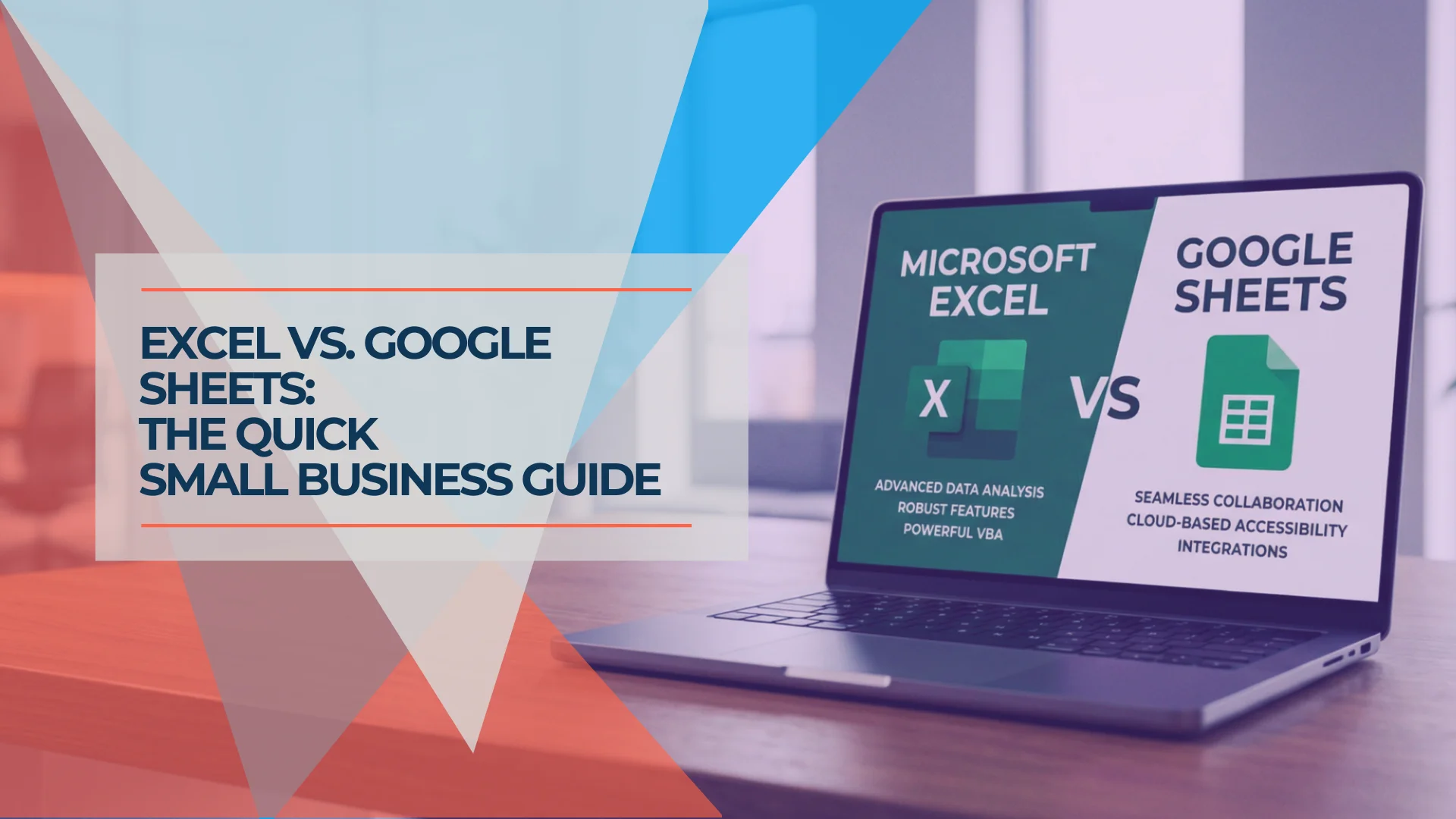
Excel vs Google Sheets: Which Should Your Business Use?
A practical comparison of Excel and Google Sheets for small businesses in 2026: where Google has caught up, where Excel still leads, and how to decide.
11 min read

Google Slides Review: Best Free Presentation Software for Business?
A practical review of Google Slides for small business: features, limitations, Gemini AI tools, Workspace pricing, and a head-to-head comparison with PowerPoint.
10 min read