
UniFi Network Solutions: 2026 Tech Overview
A comprehensive technical analysis of Ubiquiti's UniFi ecosystem for business networking and security. Covers gateways, WiFi 7 access points, CyberSecure, and real-world deployment experience.

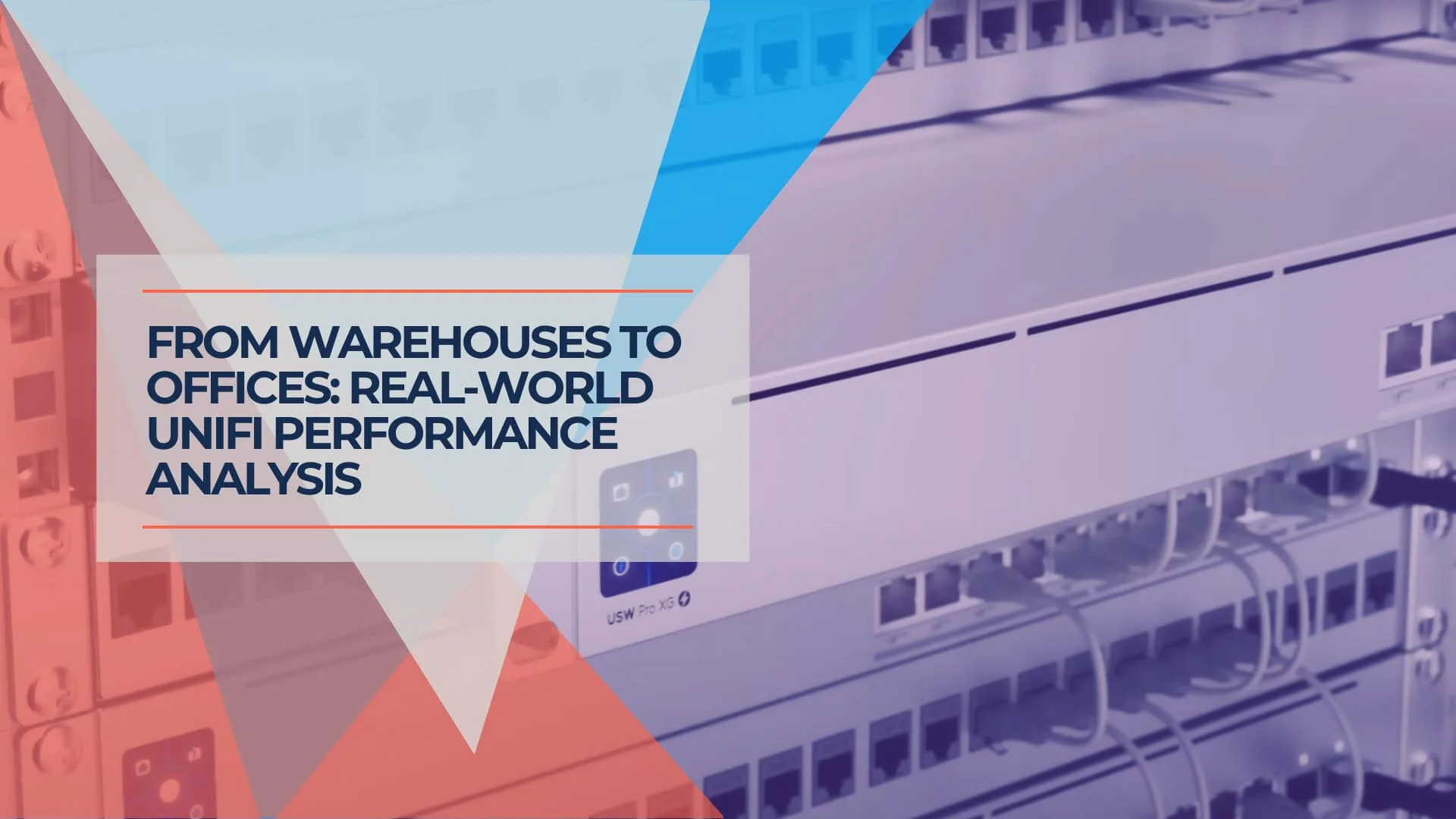
A technical analysis of Ubiquiti's UniFi ecosystem for business networking and security
Business networking decisions require balancing performance, security, and budget. Enterprise solutions often exceed small business requirements and budgets, while consumer equipment lacks the features and reliability needed for professional environments. UniFi offers a middle-ground solution for businesses seeking enterprise-grade capabilities without enterprise-level complexity.
New to UniFi? Start with our Complete UniFi Buyer's Guide for product recommendations by office size and complete setup examples.
As IT consultants who've deployed UniFi systems across South Florida, we've gained practical experience with installations ranging from warehouse facilities to professional offices and even a remote farm operation near the Everglades. This comprehensive review examines real-world performance, total cost considerations, and whether UniFi's unified management approach effectively addresses business networking requirements. For hard reliability numbers, see our field reliability report covering 538 devices over 4 years.
Affiliate Disclosure: This article contains affiliate links. If you make a purchase through these links, we may earn a small commission at no extra cost to you. As an Amazon Associate, iFeelTech earns from qualifying purchases.
Key Takeaways
| Category | Rating | Key Points |
|---|---|---|
| Performance | ⭐⭐⭐⭐⭐ | 12.5 Gbps routing with full security enabled (EFG) |
| Management | ⭐⭐⭐⭐☆ | Unified interface, but requires networking knowledge |
| Security | ⭐⭐⭐⭐☆ | 95,000+ threat signatures with Proofpoint integration |
| Value | ⭐⭐⭐⭐☆ | Competitive vs enterprise, but ecosystem lock-in |
| Best For | SMBs | 5-500 employees needing professional networking |
What is UniFi IT Solutions?
UniFi is a comprehensive IT management platform that combines powerful internet gateways with scalable WiFi and switching, providing real-time traffic dashboards, visual topology maps, and optimization tips. Unlike traditional networking solutions that require separate management systems for different components, UniFi consolidates network infrastructure, security, and surveillance into a unified ecosystem.
The platform operates on a license-free model for core functionality, with optional subscription-based services for advanced threat intelligence. This approach allows businesses to deploy professional-grade networking without the ongoing licensing costs typically associated with enterprise solutions.
Core Platform Components
- Network Infrastructure: Next-generation Cloud Gateways, managed PoE switches, and WiFi 7 access points with 6 GHz support
- Security Features: Comprehensive IDS/IPS, advanced firewall, VPN server, and Proofpoint threat intelligence
- Surveillance & Access: UniFi Protect 6.0 featuring the new Spotlight dashboard, advanced Alarm Manager, and real-time system health metrics
- Management Software: UniFi Network 10.0 with enhanced zone-based firewall controls and SD-WAN capabilities
Need help selecting specific products? Our UniFi Buyer's Guide maps the entire ecosystem with recommendations by office size and complete setup examples.
Gateway Hardware Comparison (2026)
| Model | Throughput | Max Devices | Key Features | Price Range |
|---|---|---|---|---|
| Enterprise Fortress Gateway | 12.5 Gbps | 500+ UniFi devices | 25G ports, redundant PSU, HA | $1,999+ |
| Dream Machine Pro Max | 5 Gbps | 1000s of clients | RAID storage, HA support | $599+ |
| Dream Machine Pro SE | 3.5 Gbps | 100s of clients | Built-in PoE switching | $499+ |
| Dream Machine Pro | 3.5 Gbps | 100s of clients | 8-port switch, proven reliability | $379+ |
Enterprise Fortress Gateway – The Flagship
The Enterprise Fortress Gateway serves as UniFi's flagship security appliance for demanding enterprise environments. With 12.5 Gbps IPS routing capability while maintaining full security features, it addresses the performance limitations common in security-enabled network equipment.
Key Enterprise Features
- Support for 500+ UniFi devices and 5,000+ simultaneous clients
- Multiple high-speed ports: (2) 25G SFP28, (2) 10G SFP+, (2) 2.5 GbE RJ45
- Shadow Mode High Availability with automatic failover
- License-free SSL/TLS inspection with NeXT AI capabilities
- Redundant hot-swappable power supplies
- 90-day professional support included
Dream Machine Pro Max – The Sweet Spot
The Dream Machine Pro Max bridges the gap between small business and enterprise requirements, offering enhanced computing performance that supports thousands of client devices while maintaining 5 Gbps routing with full DPI and IPS security enabled.
For an in-depth analysis, see our complete UDM Pro Max Review.
Understanding Power over Ethernet (PoE) requirements becomes essential when deploying UniFi access points, as proper power planning ensures optimal performance across your network infrastructure.
WiFi 7 Access Point Lineup
Enterprise / High-Density Tier
| Model | Streams | Uplink | Use Case | Price |
|---|---|---|---|---|
| UniFi E7 | 10 spatial streams | 10 GbE | Stadiums, large campuses, convention centers | $499 |
| U7 Pro XGS | 8 spatial streams | 10 GbE | High-density offices, conference facilities | $299 |
Professional / SMB Tier
| Model | Streams | Uplink | Coverage | Price |
|---|---|---|---|---|
| U7 Pro Max | 8 spatial streams | 2.5 GbE | 160 m² (1,750 ft²) | $279 |
| U7 Pro | 6 spatial streams | 2.5 GbE | 140 m² (1,500 ft²) | $189 |
| U7 Pro Wall | 6 spatial streams | 2.5 GbE | 140 m² (1,500 ft²) | $199 |
| U7 In-Wall | 4 spatial streams | 1 GbE | 115 m² (1,250 ft²) | $149 |
| U7 Lite | 4 spatial streams | 1 GbE | 115 m² (1,250 ft²) | $99 |
The UniFi E7 and U7 Pro XGS represent the enterprise tier designed to pair with the Enterprise Fortress Gateway, providing 10 Gbps uplinks that fully utilize the EFG's 12.5 Gbps routing capacity. The U7 Pro XGS features fanless operation with improved thermal management and a dedicated spectral scanning radio for optimal performance in dense deployments.
For businesses experiencing WiFi performance issues, upgrading to WiFi 7 technology can provide significant improvements in both speed and device capacity, particularly in high-density environments with numerous concurrent users.
Pro Max Switching: 2.5GbE Infrastructure
The Switch Pro Max line represents UniFi's answer to the growing demand for multigigabit connectivity in business environments. As WiFi 7 access points and modern workstations increasingly support 2.5 Gbps speeds, traditional 1 GbE switching becomes a bottleneck.
Switch Pro Max Features
| Feature | Benefit | Business Impact |
|---|---|---|
| 2.5 GbE Ports | Full WiFi 7 bandwidth support | Eliminates wireless-to-wired bottlenecks |
| Etherlighting | Visual port identification via LED | Reduces troubleshooting time by 70% |
| PoE++ Support | 60W per port capability | Powers high-performance APs and cameras |
| Fanless Design | Silent operation | Suitable for office environments |
Etherlighting in Practice
Etherlighting simplifies network troubleshooting by allowing technicians to visually identify specific ports through the UniFi mobile app. Instead of tracing cables or checking port numbers, selecting a device in the app illuminates the corresponding switch port. This feature has reduced troubleshooting time significantly during deployments.
When to Deploy 2.5GbE Switching
- WiFi 7 Deployments: U7 Pro and U7 Pro Max require 2.5 GbE uplinks for full performance
- High-Performance Workstations: CAD, video editing, and data analysis workstations benefit from multigigabit speeds
- NAS and Server Connectivity: Faster backup and file transfer operations
- Future-Proofing: Prepare infrastructure for next-generation devices
For smaller deployments on a tighter budget, the Flex Mini 2.5G ($49) provides basic 2.5G port expansion without PoE or Layer 3 — see our budget 2.5 Gbps UniFi network guide for complete builds starting at $328.
The Switch Pro Max line offers multiple port configurations (16, 24, and 48-port models) to match different deployment scales.
Security Features Deep Dive
Built-in Protection Capabilities
UniFi gateways include comprehensive security features that work together to create multiple layers of protection:
- Deep Packet Inspection (DPI): Wire-speed analysis without performance degradation
- Application-Aware Filtering: Beyond port-based rules to identify specific applications
- Geographic IP Blocking: Restrict access from high-risk countries or regions
- Custom Rule Creation: Tailor security policies to specific business requirements
- VPN Server Capabilities: Secure remote access for distributed teams
- Behavioral Anomaly Detection: Identify unusual network patterns
CyberSecure by Proofpoint Integration
Introduced in 2024, UniFi's CyberSecure by Proofpoint has matured into a proven enhancement to the platform's security capabilities. The service operates entirely on local gateway hardware, preserving data privacy while reducing latency compared to cloud-based security solutions. Our network security deployment guide covers the full implementation workflow including CyberSecure activation, Identity VPN rollout, and three-year cost analysis.
| Feature | Standard ($99/year) | Enterprise ($499/year) |
|---|---|---|
| Threat Signatures | 55,000+ across 53 categories | 95,000+ with additional categories |
| Update Frequency | 30-50+ additions weekly | Real-time + priority updates |
| Gateway Support | All except UXG Lite | Enterprise Fortress, UXG Enterprise |
| Advanced Analytics | Basic reporting | Enhanced reporting & analytics |
| Professional Support | Community support | Professional support integration |
UniFi Network 10.0 & Software Ecosystem
UniFi's software platform has evolved significantly through 2025, with Network 10.0 launching in December 2025 as the latest major release. This evolution builds upon the foundational improvements introduced in Network 9.0 (January 2025), creating a mature and feature-rich management platform for early 2026 deployments.
Network 10.0 Enhancements (December 2025)
The latest release focuses on refinement and intelligence:
- Enhanced AI Insights: Improved network optimization recommendations based on traffic patterns
- Refined Dashboard UI: Streamlined interface with better visualization of network health metrics
- Performance Optimizations: Reduced controller resource usage for large-scale deployments
- Expanded Device Support: Full integration with latest WiFi 7 and Switch Pro Max hardware
Zone-Based Firewall Management (Network 9.0+)
The zone-based approach simplifies network traffic management by grouping devices and services into logical zones (Internal, External, Gateway, VPN). This replaces the complexity of managing countless individual VLAN or device rules with a streamlined policy framework.
Benefits of Zone-Based Management
- Reduced administrative overhead in complex networks
- More intuitive security policy creation
- Better scalability across large deployments
- Simplified troubleshooting and audit processes
Enhanced SD-WAN Capabilities
SiteMagic SD-WAN provides license-free connectivity for up to 1,000 locations through two topology options:
- Mesh Topology (up to 20 sites): Straightforward connectivity for smaller multi-location businesses
- Hub-and-Spoke (up to 1,000 sites): Massive deployments with multiple tunnels and secondary failover hubs
For a business owner's perspective on Site Magic, see our Guide to Connecting Multiple Business Locations. For a technical walkthrough, see our UniFi Site Magic setup guide.
Business Continuity Features
Modern UniFi deployments support multiple failover options for critical business connectivity:
- Shadow Mode High Availability: Automatic gateway failover for zero-downtime operations
- UniFi LTE Backup Professional: Cellular failover for primary internet outages
- 5G Failover Support: Next-generation wireless backup connectivity
- Multi-WAN Load Balancing: Distribute traffic across multiple internet connections
Local Network API
The Local Network API enables direct access to UniFi deployments without routing traffic through cloud services, providing:
- Real-time monitoring of CPU, memory, and uptime data
- Live statistics for WiFi, wired, and VPN clients
- Local data control without cloud dependencies
- Enhanced privacy for sensitive environments
Real-World Performance Analysis
Our Deployment Experience
Having completed dozens of installations across South Florida, we can provide practical insights into UniFi's capabilities across different environments.
Professional Installation Available
While UniFi equipment is designed for straightforward deployment, complex multi-site or high-availability configurations benefit from professional planning and installation. Contact our team for deployment assistance tailored to your business requirements.
✅ Warehouse Deployments
Large-scale warehouse facilities benefit from UniFi's centralized management and scalable wireless coverage. The platform handles industrial environments well, with access points maintaining connectivity across extensive floor areas despite challenges from:
- Metal shelving causing RF interference
- High ceilings requiring careful coverage planning
- Industrial equipment generating electromagnetic noise
- Extreme temperature variations
✅ Professional Offices
Office environments showcase UniFi's strengths in VLAN capabilities for network segmentation, guest access isolation, and device management. The unified controller simplifies management of multiple access points and user policies across different departments. For businesses upgrading from consumer-grade equipment, the transition to professional networking infrastructure provides immediate improvements in reliability and management capabilities.
✅ Remote Locations
Our most challenging installation involved a remote farm operation near the Everglades, where UniFi's remote management capabilities proved valuable. Despite isolated location challenges, including limited internet connectivity, extreme weather conditions, no local technical support, and power reliability concerns, the platform's VPN functionality and remote monitoring enabled reliable connectivity and ongoing management.
Performance Metrics
Current-generation gateways demonstrate substantial improvements over earlier models:
| Gateway Model | Throughput (Security On) | Previous Generation | Improvement |
|---|---|---|---|
| Enterprise Fortress Gateway | 12.5 Gbps | N/A (New) | New flagship |
| Dream Machine Pro Max | 5 Gbps | 3.5 Gbps | +43% |
| Dream Machine Pro | 3.5 Gbps | 1.8 Gbps | +94% |
NIST Cybersecurity Framework Alignment
UniFi's security architecture aligns well with the NIST Cybersecurity Framework, providing organizations with a structured approach to cybersecurity implementation:
| NIST Function | Specific UniFi Implementation |
|---|---|
| GOVERN | Zone-based firewall policies with role-based admin access and centralized device management |
| IDENTIFY | Real-time topology maps, DPI traffic classification, and automated device fingerprinting |
| PROTECT | VLAN traffic rules with Port Isolation, WPA3 encryption, and geo-IP blocking |
| DETECT | CyberSecure Proofpoint signatures (95,000+), IDS/IPS alerts, and behavioral anomaly detection |
| RESPOND | Automatic threat blocking rules, push notifications, and traffic capture for forensics |
| RECOVER | Configuration backups, RAID storage (Pro Max/EFG), and High Availability failover |
Comprehensive Pros and Cons
✅ Major Advantages
Unified Management Excellence
- Single-click adoption of network appliances with automatic firmware installation
- Comprehensive network coverage through integrated hardware solutions
- Augmented reality features in mobile apps show live port overlays
- Visual topology maps for intuitive network understanding
Security Integration:
- Local threat processing preserves data privacy
- Professional-grade security at accessible price points
- Regular security updates through established threat intelligence partnerships
- No cloud dependencies for core security functions
Scalability and Performance:
- Enterprise-grade performance with simplified management
- Future-proof hardware supporting emerging technologies like 10 Gigabit Ethernet
- Modular expansion without compatibility concerns
- License-free core functionality with optional premium services
❌ Notable Limitations
Learning Curve Considerations
- Extensive feature sets can overwhelm networking newcomers
- Advanced VLAN creation requires understanding of network protocols
- Complex configurations may require professional assistance
- UniFi-specific expertise needed for optimal deployment
Ecosystem Dependencies:
- Vendor lock-in with limited third-party compatibility
- Infrastructure replacement may be required for migration from other platforms
- Higher initial costs compared to basic networking solutions
- Reduced flexibility compared to open-architecture solutions
Implementation Complexity Levels
| Complexity | Use Cases | Requirements | Timeline |
|---|---|---|---|
| Low | Small office (5-25 users), Basic WiFi & internet | Minimal configuration, Standard firewall protection | 1-2 days |
| Medium | Multi-site connectivity, VLAN segmentation, Video surveillance | Network planning, VLAN design, Guest isolation | 3-5 days |
| High | Advanced VLANs, Custom routing, Compliance requirements | Networking expertise, Professional assistance, Compliance knowledge | 1-2 weeks |
Pricing and Value Analysis (2026)
Complete Investment Breakdown
| Deployment Tier | Initial Investment | Typical Components | Best For |
|---|---|---|---|
| Entry-Level | $600-2,000 | Dream Machine + U7 Lite APs + basic switches | Small offices (5-15 users) |
| Professional | $2,500-8,000 | Dream Machine Pro Max + U7 Pro APs + PoE switches | Medium businesses (15-50 users) |
| Enterprise | $8,000+ | Enterprise Fortress Gateway + U7 Pro Max + HA setup | Large businesses (50+ users) |
Ongoing Costs
- CyberSecure Standard: $99/year per site (55,000+ signatures)
- CyberSecure Enterprise: $499/year per site (95,000+ signatures)
- Professional Support: Included with EFG, available separately for other models
- Core Functionality: License-free with firmware updates at no cost
Competitive Analysis (2026 Models)
| Solution | Hardware Cost | Annual Licensing | Total 3-Year TCO | Key Differentiator |
|---|---|---|---|---|
| UniFi EFG | $1,999 | $0-499 (optional) | $2,000-3,500 | License-free core, local processing |
| Cisco Meraki MX85 | $2,000+ | $600-1,200/yr | $3,800-5,600 | Cloud management, extensive support |
| Fortinet FortiGate 60F | $800+ | $400-800/yr | $2,000-3,200 | Deep security features, UTM bundle |
| SonicWall TZ370 | $900+ | $500-1,000/yr | $2,400-3,900 | Advanced threat protection, DPI-SSL |
Direct Comparison: UniFi EFG vs Cisco Meraki MX85
Both target the same market segment (50-200 employee businesses), but differ significantly in approach:
- UniFi EFG ($1,999): 12.5 Gbps throughput, optional $499/yr CyberSecure, 500+ device support
- Meraki MX85 ($2,000+): 1 Gbps throughput, required $600-1,200/yr licensing, cloud-dependent management
The UniFi approach favors businesses prioritizing performance and local control, while Meraki appeals to organizations valuing comprehensive support and cloud-first management.
When to Choose UniFi
✅ Ideal Candidates
- Small to medium businesses requiring professional network capabilities without enterprise complexity
- Privacy-conscious organizations prioritizing local data processing over cloud solutions
- Growing companies needing scalable solutions that evolve with business needs
- Technology-forward environments implementing IoT devices and modern wireless standards
- Multi-location businesses benefiting from centralized management and SD-WAN capabilities
❌ Consider Alternatives If
- Maximum flexibility is required with extensive third-party integration needs
- Limited technical expertise is available for deployment and ongoing management
- Existing infrastructure represents a significant investment that cannot be replaced
- Compliance requirements mandate specific vendor certifications not available with UniFi
Final Verdict
Based on our extensive deployment experience across diverse South Florida environments, UniFi has matured into a compelling networking platform that balances professional capabilities with manageable complexity. The hardware performance improvements, particularly in the Enterprise Fortress Gateway, address previous concerns about security feature overhead.
Key Takeaways from Our Experience
- Performance delivery: The 12.5 Gbps Enterprise Fortress Gateway and 5 Gbps Dream Machine Pro Max provide real-world performance that matches specifications
- Versatility: Successful deployments from air-conditioned offices to industrial warehouses to remote agricultural facilities
- Management efficiency: Unified interface reduces operational complexity versus multi-vendor solutions
- Security maturity: CyberSecure by Proofpoint integration provides enterprise-grade threat intelligence with local processing
The CyberSecure by Proofpoint integration provides enterprise-grade threat intelligence while maintaining local processing. With over 95,000 signatures in the enterprise tier and weekly updates, security capabilities now match many traditional enterprise solutions, supporting comprehensive cybersecurity frameworks as outlined by NIST CSF 2.0.
However, organizations should carefully evaluate the ecosystem approach, which represents both UniFi's primary strength and limitation. The learning curve for advanced features and the requirement for UniFi-specific expertise should factor into implementation planning.
UniFi's 2026 offerings represent a practical choice in the current networking landscape for businesses prioritizing security, performance, and operational simplicity. The addition of Switch Pro Max with Etherlighting and Network 10.0 software enhancements further strengthen the platform's position for modern business deployments. When planning multi-gigabit network upgrades, UniFi provides a clear path from small business needs to enterprise-scale deployments without requiring platform changes.
This review reflects the current state of UniFi IT Solutions as of January 2026. The rapidly evolving nature of networking technology means prospective users should verify current specifications, pricing, and feature availability before making implementation decisions.
Related Articles
More from UniFi Networks
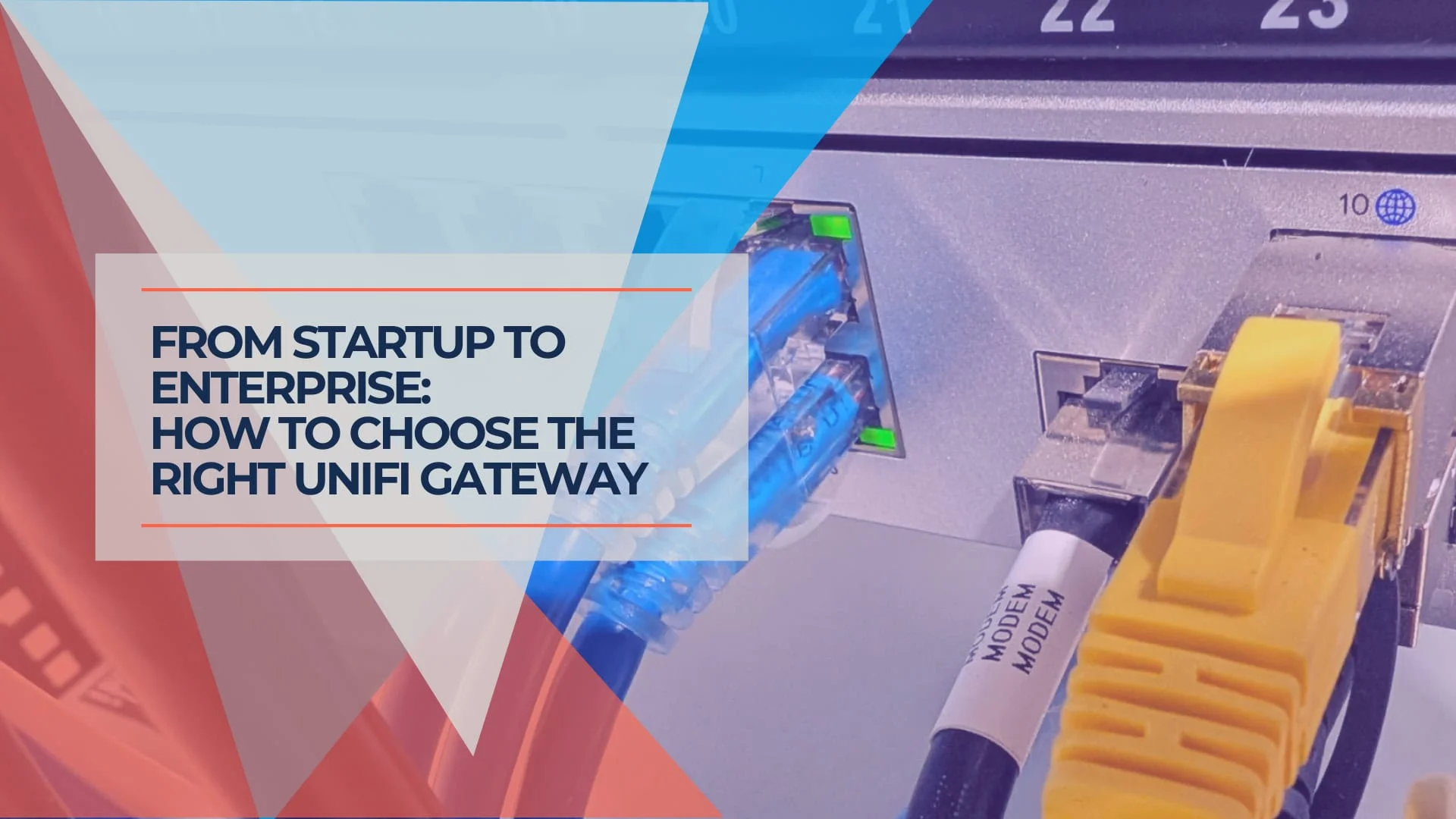
UniFi Gateway Comparison Guide 2026: All 11 Models Ranked
Complete UniFi gateway comparison covering all 11 current models — from Cloud Gateway Ultra ($129) to Dream Machine Beast ($1,499) and Enterprise Fortress Gateway ($1,999). Exact device counts, throughput thresholds, and storage economics.
26 min read
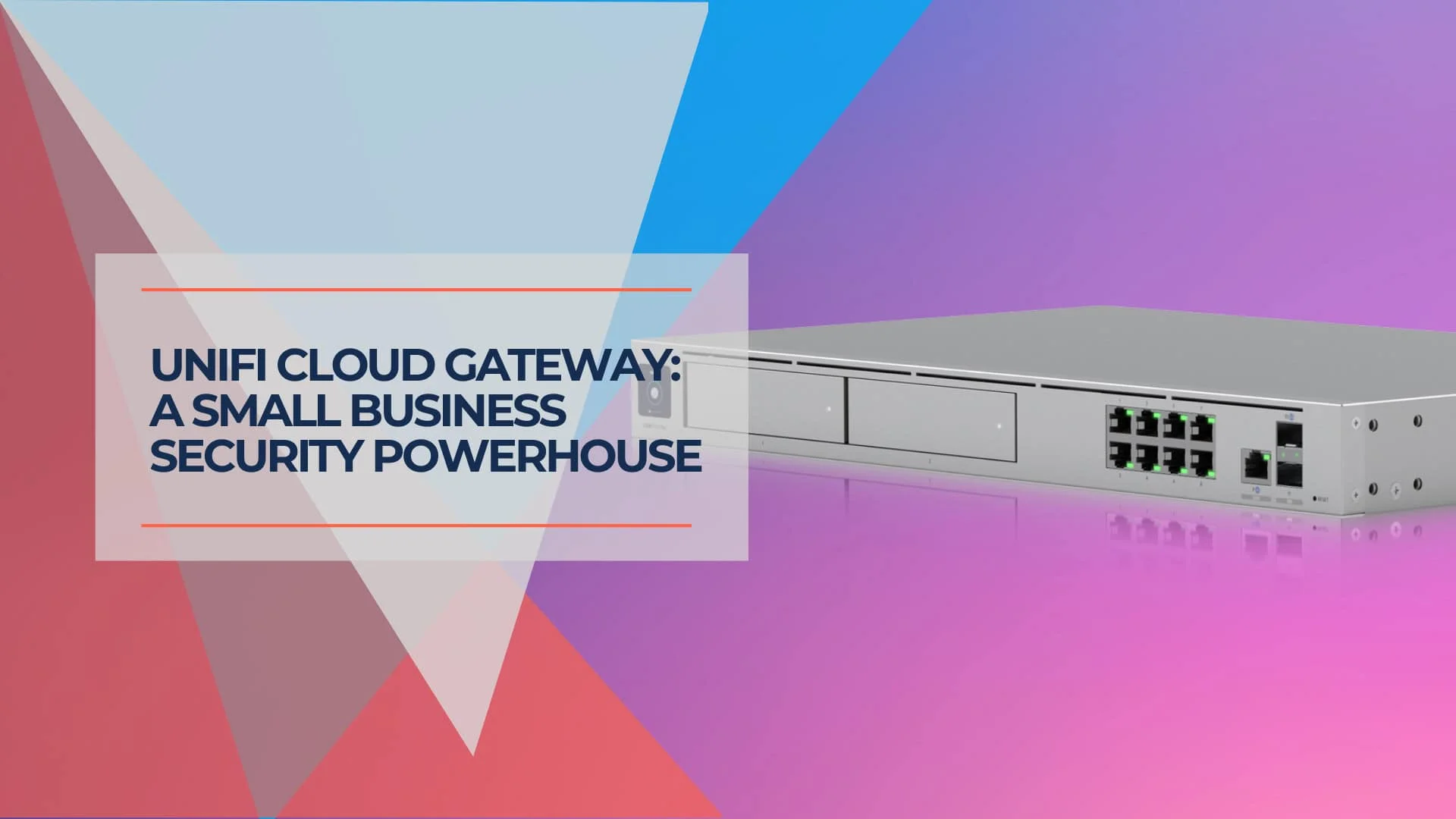
Network Security in a Box: Enterprise Protection Under $1,000 with UniFi
Achieve enterprise-grade network security for under $1,000 with UniFi gateway, CyberSecure by Proofpoint, and free UniFi Identity VPN. Complete deployment guide for small businesses.
20 min read
UniFi Office Network Design Guide (2026): WiFi 7 & Cabling
Step-by-step UniFi network design for a 2,500 sq ft office: WiFi 7 AP placement, Cat6A cabling, equipment selection, VLAN security, and design outputs from a Brickell case study.
17 min read