

Why RAM Prices Are Going Up in 2026 (and What It Means for Business Computers and Servers)
RAM and SSD prices are up sharply in 2026, and manufacturers are cutting specs too. What's actually happening to laptop, desktop, and server pricing and lead times for small businesses.

Affiliate Disclosure: This article contains affiliate links. If you make a purchase through these links, we may earn a small commission at no extra cost to you. As an Amazon Associate, iFeelTech earns from qualifying purchases.
What Changed in July 2026
- TrendForce Q3 forecast (July 3): Conventional DRAM contract prices +13-18% QoQ; NAND Flash +10-15% QoQ
- PC-grade DRAM: Forecast raised to +15-20% for Q3 (up from earlier 8-13% estimate)
- Server DRAM: +13-18% QoQ expected in Q3, with quarterly increases continuing into 2027
- IDC: Full-year 2026 PC shipments forecast down 11.3%; Q4 could fall 20% YoY
- Apple: Raised MacBook and iPad prices June 25, citing memory costs
- Retail prices remain volatile — verify by SKU and date before purchasing
Key Takeaway
DRAM contract prices rose 93-98% in Q1 2026 alone, driven by AI datacenters projected to consume about 70% of high-end DRAM output. One undercovered issue for business buyers: manufacturers are also cutting specs to hold price points, so a 2026 quote for "the same laptop" as last year may be a genuinely different machine. Servers are under even more pressure — Dell raised list prices ~17%, HPE tightened quote terms, and lead times stretched from weeks to months.
Quick Reference
- RAM and SSD prices: Up 93-98% (Q1), another 58-63% (Q2), with 15-20% more forecast for Q3 2026 PC-grade DRAM. NAND Flash rose 70-75% in Q2.
- The double bind: Prices are up and some manufacturers are cutting specs (8GB RAM is back on mainstream laptops) to hold price points. Check every quote line by line.
- Servers: Channel reports indicate Dell PowerEdge list prices up ~17%; HPE shortened quote validity to 14 days and added shipment-date price-adjustment terms. Server DRAM up 60-70% vs. late 2025, with another 13-18% QoQ forecast for Q3. Lead times stretched to 8-12+ weeks.
- What to do: Buy memory-dependent items you already need now, extend fleet life with targeted upgrades, and budget 3-4x the usual lead time for a server order.
Why Are RAM Prices Going Up? The Short Answer
RAM prices are rising because AI datacenters are consuming more high-end memory supply. AI datacenters are projected to consume about 70% of high-end DRAM output in 2026, according to reporting that cites industry analysis — a structural reallocation, not a routine cyclical shortage. Motley Fool's analysis uses the broader "memory chips" framing in an investor context. Either way, the shift from historical norms is significant: as recently as 2022, datacenters accounted for roughly 20-30% of global DRAM consumption, according to industry analysis.
The mechanism is straightforward: Microsoft, Google, Meta, and Amazon are buying DRAM and HBM (High Bandwidth Memory) at scale to build out AI server infrastructure. Memory foundries — Samsung, SK Hynix, Micron — are prioritizing those higher-margin orders, which leaves less capacity for consumer- and business-grade DRAM and NAND flash. Everyone downstream — laptop OEMs, server vendors, NAS manufacturers — is competing for a shrinking slice of a supply base that used to be far closer to balanced.
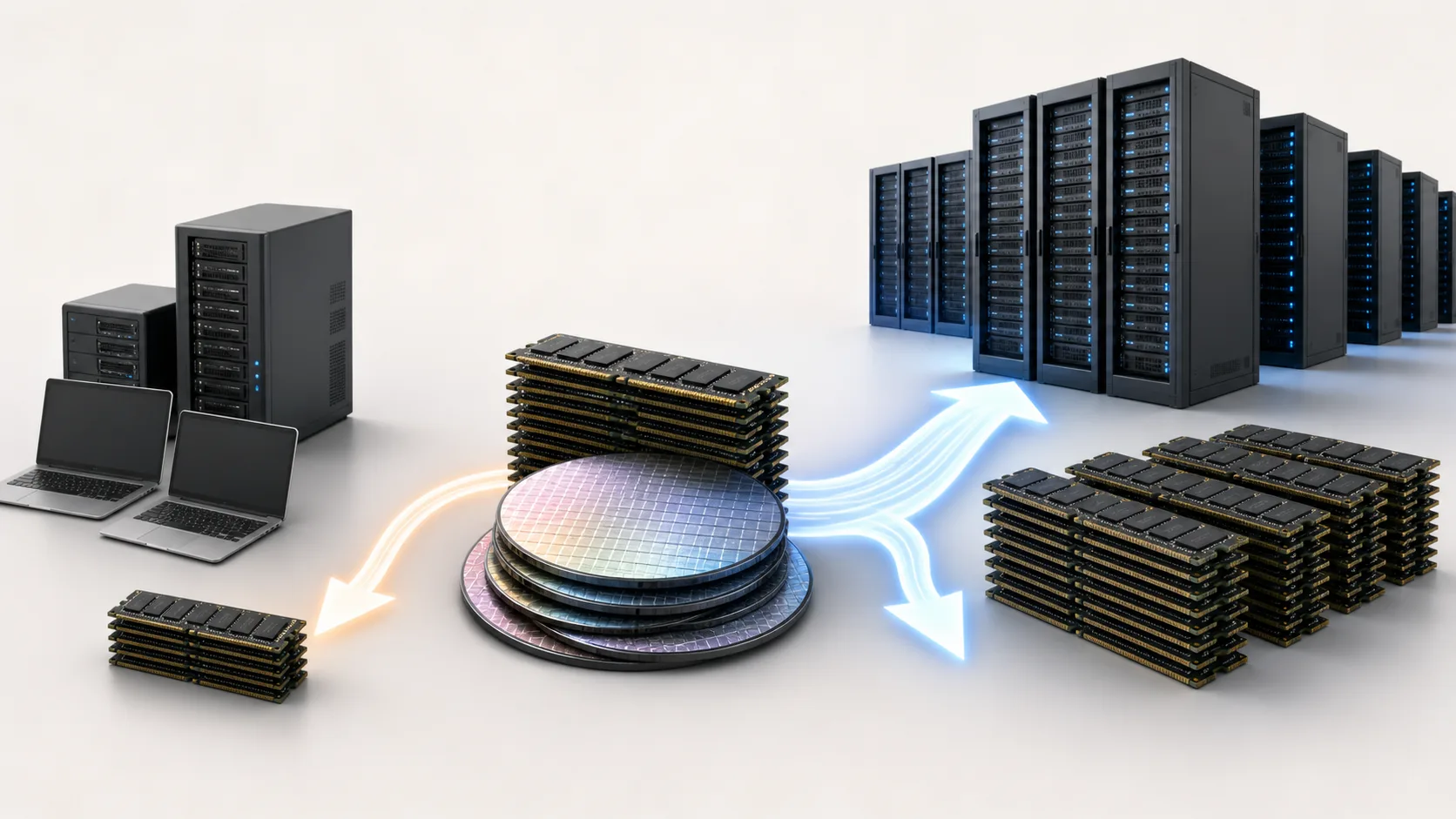
TrendForce's June 2026 report puts numbers on the actual Q1 result: conventional DRAM contract prices rose approximately 93-98% quarter-over-quarter in Q1 2026. Q2 2026 added another 58-63% for conventional DRAM and 70-75% for NAND Flash. TrendForce's July 3 revision — the freshest data available as of this writing — forecasts Q3 2026 conventional DRAM contract prices up 13-18% QoQ overall, with PC-grade DRAM specifically forecast at 15-20% (raised from an earlier 8-13% estimate). NAND Flash is expected to rise 10-15% in Q3. The pace is moderating, but prices are still climbing.
SSDs are moving on the same curve, for a related reason. NAND flash manufacturers are making the same capacity trade-offs as DRAM makers. Kingston has publicly cited a 246% increase in NAND wafer costs. Retail SSD prices have moved accordingly — the Samsung 990 Pro 1TB, which sold for around $60 at its 2023 lows, has been running above $200 in recent months. The 2TB model has been listed between $390 and $640+ depending on retailer and timing.
None of this is seasonal. A seasonal sale is unlikely to offset the underlying shortage.
The Double Bind: Higher Prices and Worse Specs
Buyers are paying more while some systems ship with less RAM or storage. What happens to specifications when memory becomes a larger share of a PC's bill of materials matters as much as the price increase itself when you're comparing a 2026 hardware quote to what you paid last year.
When a component that used to be a modest line item on a bill of materials suddenly becomes one of the largest cost drivers, manufacturers have two levers: raise the price, or quietly reduce the spec to hold the price point. Through 2026, plenty of OEMs have pulled both levers at once.
- HP has disclosed that DRAM's share of a PC's build cost has roughly doubled compared to where it stood before the shortage began.
- 8GB of RAM has reappeared on mainstream and budget laptops — a memory tier the market had mostly left behind, now back as a way to hit a price point. Tom's Hardware documented the trend directly.
- Dell, Acer, Microsoft, and Chuwi have each stepped back from the 16GB baseline that had become the default expectation on business-grade machines going into 2026.
- A TrendForce report from mid-December 2025 told OEMs plainly to expect a choice between raising prices, cutting specs, or both through 2026. Several brands chose both.
- Analysts project 10-20% additional cost increases specifically on higher-performance configurations as the shortage peaks — meaning the machines businesses actually want are getting hit twice.
The model name isn't enough
If you're comparing a new quote to one from six or twelve months ago, don't assume the configuration matches. Check the exact RAM and storage line by line — the same model number can now ship with less memory or a smaller drive than it did a year ago, at the same or a higher price. Ask the vendor directly whether the spec has changed since your last quote, not just whether the price has.
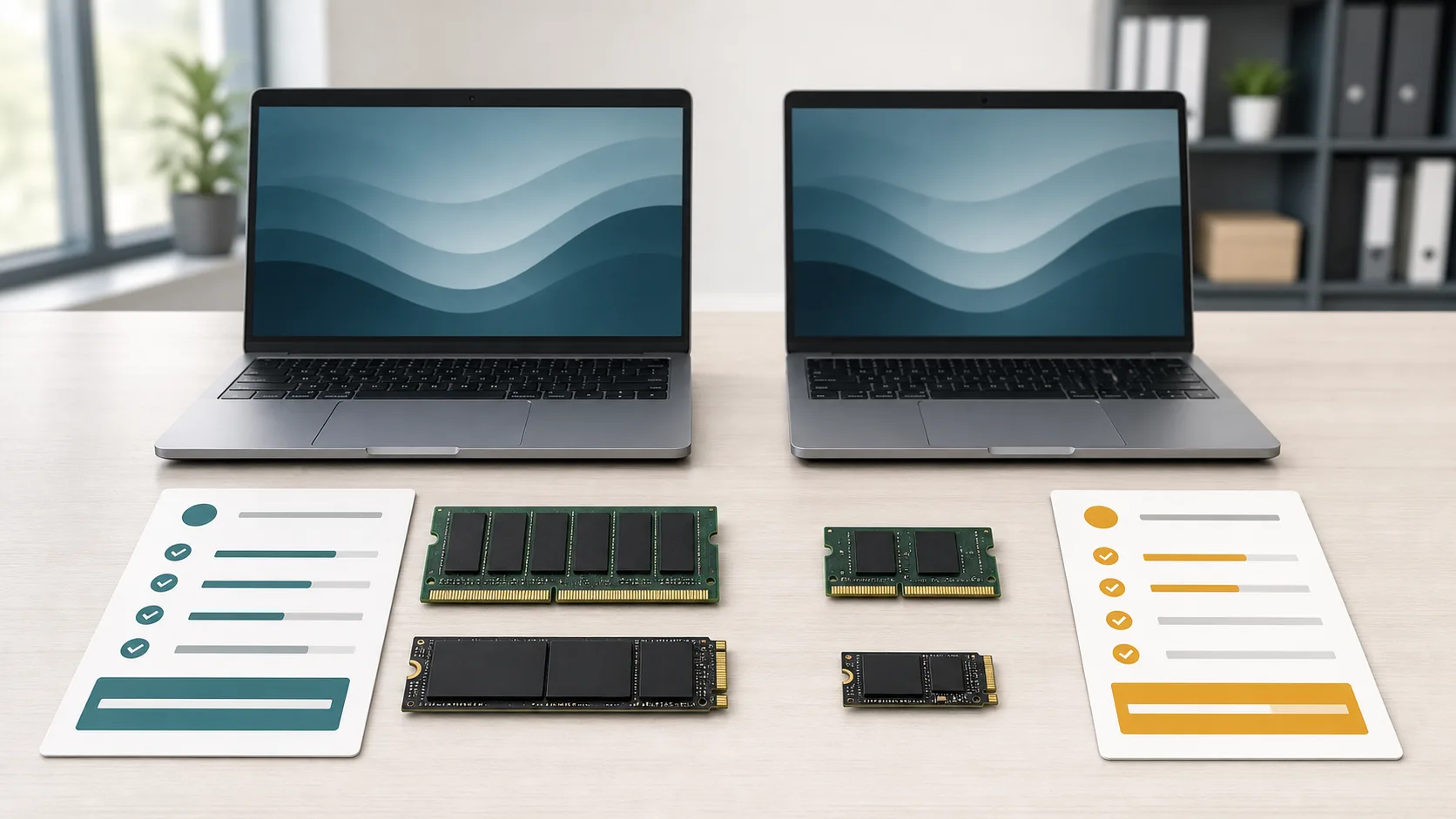
Before approving a 2026 hardware quote, check these lines
- RAM: Is it the same capacity and speed as the previous quote or model year?
- SSD/storage: Same capacity and interface (NVMe vs. SATA)?
- Windows edition: Pro, Home, or downgrade rights?
- Warranty: Same duration and coverage level?
- Docking/port compatibility: Same USB-C/Thunderbolt spec?
- Lead time: When does it actually ship — days, weeks, or months?
- Return terms: Restocking fee? Shortened return window?
- Quote validity: How long is this price held? (30 days is no longer a given)
- Model generation: Is this the same generation, or has the vendor quietly substituted an older or lower-tier SKU?
Need a second look at a hardware quote? We help small businesses compare specs, lead times, and upgrade paths before they commit.
This is also true for desktops and workstations, not just laptops, and — as the next section covers — it shows up even more sharply once you're buying a server rather than a single machine.
Buying a laptop specifically?
This article covers the mechanics behind the shortage and what it means across every hardware category, including servers. If you're specifically weighing when to buy a business laptop, our best time to buy a laptop in 2026 guide has the OEM-by-OEM price breakdown, category exposure tiers, and current model picks.
The Numbers: RAM, SSD, and PC Prices Through 2026
DRAM and NAND prices rose sharply in early 2026, with Q3 increases now slowing. Here's the full quarter-by-quarter picture, pulled directly from TrendForce's published forecasts and revised as new data has landed:
| Quarter | DRAM Contract Price Change (QoQ) | Notes |
|---|---|---|
| Q1 2026 | +93-98% | TrendForce June 2026 actual; the largest quarterly increase on record |
| Q2 2026 | +58-63% (DRAM); +70-75% (NAND) | Rate of increase slowing, but still unusually large |
| Q3 2026 (forecast) | +13-18% overall; PC-grade DRAM +15-20% | July 3 revision raised PC DRAM from an earlier 8-13% estimate |
| Q4 2026 (forecast) | +3-8% | The clearest sign yet of real moderation |
Source: TrendForce June 2026 (Q1 actual), TrendForce July 3 (Q2-Q4 forecasts), cross-checked against Tom's Hardware's reporting.
Server-grade DRAM has moved on a related but distinct track. Samsung and SK Hynix raised server DRAM prices 60-70% versus Q4 2025 in early Q1 supplier quotes, and TrendForce's July data forecasts server DRAM contract prices rising another 13-18% QoQ in Q3 2026, with continued quarterly increases expected into 2027. That matters most if you're pricing a server rather than a laptop (more on that below).
The knock-on effect on the PC market is significant. IDC forecasts full-year 2026 PC shipments will decline 11.3%, with conditions worsening progressively — Q4 alone is projected to fall 20% year-over-year. At the same time, average selling prices are forecast to rise about 17-18% (IDC's blog says 17%; its forecast page says 18.3%), and the total PC market value still grows 1.6% to $274 billion. Fewer units, higher prices, bigger dollar market — that's the shape of 2026.
Real street prices tell the same story, though they vary significantly by retailer, promotion, and timing:
| Component | Earlier low | Recent observed range | Notes |
|---|---|---|---|
| 32GB (2×16GB) DDR5 kit | ~$95-130 (2024-early 2025) | Well above 2025 lows | Varies by speed, SKU, and retailer; check current listings |
| Samsung 990 Pro SSD (1TB) | ~$60 (2023 low) | ~$200+ | PCIe Gen4; do not confuse with Samsung 9100 Pro (Gen5) |
| Samsung 990 Pro SSD (2TB) | ~$133-149 (2025 sale prices) | ~$390-640+ | Wide range depending on retailer and sale status |
Pricing methodology: Retail prices in this article are examples, not live quotes. We list the product, capacity, and approximate range where street pricing is shown. Prices change weekly in this market — verify current pricing by SKU, retailer, and date before making a purchasing decision. Do not mix sale prices with list prices, or confuse different product generations (e.g., Samsung 990 Pro vs. 9100 Pro).
Will RAM Prices Go Down in 2026?
Prices may rise more slowly in late 2026, but a full reversal is unlikely this year. TrendForce's own Q4 2026 forecast is 3-8% quarterly growth, a sharp deceleration from Q1's 93-98%. That's genuine evidence the market is moderating — consumer affordability limits are starting to cap how far OEMs can push retail pricing — but moderation is not the same as reversal. Meaningful relief depends on new fabrication capacity coming online, and most analysts don't expect that before late 2027.
If you're weighing whether to wait, the honest framing is: the worst of the rate of increase is very likely behind us, but the price level is not coming back down to early-2025 territory anytime soon.
Servers: The Category Getting Hit Hardest, and Talked About the Least
Servers are under heavy pressure because each system uses far more memory than a typical PC. Most coverage of the 2026 memory shortage is written for consumers, but servers are often under heavier pressure than laptops because each system carries far more memory and has longer supply-chain dependencies — and almost none of the mainstream coverage addresses what that means for small businesses trying to buy or replace one.
Prices are up from both directions at once. Channel reports indicate Dell raised PowerEdge list prices approximately 17%, effective March 30, 2026, while HPE shortened quote-validity windows to 14 days and added shipment-date price-adjustment language for server and GreenLake orders. Several major OEMs adjusted pricing, quote terms, or lead-time expectations in early 2026 as memory costs rose. Layered on top of those OEM list-price increases is the memory shortage itself: server-grade DRAM specifically is up 60-70% versus Q4 2025, with TrendForce forecasting another 13-18% QoQ increase for Q3 — a steeper trend than the general PC-DRAM market, because server configurations typically carry far more memory per unit than a laptop or desktop.
Lead times have stretched just as sharply as prices. Channel reports and our own current procurement experience show CPU lead times running up to 6 months for some Intel server parts and 8-10 weeks for AMD. A standard tower server configuration that used to ship in 2-3 weeks can now take 8-12 weeks or longer. If a server purchase is anywhere on your 2026 roadmap, the planning window you're used to no longer applies — this needs to start months earlier than it would have in 2024 or 2025.
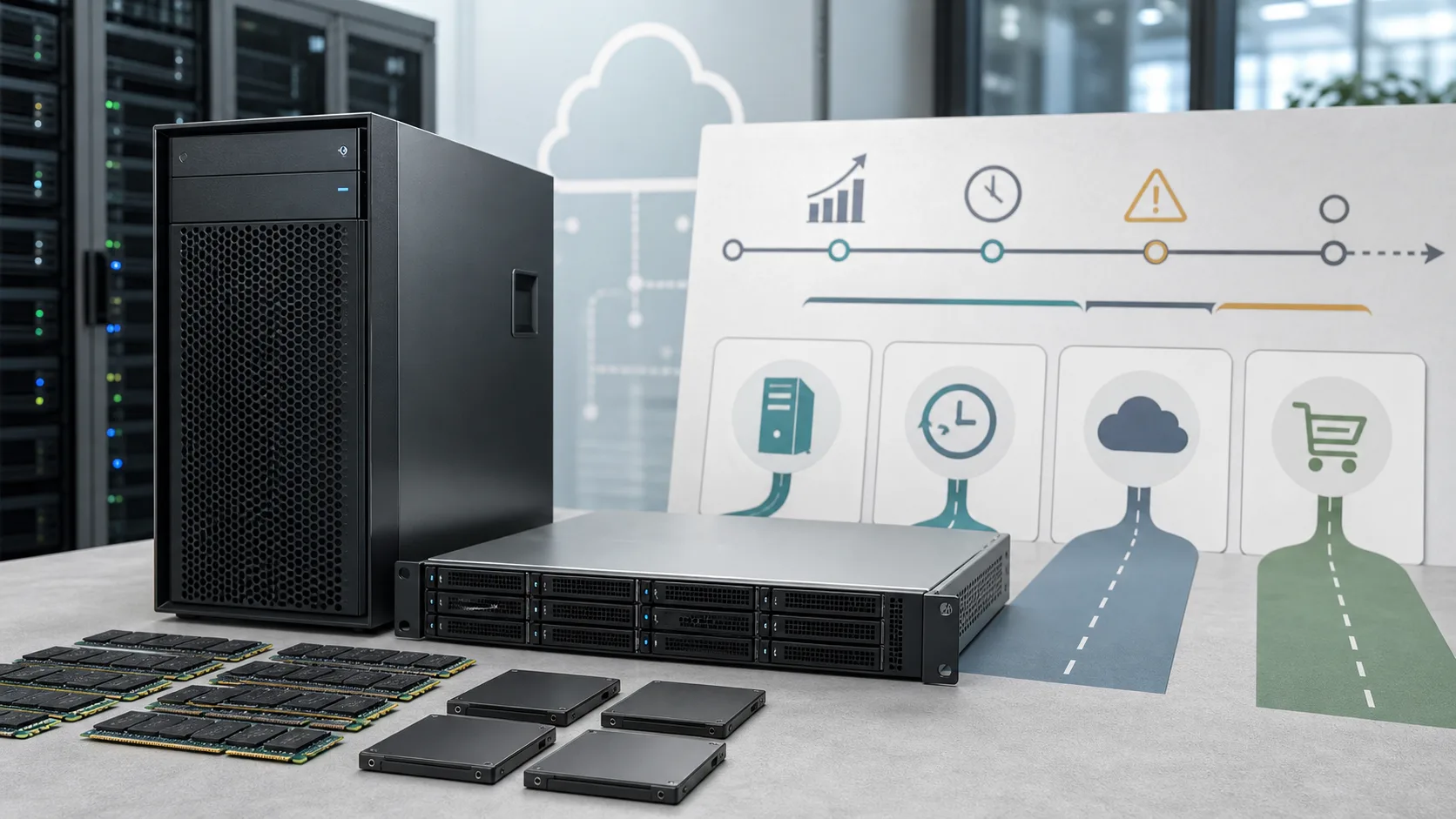
For context on what a small business actually spends here: most small businesses budget $1,500-3,500 for a new tower server in the Dell PowerEdge T350 or HPE ProLiant ML30 Gen11 class. iFeelTech's own HP ProLiant DL320 Gen11 deployment for an engineering firm — documented at roughly $8,000 for a higher-spec configuration as of our January 2026 update — predates the sharpest of this year's server DRAM and OEM list-price increases; a fresh quote for the identical configuration today would run meaningfully higher. If you're pricing a server purchase this quarter, get a current quote rather than working from anything dated before spring 2026.
Refurbished and off-lease enterprise servers are a genuine option right now, not a compromise. Refurbished models in the Dell R730 class start around $300-1,200 — a fraction of new-unit pricing, without the 8-12 week wait. For workloads that don't need the latest platform generation, this is worth serious consideration while new-unit pricing and lead times are this distorted. Our guide to server setup for small business and do you actually need a server cover the decision framework in more depth, and best small business servers 2026 compares the on-premise, cloud, and hybrid paths if a physical server refresh isn't the only option worth weighing this year.
Server Decision Framework for 2026
Before committing to a new server purchase at current pricing and lead times, evaluate which path fits:
- Replace now if warranty has expired on a business-critical system, the OS is approaching end of support, or performance is already limiting operations.
- Extend if the workload is stable, hardware health checks pass, and a RAM/SSD upgrade or warranty extension buys another 1-2 useful years.
- Move to cloud or hybrid if the replacement cost and lead time of a physical server exceed the operational value — especially for workloads that don't require on-premise data residency.
- Buy refurbished/off-lease when the workload doesn't need the latest platform generation and a clear warranty/support path exists. Start around $300-1,200 for Dell R730-class units.
Whichever path you choose: get a current quote (not one from before spring 2026), ask specifically about CPU lead time, and compare at least two options before deciding.
What This Means for Desktops and NAS Purchases
Desktops, workstations, and NAS upgrades are affected most when RAM or storage capacity is high.
Desktops and workstations carry the same exposure logic as laptops — more memory-dependent configurations (workstation-class builds with 32GB+ RAM) see proportionally more of the price increase than an entry-level office desktop. The spec-verification warning above applies here too: check the RAM and storage configuration against the quote, not the model name.
NAS purchases are comparatively less exposed on the enclosure itself, but the drives inside one are squarely in the NAND shortage's path. If a NAS refresh or expansion is on your list this year, the drives are the line item to buy sooner rather than later; the enclosure hardware is a smaller part of the total cost and less time-sensitive.
Networking gear (access points, switches, firewalls) carries comparatively low memory content and is the category safest to defer if budget is tight this quarter.
Buy, Delay, or Upgrade: 2026 Decision Matrix
| Category | Memory Exposure | Recommended Action |
|---|---|---|
| Business laptops | High | Buy confirmed needs now; avoid 8GB configs for business use |
| Workstations | High | Quote early, verify RAM/SSD specs line by line |
| Servers | Very high | Start 8-12+ weeks early; compare refurb/off-lease and cloud paths |
| NAS drives/SSDs | Medium-high | Buy planned storage sooner rather than later |
| RAM/SSD upgrades | High (but math still often works) | Evaluate per machine — extending fleet life can still save vs. replacement |
| Switches/APs/firewalls | Lower | Delay if budget is tight this quarter |
| Monitors/peripherals | Low | Delay unless operationally needed |
Extending Lifecycles: The Cheapest Way Through a Bad Year to Buy
Extending usable hardware can be the cheapest way through the 2026 pricing spike. If new hardware is this distorted on price, spec integrity, and lead time all at once, extending what you already have is a legitimate strategy, not a stopgap.
RAM and SSD upgrades on existing fleet — there's a real irony here: upgrade parts are the most inflated category of all, so the math has to be checked per machine rather than assumed. A $200-300 RAM/SSD upgrade that adds two more useful years to a machine that would otherwise cost $1,200-1,800 to replace is still a clear win, even at today's component prices — but run the actual numbers before committing.
Apple Refurbished remains a reliable lever, and it's a sharper one than it was even six months ago. Reuters reported that Apple raised MacBook and iPad prices on June 25, 2026, citing rising memory costs — the MacBook Pro with 1TB storage went from $1,699 to $1,999, while other MacBook and iPad models also increased. In our experience deploying MacBooks for clients, every unit iFeelTech has sourced from Apple Refurbished has been indistinguishable from new out of the box, and buying a lower base-memory configuration through refurb channels — rather than paying current BTO upgrade pricing on a new unit — is now a materially better trade than it was before the June increases.
Enterprise off-lease refurb applies to both Windows fleets and, as covered above, servers — it's worth treating as a first option this year, not a fallback.
What genuinely needs a new unit: anything that can't run current operating systems, anything past its warranty with a business-critical role, and any device where the productivity cost of aging hardware already exceeds the upgrade cost. Extending lifecycles is a budget strategy, not an argument for running everything into the ground.
Budgeting and Timing a Purchase This Year
Plan hardware purchases earlier, recheck quotes often, and add a contingency for 2027. A few concrete planning moves for the rest of 2026:
- Pull forward known laptop and desktop needs into Q3, before the forecast 15-20% PC-DRAM increase fully lands in retail pricing.
- If a server is anywhere on the roadmap, start now. An 8-12 week lead time means a purchase you're planning for Q4 delivery needs to start the quoting process well before Q4 begins.
- Build a 10-15% hardware contingency into 2027 budgets. Even with Q4's forecast moderation, pricing isn't expected to return to early-2025 levels.
- Revisit any quote older than 30 days. Distributors are repricing faster than usual right now, and an old quote is not a reliable number to budget against.
Our small business IT budget planning guide and business hardware refresh planning guide both walk through the process and allocation mechanics this environment sits inside.
Frequently Asked Questions
Why are RAM prices so high in 2026?
AI datacenters are projected to consume about 70% of high-end DRAM output in 2026, and memory suppliers have shifted capacity toward high-margin AI and HBM products. DRAM contract prices rose 93-98% in Q1 2026 and another 58-63% in Q2, with a further 15-20% forecast for PC-grade DRAM through Q3.
Are SSD and storage prices going up too, not just RAM?
Yes. NAND flash pricing is driven by the same AI-datacenter capacity shift. NAND Flash contract prices rose 70-75% QoQ in Q2 2026. Kingston has publicly cited a 246% increase in NAND wafer costs, and a Samsung 990 Pro 1TB SSD that sold for around $60 at 2023 lows has been running above $200 in recent months.
Why does my new computer quote have less RAM than last year's model?
Several manufacturers, including Dell, Acer, Microsoft, and Chuwi, have pulled back from the 16GB memory baseline that had become standard, and 8GB configurations have reappeared on mainstream models as a cost-cutting move. Always check the exact configuration on any quote line by line, not just the model name or price.
Are business servers affected by the RAM shortage too?
Yes, and in some respects more sharply than laptops. Channel reports indicate Dell raised PowerEdge list prices approximately 17% effective March 2026, while HPE shortened quote-validity windows and added shipment-date price-adjustment language for server and GreenLake orders. Server-grade DRAM specifically is up 60-70% versus late 2025, with another 13-18% QoQ increase forecast for Q3.
How long does it take to get a new server right now?
Longer than most businesses are used to. Channel reports and current procurement experience show CPU lead times running up to 6 months for some Intel server parts and 8-10 weeks for AMD. A standard tower server configuration that used to ship in 2-3 weeks can now take 8-12 weeks or longer. Refurbished or off-lease enterprise servers are a faster and often significantly cheaper alternative.
Will RAM prices go down in 2026?
Unlikely to reverse this year, but the pace is slowing. TrendForce's Q4 2026 forecast is 3-8% quarterly growth, down sharply from Q1's 93-98% — real evidence of moderation, not a peak-then-drop.
Planning a hardware refresh, a server purchase, or just trying to make sense of a quote that looks different from what you expected — we help small businesses budget and buy through exactly this kind of market.
Related Resources
Hardware Buying:
- Best Time to Buy a Laptop in 2026 — OEM-by-OEM price breakdown and current model picks
- Business Hardware Refresh Planning Guide — lifecycle assessment and budget framework
- Top 10 Business Laptops 2026 — tested picks ranked by value and TCO
- Business Computer Specs Guide — hardware selection criteria
Servers:
- HP ProLiant DL320 Gen11 Review — real-world deployment for an engineering firm
- Best Small Business Servers 2026 — on-premise vs. cloud vs. hybrid
- Do You Actually Need a Server? — the decision framework
- Small Business Server Setup Guide
Budget & Strategy:
Related Articles
More from Business Hardware

Business Hardware Refresh Planning Guide for 2026
Updated March 2026: Business hardware refresh planning guide covering lifecycle assessment, budget forecasting, AI PC readiness, modular systems, and staged rollout strategies for small businesses.
16 min read

Business PC Buying Guide 2026: How to Avoid Bad Laptop and Desktop Purchases
Most business PC guides rank products. This one explains the procurement framework — Windows Pro, lifecycle planning, standardization, and the buying mistakes we see every month.
13 min read

Best Conference Room Equipment for Small Business
Logitech Rally Bar, Poly Studio X52, Jabra PanaCast 50, and Yealink MeetingBoard Pro reviewed for SMB rooms. Real specs, pricing, and room-fit guidance.
27 min read