



Published: December 2, 2025 | Last updated: December 2, 2025
Key Takeaway: Small and mid-sized businesses can access specialized IT talent without the $80,000+ annual commitment of full-time hires. After 12 years and 50+ contracts, we've developed a repeatable process for finding, vetting, and managing freelance IT specialists that consistently delivers results.
Here's a situation we see constantly: a growing business needs PowerShell automation, a network security audit, or a complex migration project. The work requires genuine expertise, but it doesn't justify a full-time hire. The project might take three weeks, maybe six. What do you do?
For most of the businesses we work with in Miami, the traditional answer has been to either pay premium agency rates or muddle through with whatever internal skills happen to be available. Neither approach works exceptionally well.
We took a different path. Since 2013, we've used freelance specialists to augment our IT services capacity, not as a cost-cutting measure, but as a deliberate strategy to access skills we couldn't otherwise afford to keep on staff. Over 50 contracts later, we've figured out what works, what doesn't, and how to build a reliable process around it.
This guide shares that process. Not theory, not marketing—just the practical approach we've refined through actual deployments.
Table of Contents
- 1 The Real Cost Comparison
- 2 What to Outsource vs. Keep In-House
- 3 Our Vetting Process After 50+ Contracts
- 4 Platform Comparison: Where to Find IT Talent
- 5 Managing Remote IT Talent Effectively
- 6 Getting Started: A Practical Path
- 7 Equipping Your Freelancers for Success
- 8 When VPN Access Makes Sense
- 9 Frequently Asked Questions
- 9.0.1 How do I handle sensitive data with freelancers?
- 9.0.2 What if a freelancer doesn't deliver quality work?
- 9.0.3 How do I know if freelance rates are fair?
- 9.0.4 Can freelancers work with my existing IT provider?
- 9.0.5 What about time zone differences?
- 9.0.6 How much can I actually save using freelancers?
- 10 Next Steps
The Real Cost Comparison
Let's start with the numbers, because they matter.
A full-time IT support specialist in Miami commands a salary somewhere between $50,000 and $75,000, depending on experience. According to ZipRecruiter and Glassdoor data from late 2025, the median salary for mid-level roles is around $65,000. But salary is only part of the story.
Add employer taxes (7.65% for Social Security and Medicare), health insurance (employer portion averages $7,900 for single coverage or $20,000+ for family plans—the Kaiser Family Foundation reports total family premiums reached $27,000 in 2025, with employers covering most of that cost), 401(k) matching if you offer it, paid time off, training costs, and the overhead of workspace and equipment.
The actual cost of that $65,000 employee is closer to $80,000- $95,000 when you factor in everything. And you're paying that whether they're working on critical projects or waiting for the next ticket.

Freelance rates look higher at first glance. A solid IT freelancer on Upwork might charge $50-$100 per hour, depending on specialty. A 40-hour project at $75/hour runs $3,000. But here's what that buys you: specific expertise for the specific problem, no ongoing costs when the project ends, and the ability to scale up or down based on actual demand.
We recently needed Azure AD expertise for a client migration. Our team handles Microsoft 365 administration routinely, but this particular configuration required someone who'd done dozens of similar migrations. We found that person on Upwork, paid $2,800 for three weeks of part-time work, and the migration went smoothly. Hiring someone with that level of Azure specialization full-time would have been overkill—and probably impossible to fill anyway, given current market conditions.
The math works when you're honest about it: freelancers make sense for project-based work, specialized skills you need occasionally, and capacity overflow during busy periods. Full-time hires make sense for ongoing responsibilities, relationship-intensive roles, and work requiring deep institutional knowledge. Understanding where your business tech stack needs ongoing attention versus project-based expertise helps clarify this decision.
What to Outsource vs. Keep In-House
Not everything works well with freelancers. After years of experimentation, we've landed on a relatively straightforward division.
Good Candidates for Freelancers
One-time migrations and implementations top the list. Email platform migrations, server consolidations, and new infrastructure deployments—these have defined scopes and endpoints. You need expertise, but not permanently.
Specialized security work fits well, too. Penetration testing, security audits, compliance assessments—these require certifications and experience that most businesses can't justify keeping on staff. A freelance security specialist who does nothing but compliance audits will be better at it than a generalist who handles compliance once a year. If you're building security into your infrastructure from the start, bringing in specialized expertise for the initial design makes sense.
Development and automation projects naturally fit into the freelance model. Need a PowerShell script to automate your onboarding process? A Python tool to consolidate reporting? These are finite projects with clear deliverables.
Better Kept Internal
Ongoing support relationships belong in-house or with a managed services partner. Your help desk, your regular maintenance, your day-to-day troubleshooting—these benefit from continuity and institutional knowledge. Freelancers work best for projects, not processes. If you're evaluating whether to build internal capacity or partner with an MSP, our comparison of IT service providers in Miami offers some perspective on what's available.
Client-facing roles generally don't work well with freelancers. If someone needs to build relationships with your customers, attend meetings regularly, or represent your company directly, that's usually an employee or long-term contractor.
Work involving sensitive access requires careful consideration. We're comfortable giving freelancers limited access to specific systems for specific projects. We're not comfortable giving them broad administrative access to client environments without substantial vetting and ongoing oversight.
Our Vetting Process After 50+ Contracts
Finding reliable freelance IT talent is what trips most people up. Here's how we approach it.
Start with the profile, but don't stop there. On platforms like Upwork, profiles tell you the basics: what skills they claim, what projects they've completed, and how clients have rated them. We set a 90%+ job success rate as a baseline, but we're more interested in the reviews themselves. Does the feedback describe the actual work? Are clients mentioning communication, problem-solving, and meeting deadlines? Vague positive reviews don't mean much. Specific praise about technical competence and professionalism does.
Look for relevant experience, not just impressive credentials. Certifications matter less than evidence of similar work. If we need someone for a Microsoft 365 tenant migration, we want to see that they've done it, not just that they passed an exam about it.
Have an honest conversation before committing. A quick video call tells you more than hours of profile research. Can they explain their approach clearly? Do they ask thoughtful questions about your project? Are they responsive and professional? We've passed on technically qualified candidates who couldn't communicate effectively, and we've hired people with slightly less experience who demonstrated clear thinking and good judgment.
Start small when possible. For larger engagements, we'll often structure a paid trial—a smaller initial project that lets both sides evaluate the working relationship. This has saved us from expensive mistakes more than once. It's better to learn that someone isn't a good fit on a $500 pilot project than to find out halfway through a $5,000 implementation.
Red Flags to Watch For
Unwillingness to do a video call (everyone should be able to discuss their work face-to-face). Vague answers about past projects (should be able to describe specific challenges and solutions). Dramatically lower rates than market average (usually means inexperience or desperation, neither of which helps you). Reluctance to work within platform payment systems (protections exist for a reason).
Platform Comparison: Where to Find IT Talent
After testing various platforms over the years, we've settled on a few that consistently deliver.
Upwork remains our primary platform for most IT freelance work. The talent pool is genuinely large—we've found specialists in everything from Cisco networking to legacy database systems. The platform's job success scoring and verified feedback system helps filter candidates. Payment protections work well for both sides. We've completed over 50 contracts there with maybe five genuine problems, all of which were resolved reasonably.
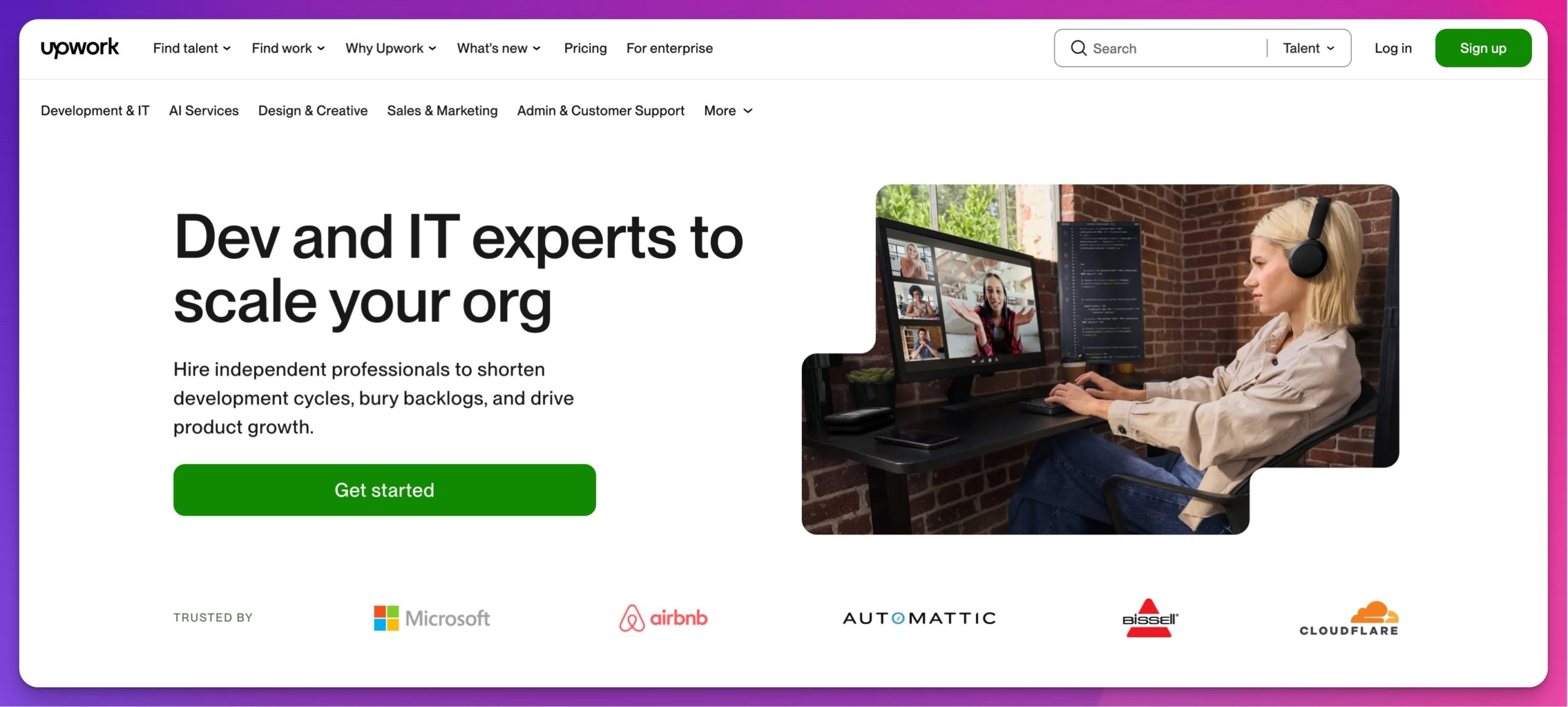

For businesses just starting to use freelance IT talent, Upwork's escrow system and milestone payments significantly reduce risk. You're not paying thousands upfront, hoping the work gets done—you release payment as deliverables are completed. Upwork freelancers pay a variable service fee ranging from 0-15% on new contracts (changed May 2025). Previously, the platform charged a flat 10% fee, which still applies to older contracts. The cost varies based on skill demand and market conditions, and helps fund the platform's dispute resolution and payment protection systems.
Toptal serves a different niche. Their screening process is notably rigorous—they claim to accept only 3% of applicants. Rates are higher ($100-200+/hour is common), but so is the average quality. We use Toptal when we need senior-level expertise, and the project budget supports premium rates. For straightforward work, it's overkill.
Fiverr works for specific, well-defined tasks. Need someone to configure a specific integration? Create a monitoring dashboard? Write documentation? Fiverr's gig-based model handles these efficiently. It's less suited to complex projects that require ongoing collaboration, but for discrete deliverables, it's fast and cost-effective.
Our recommendation for most small and mid-sized businesses: start with Upwork for general IT freelancing. The combination of talent availability, platform protections, and pricing flexibility covers most use cases. Graduate to Toptal for premium engagements where budget isn't the primary constraint.
Managing Remote IT Talent Effectively
Having good freelancers isn't enough. You need systems to work with them productively.
Clear scope documents prevent most problems. Before any project starts, we create a brief document covering: what exactly needs to be accomplished, what systems/access will be provided, what the timeline looks like, how we'll communicate, and what “done” looks like. This takes maybe 30 minutes and eliminates hours of misunderstanding later.
Security requires deliberate attention. We create temporary credentials for freelancer access rather than sharing existing accounts. Access is limited to what the project needs. When the project ends, access gets revoked promptly. For more sensitive work, we'll have freelancers use a secure remote access tool so we can monitor activity. This aligns with zero-trust security principles—verify explicitly, use least privilege access, and assume breach. None of this is complicated, but it does require being intentional.
Communication rhythm matters. We establish check-in frequency at the project start—daily updates for intensive work, weekly for longer engagements. The platform messaging systems work fine for most communication. For complex technical discussions, we'll jump on a quick call rather than trying to explain everything in writing.
Build relationships with good freelancers. When we find someone who does excellent work, we maintain that relationship. We have freelancers we've worked with for years—they know our standards, our clients' environments, and our communication style. That continuity is valuable. Treat good freelancers well, pay promptly, and they'll prioritize your work.
Getting Started: A Practical Path
If you're considering freelance IT talent for the first time, here's a sensible approach.
Identify a good first project. Pick something with clear deliverables, moderate complexity, and limited access requirements. A documentation project, a specific automation task, or a defined configuration change works well. Don't start with your most critical system or your most complex challenge.
Write a clear job posting. Describe what you need accomplished, what skills are required, and what your timeline looks like. Include enough technical detail that qualified candidates can assess whether they're a good fit. Vague postings attract vague candidates.
Interview at least three candidates. Even if the first person looks perfect, talking to multiple candidates gives you points of comparison. You'll develop better instincts for evaluating freelancers over time.
Use platform payment systems. Resist any requests to pay outside the platform, at least until you've built substantial trust through multiple successful projects. The payment protections exist because problems do happen.
Evaluate honestly after the project. Did the work meet expectations? Was communication good? Would you hire this person again? Leave honest feedback—it helps other buyers and encourages the freelancer to maintain quality.
Equipping Your Freelancers for Success
One factor that's easy to overlook: freelancers can only work as effectively as your infrastructure allows. If you're bringing in someone for a complex project, they'll need reliable hardware, secure remote access, and precise documentation of your existing systems.
Before engaging a freelancer for a significant project, consider whether your business's hardware and network infrastructure can support remote collaboration. We've seen projects delayed because a company couldn't provide adequate remote access or because critical systems weren't documented well enough for an outside expert to work with them efficiently.
Similarly, if your freelancer will be working with cloud platforms like Google Workspace or Microsoft 365, having a solid backup strategy in place before they start protects both parties. Accidents happen, and having reliable recovery options means a mistake doesn't become a disaster.
When VPN Access Makes Sense
For projects that require access to internal systems, you'll need to decide how freelancers will connect to your network. The choice between business-grade and consumer VPN solutions matters here—consumer VPNs aren't designed for the granular access control and logging you need when external contractors connect to business systems.
At minimum, freelancers should connect via a VPN with logging enabled, use dedicated credentials (not shared accounts), and limit access to only the systems necessary for their project. When the engagement ends, their access should be revoked immediately.
Frequently Asked Questions
How do I handle sensitive data with freelancers?
Use NDAs for projects involving confidential information. Create temporary credentials with limited permissions. Consider having freelancers work through monitored remote access tools for sensitive environments. For highly regulated data (e.g., healthcare, financial), ensure freelancers understand and agree to the relevant compliance requirements in writing.
What if a freelancer doesn't deliver quality work?
Platform dispute resolution systems handle most issues. Using milestone-based payments limits your exposure—you're never paying for a large amount of work that hasn't been delivered. If work is substandard, document specifically what's wrong and allow the freelancer to correct it before escalating.
How do I know if freelance rates are fair?
Research market rates for the specific skill you need. Upwork shows average rates for different skill categories. Qualified IT freelancers in the US typically charge $50-$100+ per hour, depending on specialization. Dramatically below-market rates usually indicate inexperience. Dramatically above-market rates may be justified for highly specialized expertise or proven track records.
Can freelancers work with my existing IT provider?
Yes, and this is often the best approach. Freelancers can augment your existing IT support for specialized projects. Establish clear communication channels and access permissions so everyone understands their role.
What about time zone differences?
For asynchronous work (development, documentation, analysis), time zones matter less. For work requiring real-time collaboration, look for freelancers in compatible time zones or establish overlapping working hours upfront.
How much can I actually save using freelancers?
Studies suggest businesses can reduce IT project costs by 20-50% compared to hiring full-time staff for specialized work. The savings come not just from lower per-hour costs for specific projects, but from avoiding the ongoing overhead of benefits, training, and underutilization during slow periods.
Next Steps
The freelancer model isn't right for every situation, but for project-based IT work requiring specialized skills, it's often the most practical approach. You get access to expertise you couldn't otherwise afford, with costs that scale to actual needs.
If you're unsure whether freelance IT talent makes sense for your business, or you'd like help identifying which projects are good candidates, we're happy to discuss your situation. Our IT assessments often include recommendations for when to hire, when to outsource, and when freelancers make the most sense.
Disclosure: iFeelTech may earn a commission when you sign up through our links at no additional cost to you. Our recommendations are based on 12+ years of professional experience using these platforms.