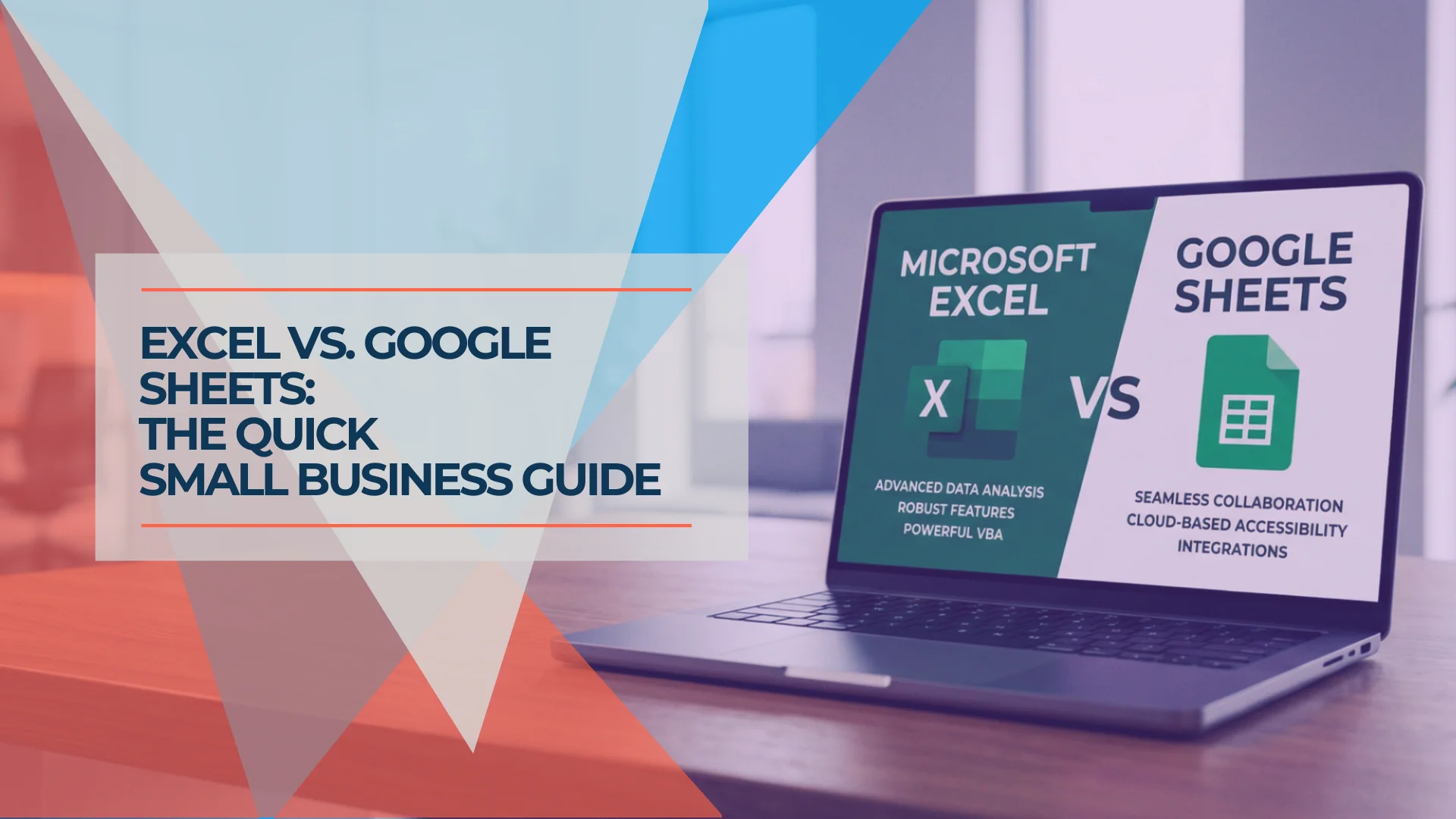

Google Workspace vs Microsoft 365: Complete Business Comparison
An honest, in-depth comparison of Google Workspace and Microsoft 365 pricing, features, and real-world performance to help you choose the right platform for your business.


The Bottom Line
Both Google Workspace and Microsoft 365 are excellent productivity platforms, but they serve different needs. Google Workspace excels with its clean, collaborative interface and straightforward pricing, making it ideal for teams prioritizing real-time collaboration. Microsoft 365 offers more powerful desktop applications and advanced enterprise features, but comes with significantly more licensing complexity and increasingly aggressive product integration.
Choosing between Google Workspace and Microsoft 365 is one of the most consequential decisions you'll make for your business technology stack. Both platforms continue to evolve rapidly, with recent pricing changes, expanded AI capabilities, and new features that blur the lines between them.
This comparison cuts through the marketing noise to give you an honest assessment based on real-world implementation experience. We'll cover current pricing (including recent and upcoming increases for both platforms), feature comparisons, AI integration, security considerations, and most importantly—which platform actually works better for different business scenarios.
Affiliate Disclosure: This article contains affiliate links. If you make a purchase through these links, we may earn a small commission at no extra cost to you.
Pricing Comparison: What You'll Actually Pay
Both Google and Microsoft have raised prices recently, citing increased AI capabilities and expanded features. Here's what each platform costs currently.
Google Workspace Pricing
Google increased prices in early 2025 when they bundled Gemini AI into all business plans. The price increase ranged from 17-22% depending on the plan, but you now get AI features that previously required an additional $20-30 per user per month.
| Plan | Annual | Flexible | Storage | Best For |
|---|---|---|---|---|
| Business Starter | $7/user/month | $8.40/user/month | 30 GB/user pooled | Small teams, basic needs |
| Business Standard | $14/user/month | $16.80/user/month | 2 TB/user pooled | Growing businesses |
| Business Plus | $22/user/month | $26.40/user/month | 5 TB/user pooled | Security-focused teams |
| Enterprise | Custom pricing | Custom pricing | Unlimited | Large organizations |
Key notes:
- Storage is "pooled" across your organization: each user contributes their allocation to a shared pool (e.g., 10 users on Business Standard = 2 TB × 10 = 20 TB total pooled storage)
- Business plans limited to 300 users maximum
- 14-day free trial available
- Annual billing saves approximately 20% vs flexible billing
- All plans now include Gemini AI features
Microsoft 365 Pricing
Microsoft announced price increases effective July 1, 2026 for most plans. Here are the current prices with upcoming pricing noted:
| Plan | Current | July 2026 | Storage | Desktop Apps |
|---|---|---|---|---|
| Business Basic | $6/user/month | $7/user/month | 1 TB per user | Web/mobile only |
| Business Standard | $12.50/user/month | $14/user/month | 1 TB per user | ✅ Included |
| Business Premium | $22/user/month | $22/user/month | 1 TB per user | ✅ Included |
| Office 365 E1 | $10/user/month | $10/user/month | 1 TB per user | Web/mobile only |
| Office 365 E3 | $23/user/month | $26/user/month | 1 TB per user | ✅ Included |
| Microsoft 365 E3 | $36/user/month | $39/user/month | 1 TB per user | ✅ Included |
| Microsoft 365 E5 | $57/user/month | $60/user/month | 1 TB per user | ✅ Included |
Key notes:
- Storage is per-user (not pooled)
- Business plans limited to 300 users
- 30-day free trial available (vs Google's 14 days)
- Plans without Teams available at slightly lower cost
- Copilot for Microsoft 365 costs extra: $30/user/month add-on
Price Comparison Reality Check
For a 10-person team with standard features:
- Google Workspace Business Standard: $140/month ($1,680/year)
- Microsoft 365 Business Standard: $125/month currently, $140/month after upcoming July increase
However, Microsoft's pricing complexity means your actual cost may differ significantly based on:
- Whether you need desktop apps (Basic vs Standard)
- Add-ons like advanced security, compliance tools, or Copilot
- Enterprise agreements and volume discounts
- Required ancillary services (Entra ID, Intune, etc.)
Calculate Your Actual Costs
Wondering what you'd actually pay? Use our interactive calculator to see real costs based on your specific requirements.
Cost Comparison
Based on your requirements
Free consultation • No commitment
Pricing accurate as of December 2025. Enterprise plans require custom quotes.
Core Applications: What's Included
Both platforms provide the essential productivity tools businesses need, but with different approaches and philosophies.
| Feature Category | Google Workspace | Microsoft 365 |
|---|---|---|
| Email & Communication | Gmail, Google Chat, Google Meet (500-1000 participants) | Outlook, Teams (300 participants), Yammer |
| Word Processing | Google Docs | Word (desktop + web) |
| Spreadsheets | Google Sheets | Excel (desktop + web) |
| Presentations | Google Slides | PowerPoint (desktop + web) |
| Note Taking | Google Keep | OneNote |
| Forms & Surveys | Google Forms | Microsoft Forms |
| Cloud Storage | Google Drive (pooled storage) | OneDrive + SharePoint (per-user) |
| Collaboration | Google Sites, shared docs | SharePoint, Microsoft Loop |
| AI Assistant | Gemini (included in all plans) | Copilot Chat (included), Copilot 365 (+$30/mo) |
| Additional Tools | Google Vids, Workspace Studio, NotebookLM | Power Platform, Lists |
| Enterprise Tools | Admin console, Vault (higher tiers) | Entra ID, Intune, Defender, Purview (varies by plan) |
The Real Difference: Philosophy and Approach
The fundamental difference between these platforms isn't just features—it's philosophy.
Google Workspace: Cloud-First DNA
Built for the cloud from day one—every app loads instantly in your browser, works on any device, and enables true real-time collaboration.
Key Advantages:
- Lightning-fast loading across any device or connection
- Automatic saving (literally impossible to lose work)
- Identical experience on Windows, Mac, Linux, ChromeOS
- Seamless real-time collaboration (see edits letter-by-letter)
- Works great even on Chromebooks or older hardware
Trade-offs:
Less feature-rich than Microsoft's desktop apps • Advanced Excel-like features are limited • Offline mode is available but secondary
Google Workspace: Designed for Cloud Collaboration
Microsoft 365: Desktop Power Meets Cloud
Decades of desktop software evolution with cloud features integrated—get the full power of professional applications that professionals have relied on for years.
Key Advantages:
- Industry-standard apps with deep, powerful feature sets
- Extremely sophisticated Excel, Word, and PowerPoint capabilities
- Excellent offline functionality with desktop apps
- Deep Windows OS integration and on-premises compatibility
- Extensive third-party add-ins and extensions ecosystem
Trade-offs:
Steeper learning curve • Desktop apps require installation and regular updates • Higher system requirements • Collaboration feels bolted-on rather than native
Microsoft 365: The Connected Cloud Experience
The bottom line: Google feels like working in the same room with your team. Microsoft feels like powerful desktop software that happens to have cloud features.
AI Integration: Gemini vs Copilot
Both platforms have made significant AI investments, but with very different approaches and pricing strategies.
| AI Feature | Google Gemini (Included) | Microsoft Copilot Chat (Included) | Copilot 365 (+$30/mo) |
|---|---|---|---|
| Email Assistance | Included | Basic assistance | Deep Outlook integration |
| Document Drafting | Full Docs integration | Basic help | Advanced Word generation |
| Spreadsheet Help | Formulas, analysis, charts | Limited | Advanced Excel reasoning |
| Presentations | Create slides from prompts | Not available | Full PowerPoint integration |
| Meeting Notes | Auto-summarization in Meet | Not included | Transcription + action items |
| Custom AI Agents | Workspace Studio (no-code) | Not available | Agent Mode |
| Document Analysis | NotebookLM (upload PDFs, videos) | File uploads | Microsoft Graph integration |
| Cost | Included in base price | Included in base price | +$30/user/month |
Google Workspace with Gemini
Gemini AI is now included in all Google Workspace business plans—no extra charge.
Real-world impact: Gemini's "Help me write" in Gmail saves time on routine email responses. Meeting summarization in Google Meet reliably captures action items. Workspace Studio lets you build custom AI agents without coding in minutes.
Important caveat: Business Starter has daily AI prompt limits (currently ~200 prompts/day per user). Heavy AI users may need to upgrade to Business Standard or Plus for higher limits. This narrows the gap with Microsoft's paid Copilot 365 for power users.
Microsoft 365 with Copilot
Microsoft's AI strategy is two-tiered: basic Copilot Chat is included, but the powerful Copilot 365 that integrates deeply with Office apps costs an additional $30 per user per month.
AI Pricing Reality Check
Google Workspace: AI included at no extra cost with Business plans
Microsoft 365: Basic Copilot Chat included, but full Copilot 365 features require:
- Business Premium ($22/mo) + Copilot 365 ($30/mo) = $52/user/month
- Microsoft 365 E3 ($36/mo) + Copilot 365 ($30/mo) = $66/user/month
For a 10-person team, that's an extra $3,600/year for advanced AI features. However, heavy AI users on Google's Business Starter plan may need to upgrade to Business Standard ($14/mo) for higher prompt limits, narrowing this gap.
Storage: Pooled vs Per-User
This seemingly minor difference has significant implications for how you'll actually use each platform.
| Aspect | Google Workspace (Pooled) | Microsoft 365 (Per-User) |
|---|---|---|
| Business Starter | 30 GB/user pooled | 1 TB per user |
| Business Standard | 2 TB/user pooled | 1 TB per user |
| Business Plus | 5 TB/user pooled | 1 TB per user |
| Allocation | Flexible across team | Fixed per person |
| Best For | Teams with varied needs | Predictable per-user boundaries |
| Example (10 users) | 20 TB total (2 TB × 10) shared flexibly | 10 TB (1 TB × 10) fixed allocation |
| Advantage | Flexible, no wasted capacity | Clear boundaries, no monopolization |
| Consideration | Requires monitoring | Some users may waste unused capacity |
Storage Consideration
For most small businesses (5-30 people): Google's pooled storage typically provides better value and flexibility. A graphic designer might need 800 GB while your accountant uses 50 GB—pooled storage accommodates this naturally.
For enterprises with strict compliance requirements: Per-user storage with clear boundaries can simplify audit and governance processes.
Collaboration: Real-Time vs Compatibility
This is where philosophy differences become most apparent in daily use.
| Collaboration Aspect | Google Workspace | Microsoft 365 |
|---|---|---|
| Real-Time Editing | True simultaneous editing | Co-authoring available but less natural |
| Edit Visibility | See cursors moving, edits letter-by-letter | Updates appear periodically |
| Version History | Automatic and granular | Through SharePoint, requires setup |
| Sharing Model | Simple link sharing | Complex (OneDrive vs SharePoint) |
| Cross-Device | Identical on any platform | Desktop vs web feature differences |
| Comments/Suggestions | Instant sync | Good, but not instant |
| File Compatibility | Fewer third-party integrations | Better legacy Office compatibility |
| Templates | Fewer available | Extensive library |
| Setup Complexity | Minimal | Requires configuration for optimal use |
The Practical Difference
Real-world experience: When collaborating on a proposal, Google Docs feels like three people in the same room working on a whiteboard. Microsoft Word co-authoring feels like three people emailing versions back and forth—better than it used to be, but still fundamentally rooted in the desktop file paradigm.
Security and Compliance: Both Are Solid
Both platforms meet rigorous security standards. The choice won't be determined by which is "more secure" for most businesses.
Both platforms hold equivalent certifications: SOC 1/2/3, ISO 27001/27017/27018, HIPAA (with BAAs), GDPR, and regional data center options.
Both platforms also integrate seamlessly with business password managers, which are essential for securing employee access across all applications.
| Security Feature | Google Workspace | Microsoft 365 |
|---|---|---|
| Base Security | 2-FA, encryption, phishing protection, MDM (varies by plan) | Multi-factor auth, encryption, basic threat protection, MDM |
| Advanced Security (higher tiers) | Google Vault, DLP, Security Center, Advanced endpoint management | Defender for Office 365, Advanced threat protection, DLP, Conditional Access |
| Enterprise Security | Context-aware access controls (Business Plus+) | Defender for Endpoint, Advanced eDiscovery, Insider Risk (E5) |
| Compliance Tools | Google Vault (eDiscovery, retention) | Information Rights Management, Communication Compliance |
Security Reality Check
For most SMBs (5-100 employees): Both platforms provide more than adequate security out of the box. Your biggest security risk isn't which platform you choose—it's user training, password policies, and proper configuration.
For regulated industries or enterprises: Microsoft 365 E5 offers more granular security controls and compliance tools, but Google Workspace Enterprise Plus is catching up rapidly.
Licensing Complexity: The Microsoft Challenge
Here's where I need to be candid based on our real-world implementation experience: Microsoft 365 licensing has become significantly more complex and, frankly, frustrating to navigate.
The Microsoft Licensing Maze
Microsoft's platform isn't just Microsoft 365. To fully utilize the platform's capabilities, you often need to understand:
Identity and Access Management:
- Microsoft Entra ID (formerly Azure AD)
- Basic vs Premium P1 vs Premium P2 tiers
- Different features at each tier
Device Management:
- Intune (included in some plans, add-on for others)
- Intune Plan 1 vs Plan 2
- Endpoint Privilege Management
- Enterprise Application Management
Security and Compliance:
- Microsoft Defender for Endpoint
- Microsoft Defender for Office 365 (Plan 1 vs Plan 2)
- Microsoft Purview (data governance)
- Information Protection
- Each with different SKUs and capabilities
Add-ons and Bundling:
- Copilot costs extra ($30/month per user)
- Advanced security features often require E3 or E5
- Some features are included in Business Premium but not in Standard
- Enterprise plans have different features than Business plans with similar names
The honest truth: We regularly encounter scenarios where we need to spend 30-45 minutes researching which Microsoft SKU or add-on provides a specific feature a client needs. The documentation is comprehensive but overwhelming. Product names change frequently (Azure AD became Entra ID, for example).
The Aggressive Integration Push
Microsoft has also become increasingly aggressive about pushing users into their ecosystem:
- Microsoft Account integration: Even if you're using Google Workspace, Windows 10/11 constantly prompts you to use a Microsoft account
- Edge browser promotion: Persistent notifications to switch from Chrome or Firefox
- OneDrive backup prompts: Regular pop-ups to enable OneDrive backup, even if users have chosen another backup solution
- Copilot promotion: Constant visibility of AI features that require additional payment
This isn't necessarily wrong from Microsoft's perspective—they want users engaged with their full ecosystem. But it creates friction for businesses that have made different technology choices or want flexibility.
Google Workspace: Simpler, But Less Granular
Google's licensing is more straightforward:
- Choose a plan tier (Starter, Standard, Plus, Enterprise)
- All features at that tier are included
- Pay one price per user
The trade-off: You can't pick and choose specific features. If you need advanced security, you upgrade the entire subscription to Business Plus, even if you only need one specific security feature.
For most businesses under 100 users, Google's approach is actually preferable—it's predictable, easy to budget, and you don't need to become a licensing expert.
Real-World Performance and User Experience
Beyond features and pricing, here's what actually using these platforms feels like day-to-day.
| Aspect | Google Workspace | Microsoft 365 |
|---|---|---|
| Load Speed | Instant (browser-based) | Fast (desktop), slower (web apps) |
| Learning Curve | Hours to learn basics | Days to weeks (feature-dense) |
| System Requirements | Works on older hardware | Requires powerful hardware |
| Offline Mode | Available but secondary | Excellent with desktop apps |
| Mobile Experience | Lightweight, fast, responsive | Feature-rich but larger apps |
| Cross-Platform | Identical on all OS | Best on Windows |
| User Familiarity | Familiar from personal Gmail | Many users know Office already |
| Power Features | Limited advanced capabilities | Extremely powerful (Excel, Word) |
Integration and Ecosystem
Both platforms integrate with thousands of third-party applications, but with different strengths.
Google Workspace Ecosystem
Strengths:
- Seamless integration with other Google services (Maps, Calendar, etc.)
- Strong connections to marketing tools (Google Ads, Analytics)
- Growing AppSheet for no-code application development
- Excellent integration with web-based SaaS tools
- Developer-friendly APIs
Common integrations:
- Slack (communication)
- Salesforce (CRM)
- Asana/Monday.com (project management)
- QuickBooks Online (accounting)
- Zoom (video conferencing alternative)
Microsoft 365 Ecosystem
Strengths:
- Deep Windows operating system integration
- Strong enterprise app compatibility
- Extensive Power Platform (Power Apps, Power Automate, Power BI)
- Better integration with on-premises systems
- More established enterprise integrations
Common integrations:
- Dynamics 365 (CRM/ERP)
- SAP (enterprise resource planning)
- Azure services (cloud infrastructure)
- ServiceNow (IT service management)
- Adobe Creative Cloud
Integration Consideration
If your business depends on Google's advertising, analytics, or cloud platform: Google Workspace provides tighter integration.
If you're heavily invested in Microsoft infrastructure or enterprise applications: Microsoft 365 makes more sense for ecosystem continuity.
Decision Framework: Which Platform for Your Business?
Let's cut to practical recommendations based on different business scenarios.
| Decision Factor | Choose Google Workspace | Choose Microsoft 365 |
|---|---|---|
| Team Size | Startups, SMBs (5-100 employees) | Enterprises (100+ employees) |
| Work Style | Remote/hybrid, collaborative | Office-based, desktop-focused |
| Priority | Simplicity, ease of use | Power features, depth |
| Budget Approach | Predictable, all-inclusive pricing | Flexible pricing with add-ons |
| Existing Ecosystem | Google Ads, Analytics, Cloud Platform | SharePoint, Dynamics, Azure |
| AI Strategy | Included AI is sufficient | Need advanced AI (willing to pay +$30/mo) |
| Device Mix | Windows, Mac, Linux, ChromeOS | Primarily Windows environment |
| App Complexity | Standard docs, sheets, slides | Advanced Excel, complex Word documents |
| Licensing Tolerance | Prefer simple, predictable | Can manage complex SKUs |
Industry Fit
Google Workspace thrives in: Marketing agencies • Tech startups • Creative studios • Remote-first teams • SaaS companies • Education technology
Microsoft 365 thrives in: Financial services • Legal firms • Healthcare organizations • Manufacturing • Traditional enterprises • On-premises infrastructure environments
Consider Hybrid Approaches
Some businesses successfully run both platforms:
- Microsoft 365 for desktop productivity (Word, Excel, PowerPoint)
- Google Workspace for collaboration and communication (Gmail, Drive, Meet)
This adds complexity and cost, but can work for organizations with specific needs that neither platform fully addresses alone.
Migration Considerations
Switching platforms isn't trivial. Here's what to consider.
| Migration Aspect | Google → Microsoft 365 | Microsoft 365 → Google |
|---|---|---|
| Email/Calendar/Contacts | Straightforward | Straightforward |
| Documents | Google Docs → Word (formatting may change) | Advanced Excel features may break |
| Collaboration Tools | SharePoint vs Drive learning curve | Simpler interface, quick adoption |
| User Retraining | Moderate (new UI and workflows) | Minimal (cleaner, intuitive) |
| Automated Workflows | Need rebuilding | Need reconfiguration |
| Timeline (50 users) | 2-4 weeks | 2-6 weeks (SharePoint complexity) |
| Biggest Challenge | Understanding SharePoint structure | Complex Excel workbooks |
| Migration Tools | Microsoft provides tools | Google provides enterprise tools |
The Verdict: Our Honest Take
After implementing and supporting both platforms for dozens of South Florida businesses, here's our straightforward assessment:
Google Workspace is the better choice for most small to mid-sized businesses. The simpler licensing, predictable pricing, superior collaboration, and included AI features make it easier to implement, manage, and use. The learning curve is gentler, the administrative burden is lighter, and the total cost of ownership is typically lower.
Microsoft 365 makes sense for specific scenarios: enterprises with complex compliance needs, businesses requiring powerful desktop applications, organizations deeply invested in Microsoft infrastructure, or industries where Office file format compatibility is non-negotiable.
The Microsoft complexity problem is real. We genuinely struggle navigating Microsoft's licensing maze, understanding which SKU provides which feature, and explaining to clients why they need five different products (Microsoft 365, Entra ID, Intune, Defender, Purview) to accomplish what they thought was included in "Microsoft 365." The aggressive product integration—pushing Edge, OneDrive, Microsoft accounts, and Copilot upgrades—creates user frustration even for teams using Microsoft 365.
This doesn't mean Microsoft 365 is bad. It's an incredibly powerful platform with sophisticated capabilities. But that power comes with complexity that many businesses don't need and frankly don't want to manage.
Google's limitation is features, not complexity. Google Sheets will never match Excel's sophistication. Google Docs doesn't have all of Word's advanced publishing features. But for 80% of business users doing 80% of common tasks, Google Workspace's straightforward approach wins on usability.
Recent and Upcoming Pricing Changes
Both platforms have implemented or announced recent price increases:
Google Workspace:
- Early 2025: 17-22% increase when Gemini was bundled
- Existing customers: Changes fully rolled out by mid-2025
- Future increases: Not currently announced
Microsoft 365:
- July 2026: $1-3/month increases across most plans
- Business Premium and Office 365 E1: No change
- Justification: Bundling enhanced security and AI features
- Pattern: Second major increase since 2022
Budget planning: Expect both platforms to continue periodic price increases as AI capabilities expand. Factor in 5-10% annual increases when budgeting for multi-year technology commitments.
Frequently Asked Questions
Can I use Google Workspace and Microsoft 365 together?
Yes, and some businesses do this successfully. You might use Microsoft 365 for desktop productivity (Excel, Word) while using Google Workspace for collaboration and communication (Gmail, Drive, Meet). However, this adds complexity, increases costs, and requires users to navigate two different platforms.
Is Microsoft 365 more secure than Google Workspace?
No. Both platforms hold equivalent security certifications (SOC, ISO, HIPAA, GDPR) and provide enterprise-grade security. The differences lie in specific features at different price tiers, not fundamental security capabilities. Your security posture depends more on proper configuration and user training than which platform you choose.
Can I migrate from one platform to the other without losing data?
Yes. Both Google and Microsoft provide migration tools for email, calendars, contacts, and files. Email migration is straightforward. Document migration (Google Docs to Word or vice versa) may result in some formatting changes. Complex spreadsheets and custom applications require the most careful migration planning.
Why does Microsoft Copilot cost extra but Google's Gemini is included?
Different business strategies. Google chose to bundle AI features into higher base prices (a $7-22/month increase in early 2025). Microsoft offers free Copilot Chat but charges $30/month for full Copilot integration with Office apps. Google's approach is simpler; Microsoft's allows businesses to choose whether to pay for advanced AI features.
Which platform has better mobile apps?
Both have strong mobile apps. Google Workspace apps tend to be lighter, faster, and more consistent with the web experience. Microsoft 365 mobile apps are more feature-rich, especially for Office applications, but can feel like scaled-down desktop versions. For basic mobile productivity, both work well; neither has a decisive advantage.
Does Google Workspace work well with Windows?
Yes. Google Workspace is entirely web-based, so it works identically on Windows, Mac, Linux, and ChromeOS. You'll use Chrome or another web browser to access Google applications. The experience is the same regardless of your operating system. However, Windows will frequently prompt you to sign in with a Microsoft account—this is a Windows behavior, not a Google limitation.
Can I switch between Business and Enterprise plans easily?
Google Workspace: Moving between Business and Enterprise plans is straightforward—usually processed within minutes through your admin console or reseller. Features activate immediately after plan changes.
Microsoft 365: Switching between Business and Enterprise (E-series) plans can be complex. Business and Enterprise licenses are separate families with different management portals in some configurations. Migrating may require Microsoft support or reseller assistance. Plan migrations carefully and allow time for testing.
What happens to my data if I stop paying?
Both platforms: You typically have 30-90 days (depending on your agreement) to export data after subscription ends. After that grace period, your data is deleted permanently. Both platforms provide data export tools. Always maintain local or alternative backups of critical business data regardless of which platform you use.
For comprehensive data protection while actively using Google Workspace, see our Google Workspace Backup Guide for backup best practices and third-party backup solutions.
How does storage work for shared files?
Google Workspace: Shared files count toward the storage quota of the file owner. If you create a file and share it with 10 people, only your storage quota is affected. With pooled storage (Business plans), this comes from your organization's total pool.
Microsoft 365: Files saved to OneDrive count toward the owner's 1 TB quota. Files saved to SharePoint team sites count toward the SharePoint site quota (separate from individual OneDrive quotas). This can be confusing but provides separation between personal and team files.
Which platform is better for email?
For basic email: Both Gmail and Outlook are excellent, reliable email platforms. Gmail's interface is cleaner and simpler. Outlook offers more sophisticated rules, automation, and integration with the broader Microsoft ecosystem.
For advanced email management: Outlook has more powerful filtering and organization tools. Gmail's search is superior (built by Google, after all). For most users, this comes down to personal preference rather than a functional advantage either way.
Can I use my own domain with either platform?
Yes, both platforms require you to use a custom domain (like yourcompany.com) rather than gmail.com or outlook.com addresses. You'll prove domain ownership during setup, configure DNS records, and then create professional email addresses for your team. Both platforms include domain registration services if you need to purchase a domain, or you can use an existing domain from any registrar.
How do video conferencing limits compare?
Google Meet:
- Business Starter: 100 participants
- Business Standard: 150 participants (with recording)
- Business Plus: 500 participants (with recording and attendance tracking)
- Enterprise: Up to 1,000 participants (with advanced features)
- Meetings can last up to 24 hours (1 hour for Starter after free trial ends)
Microsoft Teams:
- All Business plans: 300 participants
- Enterprise plans: 1,000 participants (10,000 with live events/webinars)
- Meeting length: 30 hours maximum
Both platforms provide adequate video conferencing for most businesses. Google's approach scales participant counts with price tiers; Microsoft provides consistent limits across Business plans.
What about specialized industries with compliance requirements?
Healthcare (HIPAA): Both platforms support HIPAA compliance with appropriate Business Associate Agreements (BAAs). Configuration is simpler with Google Workspace; Microsoft requires careful setup across multiple services.
Financial Services: Microsoft 365 E5 provides more granular compliance controls (SEC, FINRA) out of the box. Google Workspace Enterprise Plus is gaining ground but Microsoft currently has more established financial services compliance tooling.
Legal: Microsoft 365 has historically been stronger for legal holds, eDiscovery, and compliance archiving. Google Workspace Vault (Business Plus and above) is catching up. Many law firms remain on Microsoft 365 due to established workflows and client compatibility requirements.
How does the AI implementation compare in real-world use?
Google's Gemini (included in all plans) provides solid assistance for common tasks: email drafting, meeting notes, document summarization. It works well for 80% of use cases. Workspace Studio for building AI agents is impressive—we created workflow automation without any coding in under 15 minutes.
Microsoft's Copilot Chat (included) handles basic queries and file uploads. Copilot for Microsoft 365 ($30/month add-on) provides significantly more sophisticated capabilities in Word, Excel, and PowerPoint. If you're a heavy Excel user doing complex financial modeling, the extra $30/month for Copilot may genuinely pay for itself.
Getting Started: Next Steps
Ready to make a decision? Here's how to proceed:
Try Before You Buy
Google Workspace:
- 14-day free trial available
- No credit card required
- Full access to all Business tier features
- Start Google Workspace trial →
Microsoft 365:
- 30-day free trial available
- No credit card required for most plans
- Full access to selected plan features
- Start Microsoft 365 trial →
Calculate Your Total Cost
Use this framework to estimate your actual costs:
Google Workspace:
- Number of users × $7-22/month (depending on plan)
- Add 20% if using flexible (monthly) billing instead of annual
- No significant add-ons required for most businesses
- Total = User count × plan cost × 1.2 (if monthly billing)
Microsoft 365:
- Number of users × $6-22/month base plan
- Add 20% if using monthly instead of annual billing
- Add $30/user if you want full Copilot integration
- Add costs for any required security/compliance add-ons
- Total = (User count × plan cost) + (Copilot users × $30) × 1.2 (if monthly)
Migration Support
Switching platforms or implementing for the first time? Both platforms provide migration tools, but the process goes more smoothly with expert guidance—especially for teams over 10 users or with complex workflows.
Need help evaluating which platform fits your business, or support implementing and migrating? We provide Google Workspace and Microsoft 365 consulting for businesses throughout South Florida. Contact us for a personalized assessment.
Related Resources
- Small Business Network Setup Guide - Infrastructure considerations for your productivity platform
- Best Cybersecurity Software for Small Business - Security tools that integrate with both platforms
- Business Hardware Refresh Planning Guide - Choosing computers that work well with cloud productivity suites
- Best IT Companies Miami - Local support for Google Workspace and Microsoft 365 implementation
Service Pages
- IT Consulting Services - Technology planning and implementation support
- Cybersecurity Services - Security configuration for productivity platforms
- Cloud Services - Google Workspace and Microsoft 365 management
Related Articles
More from Business Software
Tresorit vs Proton Drive: Which Encrypted Cloud Storage is Right for Your Business?
Detailed comparison of Tresorit and Proton Drive for business use. Pricing, features, compliance capabilities, and real-world scenarios to help you choose the right encrypted cloud storage.
14 min read

QuickBooks Desktop Alternatives for Small Business: Complete 2025 Guide
Complete guide to QuickBooks Desktop alternatives as Intuit phases out Pro, Premier, and Mac Plus. Compare QuickBooks Online, Xero, and Wave with pricing, features, and migration strategies.
15 min read

Proton Pass Business Review 2025: Password Management & Secure Documentation for Small Business
Comprehensive Proton Pass Business review after 2 years of implementation. Password management, encrypted notes for project documentation, pricing analysis, and implementation guide for small businesses.
22 min read