

Best UPS for UniFi Rack (2026): Protecting UDM Pro & Active PFC Gear
Compare UPS options for UniFi using verified battery capacity, manufacturer runtime figures, form factor, and shutdown support. Size protection to your measured load.

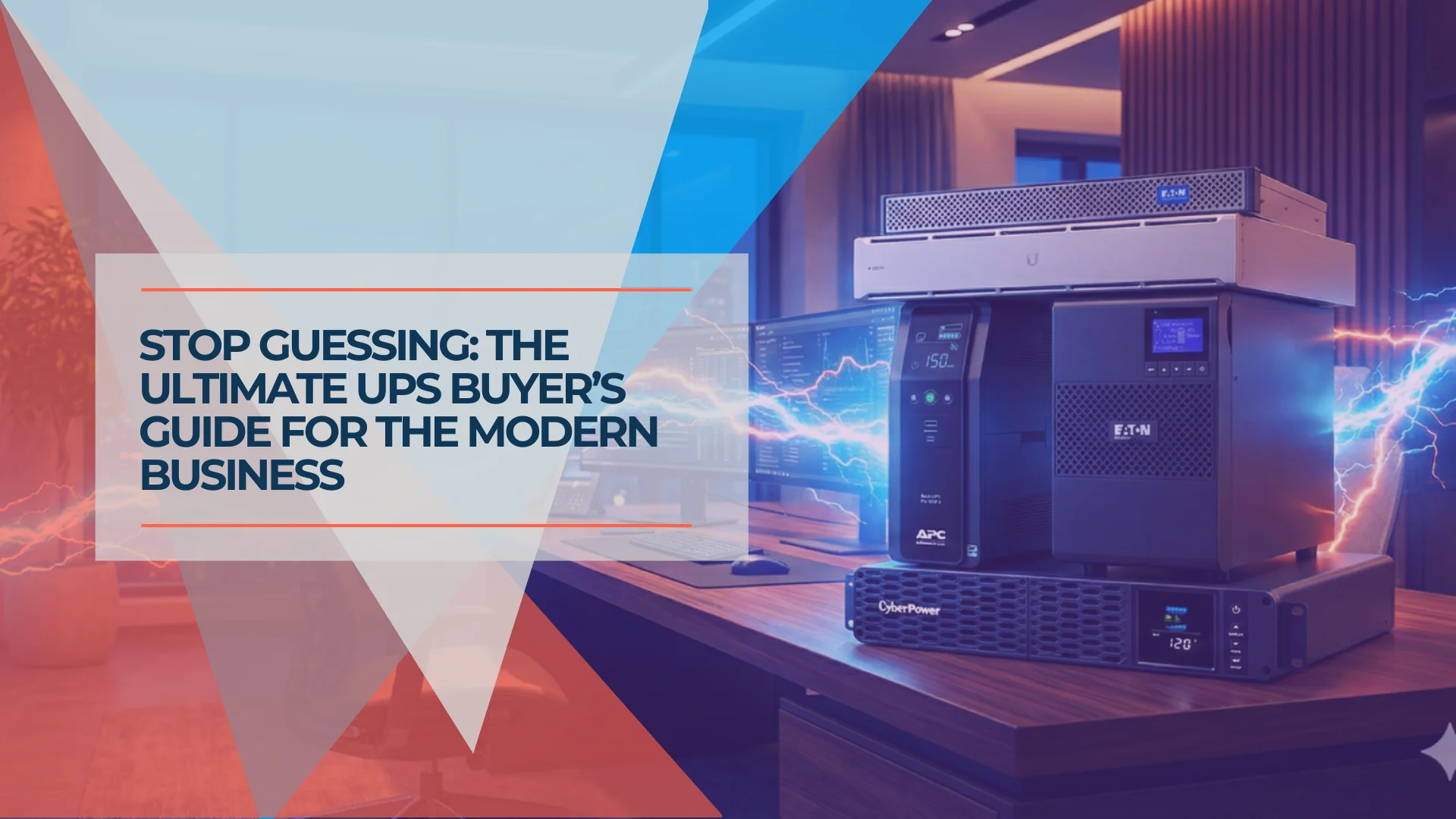
A UPS needs to keep the required equipment running long enough for your outage plan. Select it using measured load, runtime, physical fit, and supported shutdown behavior, rather than the VA number alone. If you only need to protect a modem, router and small switch, see our battery backup guide for a modem and router.
This guide was corrected against manufacturer documentation on October 3, 2026. Prices and availability can change; compare the exact SKU and current checkout price.
Quick Verdict
Tower option: CyberPower CP1500PFCLCD provides pure sine wave output and a manufacturer-listed 10 minutes at 500 W. It is not a rackmount unit.
Rackmount UniFi option: UniFi UPS 2U has native monitoring and supported UNVR/UNAS shutdown integration. Its 216 Wh nominal battery capacity is the same calculated nominal capacity as the CP1500PFCLCD, not half as much.
APC or Eaton: Choose the exact model for your mounting, monitoring, and runtime needs. APC SMT1500C and the US Eaton 5SC1500 are tower models; a similarly named rack version can have different specifications.
Why Waveform Matters for Active PFC Gear
Pure sine wave and simulated sine wave describe the AC output produced while a UPS runs on battery. Compatibility also depends on transfer time, load, and the connected power supplies. Do not assume that every UniFi model has the same power-supply design or that pure sine wave eliminates every compatibility concern.
The CP1500PFCLCD specification lists pure sine wave output. The UniFi UPS 2U specification lists simulated sine wave output. Follow each manufacturer's requirements and test the selected combination during a planned maintenance window with recovery access available.
Simulated vs. Pure Sine Wave
A pure sine wave UPS generates a smooth sinusoidal output. A simulated sine wave UPS approximates that shape in steps. Waveform alone does not establish how long the UPS can run or whether a particular workload will survive transfer to battery.
The Active PFC Consideration
For equipment using active power factor correction, check the power-supply and UPS compatibility guidance. Avoid relying on an anecdote from a different model. A controlled transfer test should confirm that the gateway, switches, storage, and attached PoE devices remain operational at the intended load.
The Cost Reality
Compare current quotes for the exact voltage, form factor, watt rating, battery configuration, and management options. A tower and rackmount model in the same product family are not interchangeable comparisons.
Lead-Acid vs. Lithium-Ion: The 2026 Reality
Lead-acid batteries require periodic maintenance and replacement. Lithium-based UPS models can offer different service-life and maintenance characteristics, but there is no universal replacement-free lifespan or weight advantage that applies to every SKU.
The Lead-Acid Reality
Heat and repeated discharges affect battery condition. Use the manufacturer's replacement schedule as a starting point and inspect the battery and runtime test results. A successful brief self-test does not establish hours of remaining runtime. To check the age and condition of a battery you already own, see stop 3 of our small office IT checklist.
The Lithium-Ion (LiFePO4) Advantage
Eaton's 9PX lithium-ion technical specifications identify LiFePO4 chemistry for that family. Verify the specific capacity, warranty, battery service guidance, and current purchase price before comparing it with a lead-acid model.
Total Cost of Ownership
Include the UPS, mounting hardware, management options, batteries, energy, installation, and maintenance. Treat a ten-year cost calculation as a scenario with explicit assumptions, not a prediction that one model will never need a battery replacement.
The Contenders: 2026 Standings
CyberPower: The Budget Option
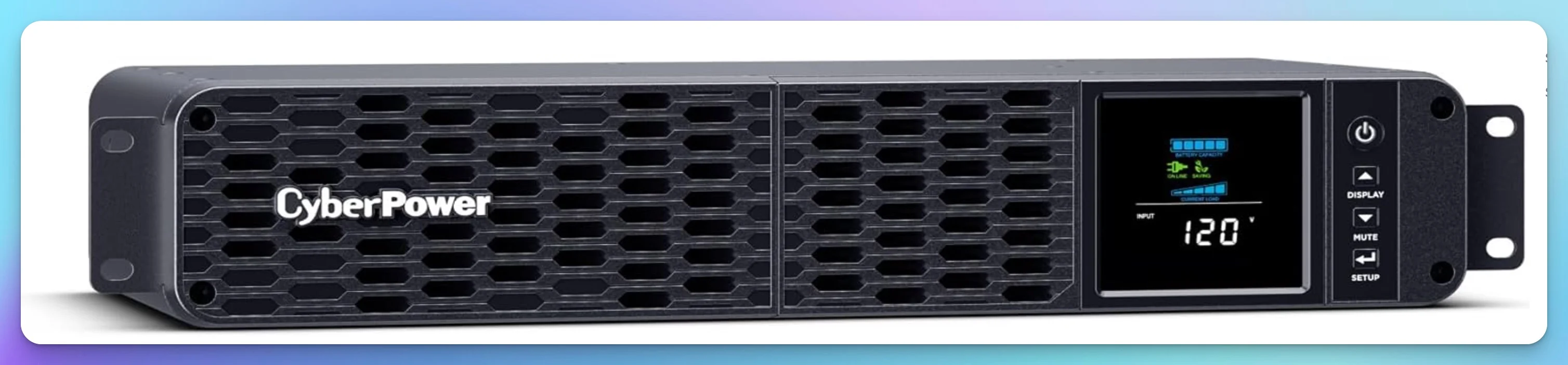
The CP1500PFCLCD is a 1500 VA / 1000 W tower UPS with pure sine wave output. Its two 12 V, 9 Ah batteries give 216 Wh nominal capacity: 2 × 12 V × 9 Ah. That is a battery nameplate calculation, not usable AC energy at the outlets.
CyberPower lists 10 minutes at 500 W and 2.5 minutes at 1000 W. It has 12 NEMA 5-15R outlets: six battery-backed and six surge-only. The manufacturer page displayed a $274.95 MSRP when checked; a retailer's price can differ. Manufacturer specifications and runtime.
A rackmount CyberPower model has its own specifications. Do not transfer the CP1500PFCLCD's battery, depth, or runtime figures to it. If you are choosing a tower for a desk rather than a rack, our APC vs CyberPower comparison for a small office sets this model beside the APC BR1500MS2.
APC: The Enterprise Standard
The APC SMT1500C is a tower model. Select an explicitly rackmount SKU if you need rail mounting, and verify the runtime curve and management options for that SKU.
SmartConnect cloud monitoring, local USB management, and optional network management hardware are different options. Cloud entitlements and renewal prices can change; verify the current plan and device eligibility with Schneider Electric rather than budgeting from an old subscription table. Do not assume every Smart-UPS accepts every management card or external battery pack.
Eaton: The Prosumer Sweet Spot
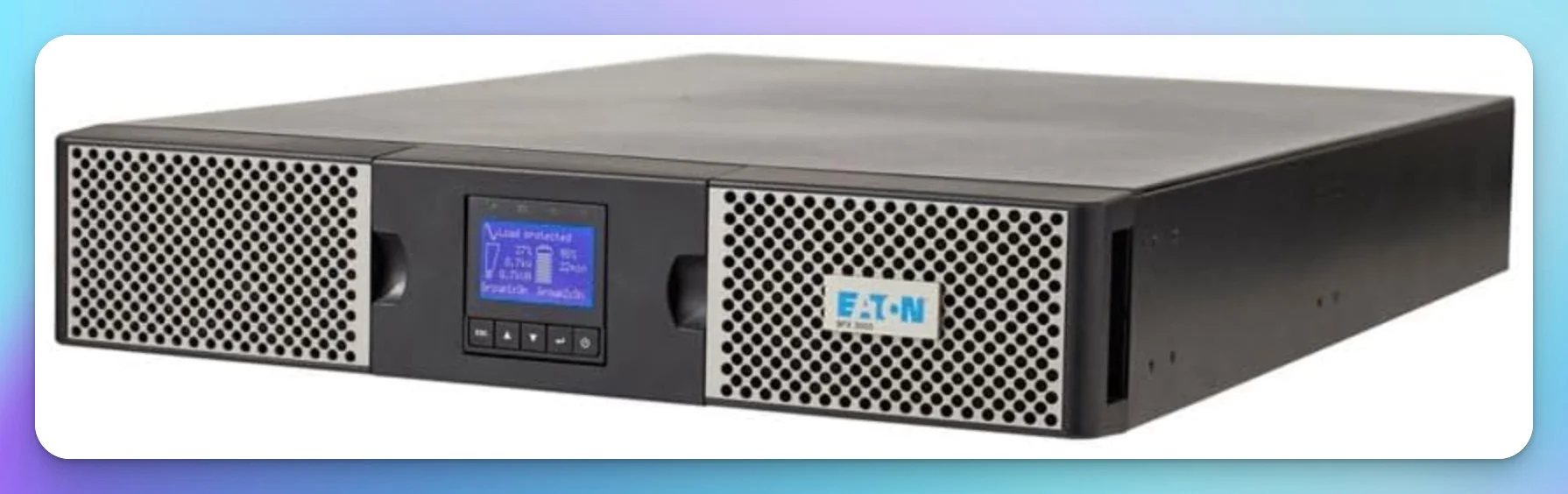
The US 120 V Eaton 5SC1500 is a tower, rated at 1440 VA / 1080 W, with eight NEMA 5-15R outlets and a depth of 16.1 inches. It is not a short rackmount UPS. See Eaton's US 5SC technical specifications.
For a rack, consider an explicitly rackmount Eaton SKU and verify depth including connectors, rails, supported management interfaces, and any external battery options. The pictured 9PX is not the 5SC1500. Model-specific fan behavior should also be checked before installing beside occupied desks.
The UniFi Native Option
UniFi UPS 2U
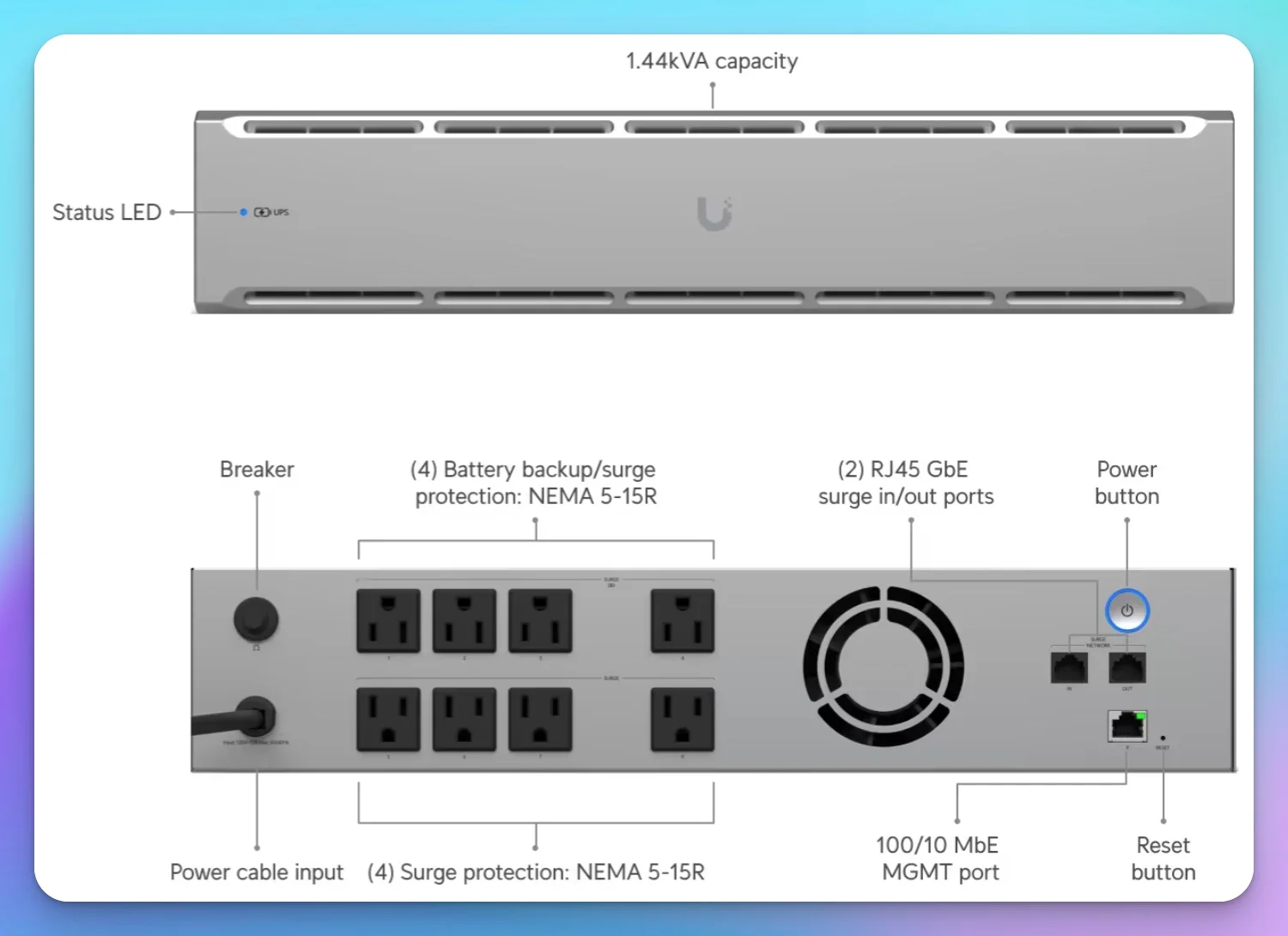
The US model provides:
- 1440 VA / 1000 W output rating.
- 216 Wh nominal battery capacity, using two 12 V, 9 Ah batteries.
- 8 minutes at 500 W and 2.3 minutes at 1000 W, according to Ubiquiti.
- Four battery-backed and four surge-only NEMA 5-15R outlets.
- Simulated sine wave output and a 300 mm (about 11.8-inch) chassis depth.
- UniFi monitoring, graceful shutdown support for UNVR/UNAS with UniFi OS 4.4.3 or later, and NUT compatibility for third-party devices.
These are manufacturer specifications, not our own runtime measurements. Check the current setup requirements for the storage devices you intend to shut down; do not assume that the gateway automatically has the same shutdown behavior.
On October 3, the US store displayed a $279 base price and $301 including its surcharge, before tax and shipping. Confirm current stock and checkout charges before ordering.
Capacity correction: The CyberPower CP1500PFCLCD also has 216 Wh of calculated nominal battery energy. The earlier claim that typical competing 1500 VA models provide 400–500 Wh was not supported. Equal nameplate energy does not produce identical runtime because discharge conditions, efficiency, and cutoff behavior differ.
Sizing the rest of the rack first? Our UniFi buyer's guide includes a build order and runtime checks for matching a UPS to the gateway, switch and recorder.
Comparison: At a Glance
| Feature | CyberPower CP1500PFCLCD | APC SMT1500C | Eaton 5SC1500 (US) | UniFi UPS 2U (US) |
|---|---|---|---|---|
| Form factor | Tower | Tower | Tower | 2U rackmount |
| Verified nominal battery energy | 216 Wh calculated | Check exact battery configuration | Check exact battery configuration | 216 Wh listed |
| Manufacturer runtime at 500 W | 10 minutes | Check SKU runtime curve | Check SKU runtime curve | 8 minutes |
| Watt rating verified in this correction | 1000 W | Check current SKU specification | 1080 W | 1000 W |
| Shutdown planning | Verify software, driver, and target support | Verify software, card, and target support | Verify software, driver, and target support | Supported UNVR/UNAS integration; verify versions |
Our Recommendations
The Budget-Conscious Choice
Consider the CP1500PFCLCD if a tower fits your installation. Confirm current pricing and test your load. Its pure sine wave output does not remove the need to check watt headroom and runtime.
The Best Value Choice
Choose the Eaton model that fits the installation rather than treating the 5SC1500 tower as a rack product. Price, mounting, management, and runtime should be compared using the same requirements.
The UniFi Ecosystem Choice
The UniFi UPS 2U is worth considering when native monitoring and supported UNVR/UNAS shutdown are priorities. See our UNAS comparison for the storage options. Verify that the protected load can complete its shutdown within the tested runtime.
The Long-Term Investment
For longer outages, compare UPS models with supported external batteries or a broader backup-power plan. Chemistry alone does not establish enough runtime or a lower total ownership cost.
Frequently Asked Questions
Does my UDM Pro really need a pure sine wave UPS?
Waveform is one compatibility factor, not a guarantee. Check the UPS and equipment requirements and test transfer to battery at your actual load. The UniFi UPS 2U uses simulated sine wave output; CyberPower CP1500PFCLCD uses pure sine wave output.
Can I manage an Eaton UPS through the UniFi dashboard?
Do not assume native UniFi management. Local monitoring and shutdown options depend on the exact Eaton model and its supported software or NUT driver. Monitoring a UPS does not automatically provide supported shutdown of a UniFi gateway.
Why does rack depth matter?
Check the exact SKU, mounting method, usable cabinet depth, and cable clearance. UniFi UPS 2U is 300 mm (about 11.8 inches) deep. The US Eaton 5SC1500 and APC SMT1500C discussed here are tower models, not rackmount units.
How long do UPS batteries last?
Battery service life depends on chemistry, temperature, discharge cycles, and maintenance. Follow the exact model’s replacement guidance and run scheduled capacity tests. A lithium battery does not guarantee ten years without replacement.
What size UPS do I need for a UniFi rack?
Measure the complete protected load, including PoE devices, then check both the UPS watt limit and its manufacturer runtime curve. At 500 W, CyberPower lists 10 minutes for CP1500PFCLCD and Ubiquiti lists 8 minutes for UPS 2U. These are manufacturer figures, not a guarantee for your rack.
Affiliate Disclosure: This article contains affiliate links. If you make a purchase through these links, we may earn a small commission at no extra cost to you. As an Amazon Associate, iFeelTech earns from qualifying purchases.
Related Articles
More from Business Hardware
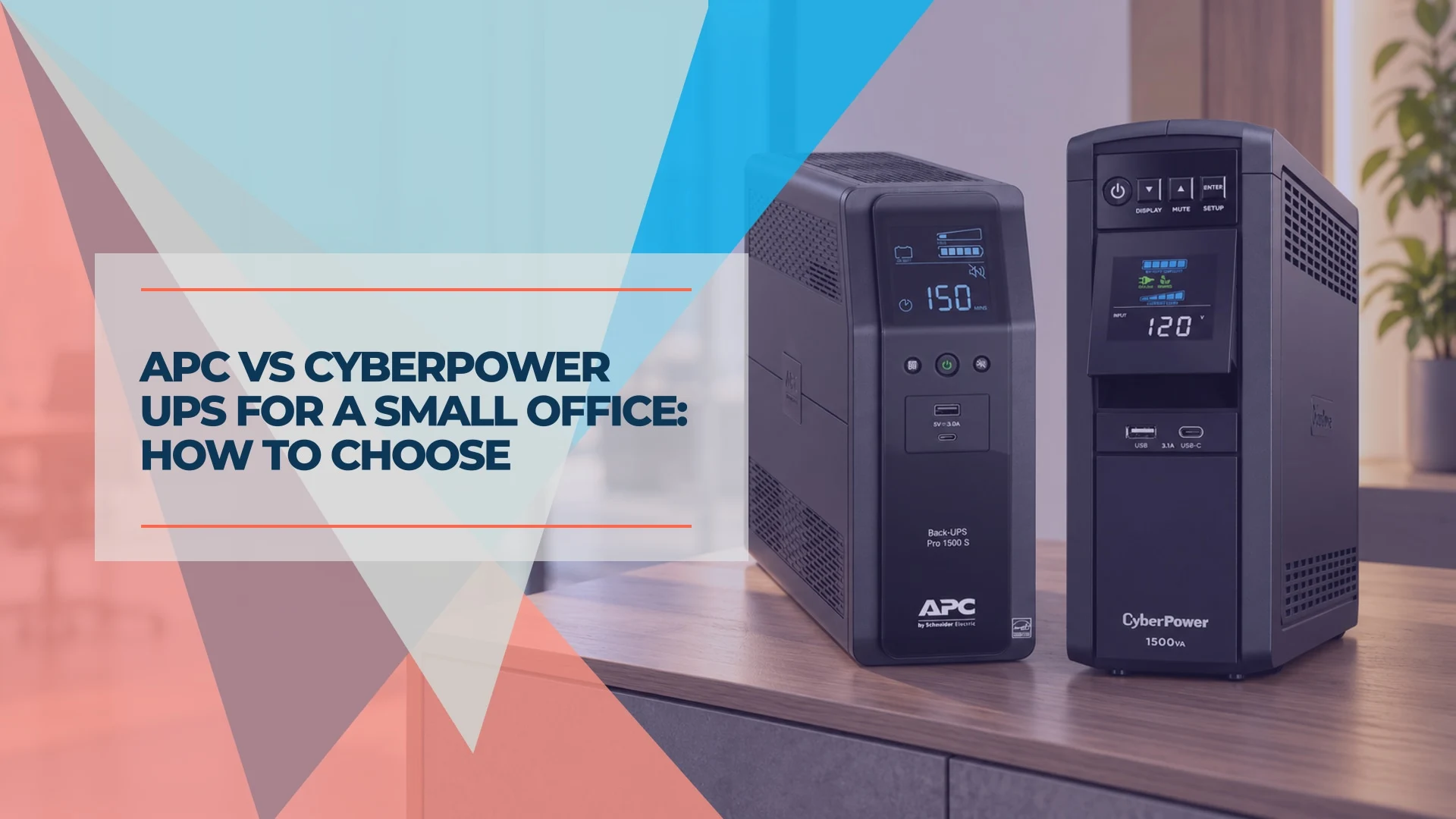
APC vs CyberPower UPS for a Small Office: How to Choose
APC or CyberPower for your office? Compare suitable UPS models by load, battery-backed outlets, runtime, replacement batteries and monitoring.
9 min read
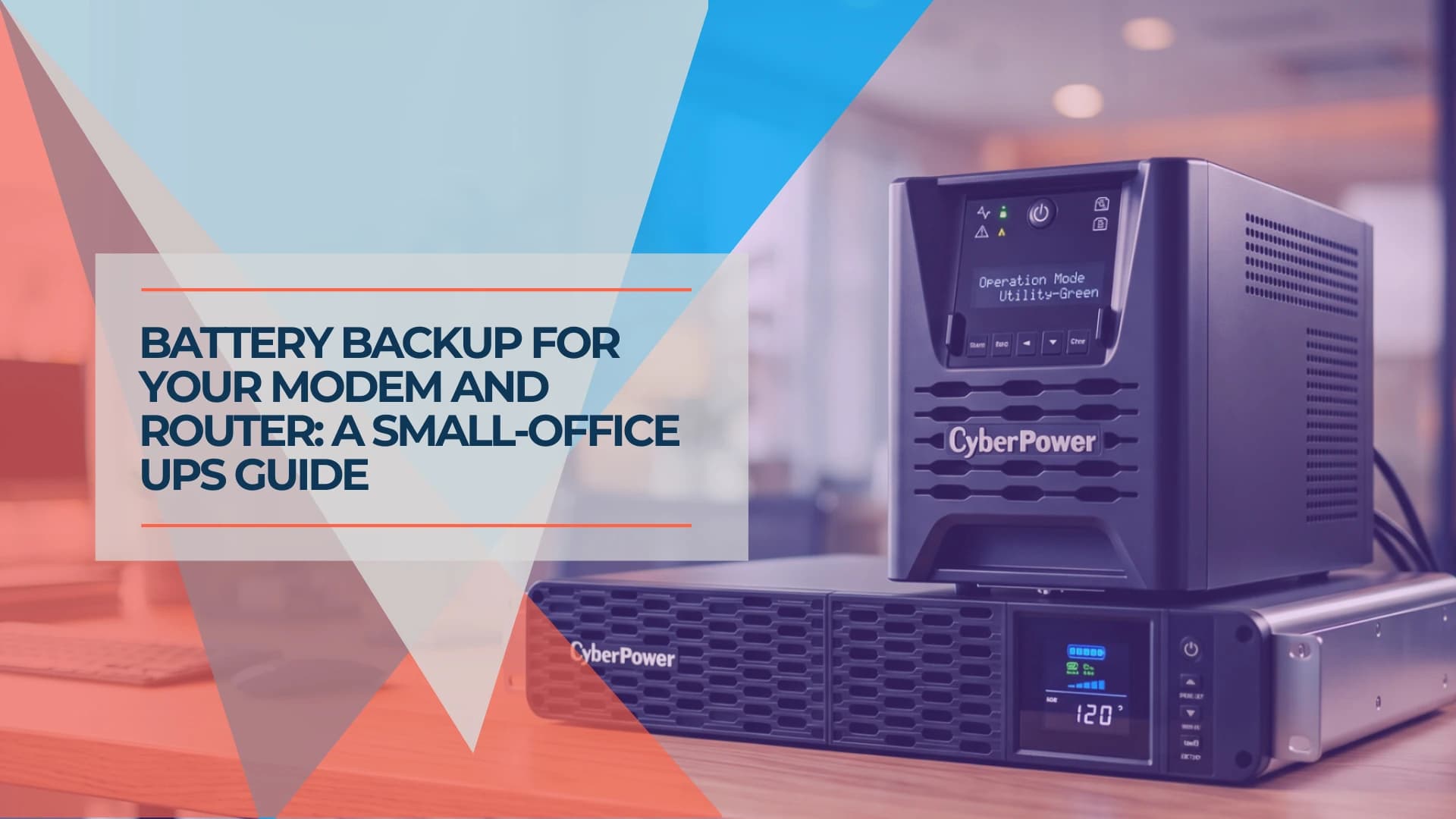
Battery Backup for a Modem and Router: Business UPS Guide
Choose a battery backup for your modem and router. Compare six business UPS models by runtime at small loads, rack fit, circuit needs and monitoring.
19 min read
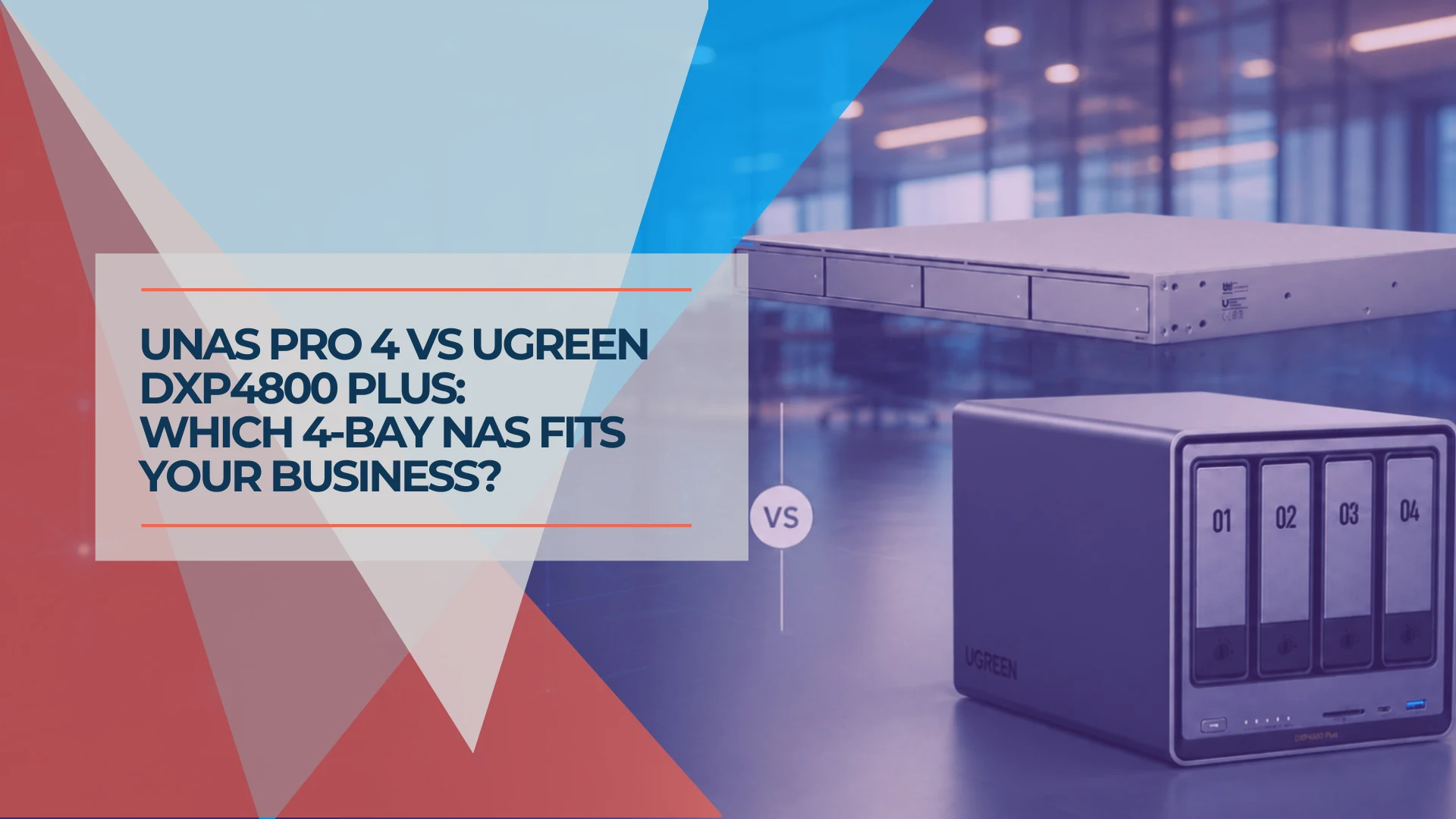
UNAS Pro 4 vs UGREEN DXP4800 Plus: Which 4-Bay NAS Should You Buy in 2026?
Two good 4-bay NAS units built on opposite philosophies. Verified specs, complete system costs, and where each one fits in a small business.
12 min read