
Small Business Security Compliance Guide 2026 | HIPAA & PCI
Updated 2026 security compliance guide for small businesses. Covers the HIPAA Notice of Privacy Practices update (Feb 16, 2026), PCI DSS v4.0.1 requirements, GDPR, cyber insurance requirements, and AI compliance considerations.

Affiliate Disclosure: This article contains affiliate links. If you make a purchase through these links, we may earn a small commission at no extra cost to you. As an Amazon Associate, iFeelTech earns from qualifying purchases.
Key Takeaway: 2026 Compliance Action Items
- Deadline Passed: February 16, 2026 was the compliance date for updating HIPAA Notices of Privacy Practices for the 42 CFR Part 2 (substance use disorder records) changes. Covered entities that have not yet updated their notice should do so now.
- Budget Planning: Managed compliance services are usually priced per employee per month. The $100-$250 range in this guide is a planning estimate, not a published price; request quotes.
- Immediate Actions: MFA for all access to the PCI cardholder data environment, authenticated internal vulnerability scans (PCI DSS v4.0.1), tested backups
- Risk Context: IBM's Cost of a Data Breach Report 2026 puts the global average breach cost at USD 4.99 million. IBM's figure is not specific to small businesses.
- Insurance Requirement: Cyber insurers commonly ask for MFA, endpoint detection and response (EDR), tested backups, and an incident response plan; requirements vary by insurer.
Security compliance has become standard business practice in 2026. Recent enforcement trends show a significant pivot toward smaller entities, with Comstar, LLC, an ambulance billing company, agreeing to about $590,000 in combined settlements ($75,000 with HHS OCR in May 2025, and $515,000 with the Massachusetts and Connecticut attorneys general in January 2026). PCI DSS non-compliance can lead to fees from card brands and acquiring banks, set by contract rather than by the PCI Security Standards Council, while cyber insurance providers increasingly ask for documented security controls before issuing coverage.
Regulatory enforcement applies to businesses of all sizes. Insurers increasingly ask businesses to show controls such as MFA, EDR, and incident response plans before issuing coverage, and may check them again when a claim is made.
Understanding Your Compliance Obligations
Determining which compliance frameworks apply to your business requires analysis of your operations, data handling practices, and industry sector.
Compliance Quick Assessment Checklist
You need HIPAA compliance if:
- You're a healthcare provider, health plan, or healthcare clearinghouse
- You provide services to healthcare entities and access protected health information (IT, billing, legal, consulting)
- You're a subcontractor working with business associates
You need PCI DSS v4.0.1 compliance if:
- You process, store, or transmit credit or debit card information
- You handle any payment card transactions (regardless of volume)
- You provide payment processing services to other businesses
You need GDPR compliance if:
- You process personal data of EU residents
- You offer goods or services to EU customers
- You monitor behavior of individuals in the EU
Additional frameworks may apply based on:
- Industry: Financial services (SOX, GLBA), publicly traded companies
- Location: State data privacy laws (California, Texas, Virginia, and a growing number of other states)
- Business relationships: Serving regulated entities as a vendor
What Are the New 2026 HIPAA Requirements?
Covered entities had until February 16, 2026 to update their Notices of Privacy Practices (NPP) for the Substance Use Disorder (SUD) record requirements under 42 CFR Part 2. That date has passed, so any practice that has not updated its notice should do so now. The Health Insurance Portability and Accountability Act continues evolving: HHS proposed stronger Security Rule safeguards in January 2025, but as of this update the proposal has not been finalized.
Who Must Comply with HIPAA
Covered Entities: Healthcare providers, health plans, and healthcare clearinghouses that transmit health information electronically.
Business Associates: Organizations that perform functions or activities involving protected health information on behalf of covered entities, including IT service providers, billing companies, legal firms, consultants, and cloud service providers.
Subcontractors: Third-party vendors working with business associates who may access protected health information.
Critical 2026 HIPAA Updates
NPP Updates (compliance date February 16, 2026): Covered entities were required to revise privacy notices to address the integration of Substance Use Disorder (SUD) records under 42 CFR Part 2 with HIPAA. The notice changes tied to the 2024 reproductive health privacy rule were vacated by a federal court in June 2025; HHS states that the remaining NPP modifications still apply.
Evolving Safeguard Requirements: Under the current Security Rule, encryption is an "addressable" implementation specification. HHS's January 2025 proposed rule would make encryption and MFA required, but it is still listed as a proposed rule. Many cyber insurers already ask for encryption, MFA, and tested backups, so implementing them is sensible either way.
Cyber Insurance Requirements: Insurance providers commonly ask for technical safeguards such as MFA, EDR, and backups. These requests often overlap with HIPAA technical safeguards.
Core Technical Requirements:
- Access Controls: Unique user identification, automatic logoff, role-based access, and MFA (commonly requested by insurers)
- Encryption: Data at rest and in transit—addressable under the current rule, and strongly recommended
- Audit Logging: Comprehensive logging of all PHI access and modifications
- Password Management: Strong password policies or MFA implementation—our business password manager comparison evaluates HIPAA-compliant solutions
- Backup and Recovery: Immutable backups with regular testing—solutions like Acronis Cyber Protect combine backup with security monitoring
2026 HIPAA Cost Breakdown for Small Practices
HIPAA Compliance Budget Planning (2026 Planning Estimates)
These ranges are planning estimates, not published prices; actual quotes vary with practice size and scope.
NPP updates: $500-$2,000 for legal review and distribution.
Initial Implementation: $18,000-$42,000 for comprehensive compliance including risk assessment, policy development, MFA deployment, encryption, and staff training.
Annual Maintenance: $6,000-$18,000 for ongoing training, risk assessments, policy updates, and system maintenance.
Managed Compliance Services: $150-$250 per employee per month (includes RMM, EDR, compliance reporting, and cyber insurance requirements).
Professional Services: Legal consultation ($250-$450/hour), compliance consulting ($175-$350/hour), technical implementation ($125-$250/hour).
For businesses needing assistance with HIPAA compliance implementation, including MFA deployment, encryption setup, and policy development, professional guidance can streamline the process and ensure all requirements are met.
How Does PCI DSS v4.0.1 Affect Small Businesses?
These controls are now mandatory as of March 31, 2025. If you haven't implemented them, you are non-compliant. The Payment Card Industry Data Security Standard applies universally to any business that processes, stores, or transmits credit or debit card information.
PCI DSS Compliance Levels
Level 1: Merchants processing over 6 million transactions annually require on-site security assessments by Qualified Security Assessors.
Level 2-4: Most small businesses fall into these categories, requiring Self-Assessment Questionnaires and network vulnerability scans by Approved Scanning Vendors.
Service Providers: Organizations that store, process, or transmit cardholder data on behalf of other entities face specific requirements based on transaction volume.
Mandatory v4.0.1 Requirements (Now Enforced)
Businesses must demonstrate compliance with these requirements:
Disk-Level Encryption Restricted: Requirement 3.5.1.2 no longer accepts disk-level or partition-level encryption as the method for making stored account data unreadable, except on removable electronic media. Non-removable storage needs file-, column-, or field-level encryption or another approved method.
Authenticated Vulnerability Scans: Requirement 11.3.1.2 requires internal vulnerability scans, run at least quarterly, to use authenticated scanning. These scans log in to systems to detect internal vulnerabilities that unauthenticated scans miss. This became mandatory on March 31, 2025. Tools like Tenable Nessus Professional include built-in PCI-DSS audit templates for this purpose.
Anti-Phishing Mechanisms: Automated mechanisms to detect and block phishing attacks are now mandatory. This includes email filtering, URL reputation checking, and user awareness systems. Business email platforms like Microsoft 365 Business and Google Workspace include advanced email security features.
Password Rotation Requirements: Where a password is the only authentication factor, Requirement 8.3.9 calls for changing it at least every 90 days, or instead dynamically analyzing the account's security posture. Accounts protected by MFA are not subject to this rotation requirement.
Multi-Factor Authentication: Requirement 8.4.2 requires MFA for all non-console access into the cardholder data environment (CDE), not just remote or administrative access. The standard does not name a specific factor type, and the PCI Security Standards Council allows properly implemented phishing-resistant methods such as FIDO2 to satisfy MFA in some cases. SMS codes are the weakest common option because of SIM-swap risk, so app-based or FIDO2 methods are the safer choice.
Network Segmentation Documentation: Enhanced documentation requirements for network segmentation, including annual validation that segmentation controls are operational.
Recommended Action: Businesses whose last PCI assessment used v3.2.1 should schedule a gap assessment to review the expanded control requirements.
PCI DSS Compliance Verification Process
Self-Assessment Questionnaire (SAQ): Most small businesses complete one of several SAQ types based on their payment processing methods. The questionnaire requires detailed responses about security measures and supporting documentation.
Network Vulnerability Scanning: Quarterly scans by Approved Scanning Vendors identify security vulnerabilities in systems that store, process, or transmit cardholder data.
Attestation of Compliance: Annual certification that your organization meets all applicable PCI DSS requirements, signed by an authorized representative.
PCI DSS v4.0.1 Implementation Summary (2026)
- Implementation Timeline: Planning estimate of several months for a v4.0.1 upgrade, longer if migrating from v3.2.1
- Estimated Costs (planning estimates, not published prices): $12,000-$32,000 for v4.0.1 implementation, $4,000-$10,000 annually for maintenance
- Quarterly Scanning (estimate): $200-$400/month for authenticated scanning services
- Key Benefit: Avoid card-brand non-compliance fees, which acquiring banks set by contract and the PCI Security Standards Council does not issue
- Compliance Tools: Automated compliance platforms can reduce audit preparation effort
Businesses implementing PCI DSS v4.0.1 requirements may benefit from professional assessment and implementation support to ensure all controls meet the updated standards.
Additional Compliance Frameworks
Beyond HIPAA and PCI DSS, small businesses may encounter additional regulatory requirements based on their industry, geographic location, or customer base.
GDPR: European Data Protection
The General Data Protection Regulation applies to any business processing personal data of EU residents, regardless of the business's physical location. Administrative fines under Article 83 apply to controllers and processors, and can reach EUR 20 million or 4% of total worldwide annual turnover, whichever is higher, for the most serious infringements.
GDPR Implementation Costs (2026 Planning Estimates)
Total Investment Range: $24,000-$115,000, depending on organizational complexity
Implementation Fees: $12,000-$30,000 for initial compliance program development
Ongoing Monitoring: $6,000-$35,000 annually for compliance maintenance
Professional Services: Legal consultation ($6,000-$18,000), technical implementation ($6,000-$24,000), staff training ($1,000-$22,000)
For comprehensive business software solutions, consider platforms like Microsoft 365 Business, which include built-in compliance tools.
SOX: Financial Reporting Controls
The Sarbanes-Oxley Act primarily affects publicly traded companies but can impact small businesses that provide services to public companies or plan to go public. Compliance costs for smaller public companies are substantial and vary widely. Proper financial management tools like QuickBooks Online can help maintain the financial controls required for SOX compliance.
State and Local Requirements
Many states have enacted data breach notification laws and privacy regulations that affect small businesses. California's Consumer Privacy Act (CCPA), New York's SHIELD Act, Texas Data Privacy and Security Act (TDPSA), Virginia Consumer Data Protection Act (VCDPA), Florida's Digital Bill of Rights (FDBR, which applies mainly to companies with more than $1 billion in global revenue), and similar state-level regulations in Colorado, Connecticut, Utah, Oregon, and Montana create additional compliance obligations for companies operating in or serving customers in these jurisdictions.
Practical Implementation Strategy
Successful compliance implementation requires systematic planning, appropriate resource allocation, and ongoing commitment to maintaining security standards.
2026 Required Policy Checklist
Assessment & Planning:
- Compliance scope analysis (which frameworks apply to your business)
- Gap assessment comparing current measures to regulatory requirements
- Risk evaluation of non-compliance financial impacts
Essential Policies to Document:
- Data Handling Policy: Classification, storage, transmission, and disposal procedures
- Access Control Policy: User authentication, role-based access, privileged account management
- AI Acceptable Use Policy: Approved AI tools, prohibited data types, employee guidelines
- Remote Work Policy: Secure access requirements, device management, home network security
- Incident Response Plan: Detection procedures, containment steps, notification timelines
- Employee Training Program: Initial onboarding, annual refreshers, role-specific requirements
Technical Implementation Priorities:
- Encryption: Data at rest and in transit (effectively mandatory for insurance)
- Multi-Factor Authentication: All administrative accounts, email, VPN, cloud services
- Endpoint Protection: EDR solutions like Bitdefender Business Security or ESET SMB Security
- Immutable Backups: Air-gapped or immutable backups tested within 90 days—Acronis Cyber Protect provides integrated backup and security
- Network Security: Firewalls, segmentation, monitoring tools—see our VPN vs Zero Trust guide
- Compliance Software: Platforms that automate monitoring and reporting—our cybersecurity software guide compares solutions
How Much Does Security Compliance Cost in 2026?
Managed compliance programs are usually priced per employee per month. As a planning estimate, small businesses might budget $100-$250 per employee per month, depending on industry regulation levels; these are not published prices, so get quotes. A per-employee model is often easier to plan around than total project costs.
Cost Categories and Planning (2026)
The figures below are planning estimates, not published prices.
| Cost Category | HIPAA | PCI DSS | GDPR |
|---|---|---|---|
| Initial Implementation | $18,000-$42,000 | $12,000-$32,000 | $24,000-$115,000 |
| Annual Maintenance | $6,000-$18,000 | $4,000-$10,000 | $6,000-$35,000 |
| Managed Services (per employee/month) | $150-$250 | $100-$180 | $120-$200 |
| Professional Services | $250-$450/hour | $175-$350/hour | $6,000-$18,000 |
Financing and Resource Allocation
Phased Implementation: Implement requirements in phases to spread compliance costs across multiple budget cycles. Prioritize critical security controls first, then gradually enhance systems and processes as resources become available.
Technology Investment: Focus on scalable solutions that support multiple compliance frameworks simultaneously. Integrated platforms like Microsoft 365 Business or Google Workspace often provide better value than point solutions while reducing ongoing maintenance complexity.
Professional Services Strategy: Balance internal resources with external expertise. Initial implementation often benefits from professional guidance, while ongoing maintenance can be managed internally with proper training.
Cost-Benefit Analysis Framework (2026)
Evaluate compliance investments against potential penalties and business risks:
- Average breach cost: IBM's Cost of a Data Breach Report 2026 reports a global average of USD 4.99 million (USD 4.44 million in the 2025 report); the figure is not specific to small businesses
- HIPAA violations: Civil penalties are tiered. The statutory calendar-year cap for identical violations is $1.5 million, adjusted for inflation to $2,134,831 as of August 2024; HHS has applied lower caps under a 2019 enforcement notice
- PCI DSS non-compliance: Fees are set by card brands and acquiring banks, so amounts vary by contract
- GDPR penalties: Up to EUR 20 million or 4% of worldwide annual turnover, whichever is higher
- Cyber Insurance Requirements: Insurers commonly ask for MFA, EDR, and incident response plans
ROI Perspective: Weigh compliance spending against the cost of a breach, penalties, and potential loss of insurance coverage.
The Cyber Insurance Link: What Insurers Demand in 2026
Cyber insurance requirements have become increasingly specific. Insurance providers commonly ask for documented proof of security controls before issuing policies, and claims may be denied when businesses cannot demonstrate they maintained required controls at the time of an incident. These insurance requirements often align with regulatory compliance standards.
Why Cyber Insurance Drives Compliance
Documentation Requirements: Insurance applications often require documentation and technical validation, including proof of security controls and their ongoing maintenance.
Claims Verification: Insurers verify that required controls were maintained at the time of an incident. Missing MFA logs, incomplete backup verification, or outdated incident response plans can affect claim approval.
Premium Incentives: Insurers generally offer better terms and pricing to businesses that can show mature security controls. The size of the difference varies by insurer, industry, and revenue.
Controls Insurers Commonly Ask For
What Insurers Commonly Require Before Issuing Coverage
Multi-Factor Authentication (MFA):
- Required for all administrative accounts, email, VPN, and cloud services
- Must be enforced, not just "available"
- Insurers verify MFA logs during underwriting
- Password managers like 1Password Business, Proton Pass Business, or NordPass Business can help enforce MFA policies
Endpoint Detection and Response (EDR):
- Modern endpoint protection beyond traditional antivirus
- Should include behavioral detection and automated response
- Coverage typically requires EDR on all endpoints—solutions like Bitdefender Business Security or ESET SMB Security meet these requirements
Immutable Backups:
- Air-gapped or immutable backups tested within 90 days
- Backup verification logs required for underwriting
- Should demonstrate ability to restore within defined RTO—Acronis Cyber Protect provides immutable backup capabilities with integrated security
Incident Response Plan:
- Documented, tested within 12 months
- Must include specific vendor contacts and escalation procedures
- Some insurers ask for tabletop exercise documentation, particularly on larger policies
Email Security:
- Advanced email filtering with link protection
- DMARC, SPF, and DKIM implementation
- Phishing simulation training for all users
Privileged Access Management:
- Separate admin accounts from standard user accounts
- Documented privileged access procedures
- Audit logs for all administrative actions
Coverage Costs and Limits (2026)
Small Business Premiums: Premiums vary widely by industry, revenue, coverage limit, and controls; get quotes from a broker who specializes in cyber insurance. Businesses without the controls insurers ask for may pay more or may not be able to obtain coverage.
Deductibles: Higher deductibles reduce premiums but increase out-of-pocket breach costs.
Coverage Exclusions: Some policies limit or exclude ransomware coverage when specific controls are missing. Social engineering fraud often requires a separate coverage endorsement.
Action Items for Insurance Compliance
- Audit Current Controls: Document existing security measures against insurer requirements
- Implement Missing Controls: Prioritize MFA, EDR, and immutable backups
- Create Documentation: Maintain logs proving control effectiveness
- Schedule Annual Reviews: Update incident response plans and backup testing documentation
- Work with Specialized Brokers: Standard business insurance brokers often lack cyber insurance expertise
For comprehensive guidance on implementing these security controls, see our cybersecurity software guide and breach prevention guide.
Can I Use AI Tools with Regulated Data?
Small businesses increasingly use ChatGPT, Microsoft Copilot, and other AI tools for productivity. However, pasting patient data, customer information, or payment details into AI systems can violate HIPAA, GDPR, and PCI DSS—even if you delete the conversation afterward.
The Compliance Risk
Data Retention Policies: Consumer AI services have their own retention and training settings, which differ by provider and plan, and a deleted conversation may be retained for some period. Some vendors offer Zero Data Retention (ZDR) options for business customers; HIPAA itself requires a Business Associate Agreement rather than ZDR.
HIPAA Violations: Using an AI tool with PHI is a HIPAA problem unless the provider has signed a Business Associate Agreement (BAA) covering that product and you have configured it as the BAA requires. Consumer plans of ChatGPT, Claude, and similar services are not covered by BAAs.
GDPR Implications: Sending EU resident data to AI services without proper data processing agreements violates GDPR. The AI provider becomes a data processor, requiring documented agreements.
PCI DSS Concerns: Pasting credit card numbers, CVV codes, or cardholder information into an AI tool brings that tool into the scope of your cardholder data environment, and sensitive authentication data such as CVV codes must never be stored after authorization. Keep this data out of AI tools.
Compliant AI Usage Options
How to Use AI Tools Safely with Regulated Data
Enterprise AI Services with BAAs:
- Microsoft 365 Copilot (organizational use): Covered by Microsoft's Data Protection Addendum and Product Terms, which is where its HIPAA BAA applies; Microsoft states prompts and responses are not used to train foundation models. Web search queries are excluded from the DPA and BAA. Consumer Copilot products fall under different terms.
- Google Workspace AI: Google states Workspace with Gemini can support HIPAA workloads for customers who have signed its BAA; check Google's HIPAA Included Functionality list for covered features.
- OpenAI: BAAs are available for ChatGPT for Healthcare, ChatGPT Enterprise with a Regulated Workspace, and the API with Modified Retention.
- Anthropic Claude: BAAs are available for Claude Enterprise (after the organization's Primary Owner enables HIPAA settings and accepts the BAA) and for a HIPAA-ready API organization.
Data Anonymization:
- Remove all personally identifiable information before using AI tools
- Replace names, dates, locations, and identifying details with placeholders
- Verify anonymization is sufficient under applicable regulations
On-Premises AI Solutions:
- Self-hosted large language models (LLMs) that never send data externally
- Higher implementation costs but complete data control
- Suitable for highly regulated environments
Prohibited Actions:
- Never paste PHI, PII, or payment card data into consumer AI services
- Don't use AI tools to draft communications containing regulated data without proper agreements
- Avoid using AI for compliance documentation that includes actual customer data
Employee Training Requirements
AI Usage Policies: Document which AI tools are approved for business use and what data types are prohibited. Include specific examples relevant to your industry.
Regular Training: Employees must understand that AI tools are external services subject to compliance requirements. Annual training should include AI-specific scenarios.
Monitoring and Enforcement: Implement DLP (Data Loss Prevention) tools to detect and block transmission of regulated data to unauthorized AI services.
Best Compliance Software Stack for 2026
Modern compliance management leverages specialized software platforms and integrated security solutions to streamline implementation and reduce ongoing maintenance costs.
Compliance Management Platforms
Integrated Solutions: Comprehensive platforms that address multiple compliance frameworks through unified dashboards, automated monitoring, and centralized reporting. Business productivity suites like Google Workspace offer integrated compliance tools, while dedicated solutions are typically priced annually and can reduce compliance management time.
Risk Assessment Tools: Automated systems that continuously evaluate security posture and identify compliance gaps. Regular automated assessments ensure ongoing compliance while reducing manual oversight requirements.
Documentation Management: Centralized systems for maintaining compliance documentation, policy management, and audit trail creation. Cloud-based solutions like Google Workspace or Microsoft 365 provide integrated document management with compliance features.
Security Infrastructure Components
Encryption Solutions: End-to-end encryption for data at rest and in transit, meeting requirements across multiple compliance frameworks. Solutions like Proton Business provide email encryption, while selecting devices with built-in hardware encryption — like TPM 2.0 and BitLocker — simplifies compliance documentation and eliminates third-party encryption licensing.
Access Control Systems: Multi-factor authentication, role-based access controls, and privileged access management. These systems ensure that only authorized personnel can access sensitive data while maintaining detailed audit logs.
Monitoring and Analytics: Security information and event management (SIEM) systems that provide real-time monitoring, threat detection, and compliance reporting. Advanced analytics help identify potential security incidents before they become compliance violations. For comprehensive protection, consider solutions like Acronis Cyber Protect, which combine backup and security monitoring.
Ongoing Maintenance and Monitoring
Compliance is not a one-time achievement but an ongoing commitment requiring continuous attention, regular updates, and proactive management.
Regular Assessment Requirements
Annual Risk Assessments: Comprehensive security posture, threat landscape, and compliance status evaluations. Annual assessments identify emerging risks and ensure the continued effectiveness of security controls.
Quarterly Reviews: Regularly evaluate policies, procedures, and technical controls to ensure continued compliance. Quarterly reviews help identify and address compliance gaps before they become violations.
Continuous Monitoring: Real-time oversight of security controls and compliance status through automated systems. Continuous monitoring immediately alerts potential compliance issues while reducing manual oversight requirements.
Staff Training and Awareness
Initial Training Programs: Comprehensive education covering compliance requirements, security procedures, and individual responsibilities. Initial training must be role-specific and tailored to actual job functions.
Ongoing Education: Regular updates covering evolving threats, regulatory changes, and procedural modifications. Ongoing education ensures staff remain current with compliance requirements and security best practices.
Incident Response Training: Specialized instruction covering security incident detection, reporting, and response procedures. Proper incident response training can significantly reduce the impact of security events on compliance status.
Frequently Asked Questions
How do I determine which compliance frameworks apply to my business?
Start with a comprehensive analysis of your data handling practices, customer base, and industry sector. Consider both direct applications (you handle regulated data) and indirect applications (you provide services to regulated entities). Professional compliance assessments can provide definitive guidance tailored to your specific business operations.
Can small businesses achieve compliance without dedicated IT staff?
Yes—managed compliance services offer comprehensive programs, typically priced per employee per month (a planning estimate is $100-$250), including RMM, EDR, compliance reporting, and cyber insurance documentation. Many small businesses work with managed service providers who handle technical implementation while internal staff manage policies and training. Cloud-based platforms like Microsoft 365 Business include built-in compliance tools that reduce the technical burden.
What happens if my business experiences a data breach?
Data breaches trigger specific notification requirements under most compliance frameworks. HIPAA requires notification within 60 days, GDPR requires notification within 72 hours, and state laws vary. Having a comprehensive incident response plan is essential for managing breach response while minimizing regulatory penalties.
How often do compliance requirements change?
Compliance frameworks evolve regularly. HIPAA's February 16, 2026 compliance date for Notice of Privacy Practices updates (tied to 42 CFR Part 2) has passed, and HHS's proposed Security Rule overhaul has not been finalized. The future-dated PCI DSS v4.0.1 requirements became mandatory on March 31, 2025. More significantly, cyber insurance requirements change annually and often drive faster adoption of security controls than regulatory mandates. Monitor both regulatory updates and insurance industry requirements.
Is cyber insurance sufficient protection against compliance violations?
Cyber insurance and compliance work together rather than as substitutes. Insurance providers commonly ask for documented controls (MFA, EDR, tested backups, and incident response plans) before issuing coverage. Claims may be denied when businesses cannot demonstrate they maintained required controls at the time of an incident. Compliance has become a prerequisite for obtaining and maintaining cyber insurance coverage.
What's the difference between compliance and security?
Compliance involves meeting specific regulatory requirements, while security encompasses broader protection measures. A business can be compliant but not secure, or secure but not compliant. In 2026, this distinction has become less clear as cyber insurance requirements often mandate security controls that exceed minimum regulatory compliance standards.
Can I use ChatGPT or other AI tools with customer data?
Not with consumer AI services. Using ChatGPT, Claude, or similar consumer AI tools with PHI, PII, or payment card data violates HIPAA, GDPR, and PCI DSS. You need an AI service covered by a Business Associate Agreement (BAA) for PHI. Options include Microsoft 365 Copilot (under Microsoft's BAA terms), Google Workspace with Gemini (for customers with a signed BAA), OpenAI's BAA-eligible products, or Claude Enterprise with the BAA enabled. Alternatively, anonymize all data before using consumer AI tools.
Building a Sustainable Compliance Program
Long-term compliance success requires viewing regulatory requirements as fundamental business infrastructure rather than temporary obligations. Organizations integrating compliance into their operational culture achieve better outcomes while reducing ongoing costs.
Cultural Integration Strategies
Leadership Commitment: Executive leadership must demonstrate ongoing commitment to compliance through resource allocation, policy enforcement, and regular communication about the importance of compliance.
Employee Engagement: Create compliance awareness programs that help employees understand their role in maintaining security and regulatory adherence. Engaged employees become active participants in compliance rather than passive recipients of training.
Continuous Improvement: Establish processes for regularly evaluating and improving compliance programs based on emerging threats, regulatory changes, and operational experience.
Scalability Planning
Growth Accommodation: Design compliance programs that can scale with business growth without requiring complete redesign. Scalable programs reduce long-term costs while ensuring continued compliance as operations expand.
Technology Evolution: Plan for technology changes and upgrades that maintain compliance while supporting business innovation. Technology roadmaps should consider both compliance requirements and operational needs.
Regulatory Adaptation: Build flexibility into compliance programs to accommodate evolving regulatory requirements without significant disruption to business operations.
Professional Compliance Support
Navigating the complex security compliance landscape requires specialized expertise and ongoing attention to regulatory developments. Professional compliance services provide comprehensive support including:
- Compliance gap analysis and risk assessment
- Policy and procedure development
- Technical implementation support
- Staff training and awareness programs
- Ongoing monitoring and maintenance
- Regulatory update management
Disclaimer
This guide provides general information about security compliance requirements and should not be considered legal advice. Specific compliance obligations vary based on individual business circumstances. Consult with qualified legal and compliance professionals for guidance tailored to your specific situation.
Related Resources
- Best Cybersecurity Software for Small Business – Tool recommendations
- Best Business Password Managers – HIPAA-compliant options
- Gusto vs Rippling vs ADP vs Deel Comparison – IT and compliance depth of each payroll platform
- Small Business Breach Prevention Guide – 90-day security plan
- Small Business Security Audit Checklist – Seven-step audit aligned with NIST CSF 2.0, with evidence requirements for each control
- NIST CSF 2.0 Cybersecurity Tools – Framework implementation
- VPN vs Zero Trust Guide – Access security
- Proton Business Suite Review – Encrypted solutions
- Cybersecurity Services – Professional support
Related Articles
More from Cybersecurity
Are Free VPN Extensions Safe for Small Businesses? A July 2026 Check
Recent VPN incidents showed how extensions can expose passwords, AI conversations, and browser traffic. Learn how to audit extensions, build an allowlist, and protect your company.
11 min read
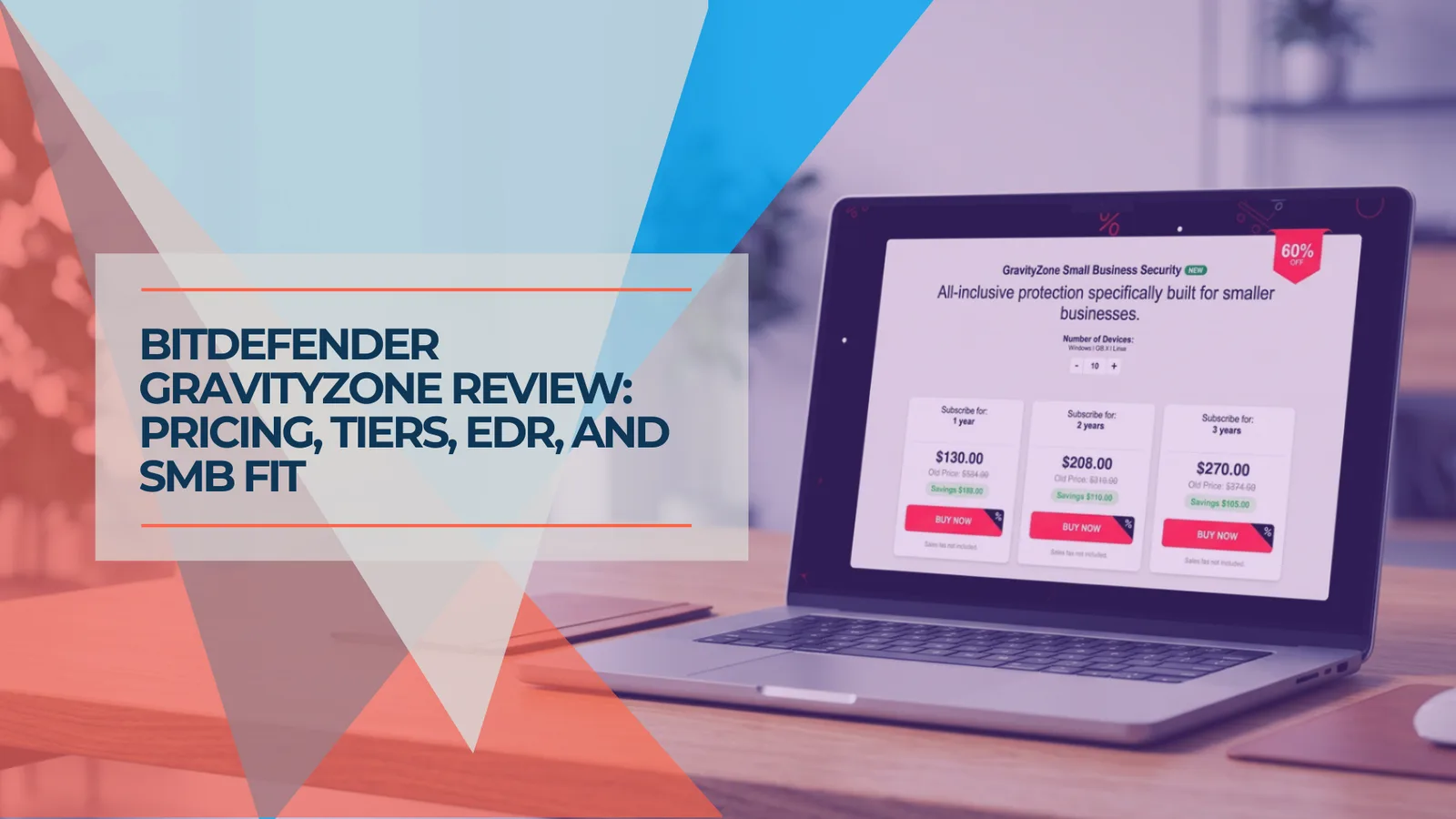
Bitdefender GravityZone Review (2026): An IT Provider's Take for Small Business
We deploy GravityZone for clients — this review covers the real console experience, tier selection, pricing traps, and whether it fits a business without a security team.
15 min read
Double Extortion Ransomware: Why Backups Alone Aren't Enough
Data exfiltration appears in 96% of BlackFog-tracked Q1 2026 ransomware incidents. Backups restore access but don't resolve data exposure. Here's what actually protects your business.
13 min read