
Bitdefender GravityZone Review (2026): An IT Provider's Take for Small Business
We deploy GravityZone for clients — this review covers the real console experience, tier selection, pricing traps, and whether it fits a business without a security team.

Bitdefender GravityZone is one of the strongest-value endpoint security platforms for small businesses. Its main tradeoff is not protection quality — independent testing consistently puts it at or near the top. The real decisions are choosing the right tier, managing the console, and understanding renewal pricing before you buy.
We deploy and manage GravityZone for clients, so this review focuses on the parts that generic reviews skip: what the console actually feels like to operate, which tier you need (and which ones are overbuy), and when GravityZone is not the right fit.
Bottom Line
Bitdefender GravityZone is a strong value for SMB endpoint protection — top-tier detection at approximately $22.75/device/year (promo). The main risks are buying the wrong tier, underestimating the console learning curve, and not planning for renewal pricing. Most small businesses should start with Small Business Security.
Rating: 4.3/5
Affiliate Disclosure: This article contains affiliate links. If you make a purchase through these links, we may earn a small commission at no extra cost to you. As an Amazon Associate, iFeelTech earns from qualifying purchases.
Verified June 2026
- Pricing checked June 30, 2026 on the Bitdefender pricing page
- AV-Comparatives 2026 result applies to the tested product (Business Security Premium 8.26); lower tiers share core protection layers but lab results apply to the tested SKU
- Business Security Premium is not full EDR — Enterprise is the EDR tier
- Promotional discounts do not persist at renewal
What Is Bitdefender GravityZone?
GravityZone is Bitdefender's cloud-managed endpoint security platform for business devices. It protects Windows, macOS, and Linux endpoints — laptops, desktops, and file servers — from a central cloud console. There is no per-device dashboard and no consumer-style app that end users interact with. Policy configuration, threat visibility, deployment, and reporting all happen centrally.
That distinction matters. GravityZone is not consumer Bitdefender Total Security with a business label. It is built for managing a fleet of devices, not for individual users who expect a tray icon with scan buttons. If you (or your IT partner) want centralized control, that's a strength. If you were hoping to hand each employee a download link and walk away, that expectation needs adjusting.
Who it's for: small and medium businesses that want centralized endpoint protection and either have an internal IT person or work with an IT provider. If you're evaluating where GravityZone fits among the alternatives, our best cybersecurity software for small business guide covers the full landscape. To see it measured directly against CrowdStrike and SentinelOne, we have a dedicated 3-way comparison.
What Is GravityZone Like to Deploy and Manage?
Deployment is straightforward, but the console requires basic IT ownership.
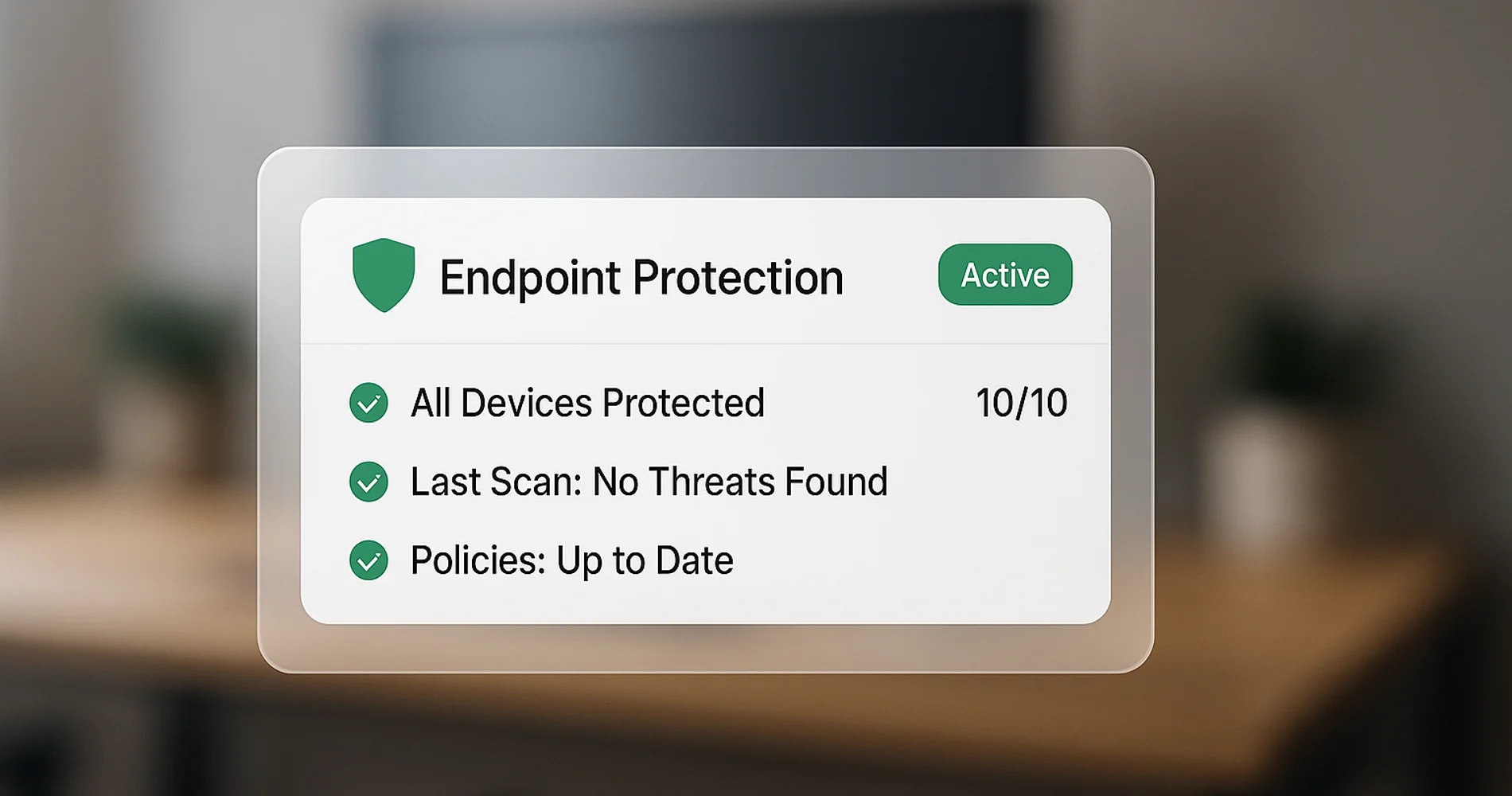
For a 10–20 device office, the initial rollout takes under an hour: download the lightweight agent installer from the console, push it to endpoints (manually, via GPO, or through an RMM tool), and confirm devices check in. The agent runs silently in the background with a light resource footprint. End users won't know it's there unless it blocks something.
The first week is where the learning curve appears. The console surfaces threat events, policy violations, and risk analytics. For an IT professional, this is useful signal. For a business owner who's never seen an endpoint security dashboard, the volume of information can feel overwhelming at first. The console isn't unusable, but it isn't self-explanatory either — you'll spend time learning what alert categories mean, which policy defaults to keep, and which to tune.
Ongoing management settles into a reasonable rhythm. Once policies are set and the initial noise is triaged, weekly check-ins take 15–20 minutes — reviewing detections, confirming endpoints are reporting in, and applying policy updates.
Can You Self-Manage GravityZone?
Yes, if you're comfortable navigating a cloud dashboard, reading alert summaries, and making basic policy decisions (e.g., what websites to block, whether to quarantine or delete a flagged file). Many of our clients with 10–30 devices self-manage after an initial setup session.
Probably not, if you've never administered any IT system and don't want to learn. In that case, GravityZone paired with an IT provider (like an MSP) is the better path — the product is capable, but the console assumes a baseline of IT literacy.
| SMB Size | Setup Effort | Ongoing Effort | Recommended Path |
|---|---|---|---|
| 1–5 devices | Low | Low | Consider Defender for Business or a consumer business bundle first |
| 10–30 devices | Moderate | 15–20 min/week | GravityZone SBS with setup help |
| 30–100 devices | Moderate | Weekly review | Business Security or Premium depending on control needs |
| 100+ devices | Higher | IT/MSP ownership | Partner quote, evaluate EDR/MDR options |
How Well Does Bitdefender GravityZone Perform in Independent Testing?
Bitdefender's business products consistently score among the strongest in independent endpoint security evaluations.
- AV-TEST Award 2025: Bitdefender Business Security won Best Protection for Corporate Users, earning top marks across every monthly evaluation in the 2025 test year
- AV-Comparatives 2025 EPR Test: Top breach prevention and lowest total cost of ownership across 50 targeted attack scenarios. Bitdefender says GravityZone was the only vendor to block 100% of attacks during the first stage. AV-Comparatives' 2025 EPR test evaluated Bitdefender GravityZone Business Security Enterprise 7.9, not the entry-level Small Business Security tier
- AV-Comparatives 2026 Business Real-World Protection Test (Mar–Apr): GravityZone Business Security Premium blocked 200 out of 200 test cases (100% protection rate) with only 2 false positives — ahead of CrowdStrike (98.5%), ESET (99.5%), and Kaspersky (99.5%)
- Gartner 2026: Bitdefender says it was named a Visionary in the Gartner Magic Quadrant for Endpoint Protection for the fourth consecutive year
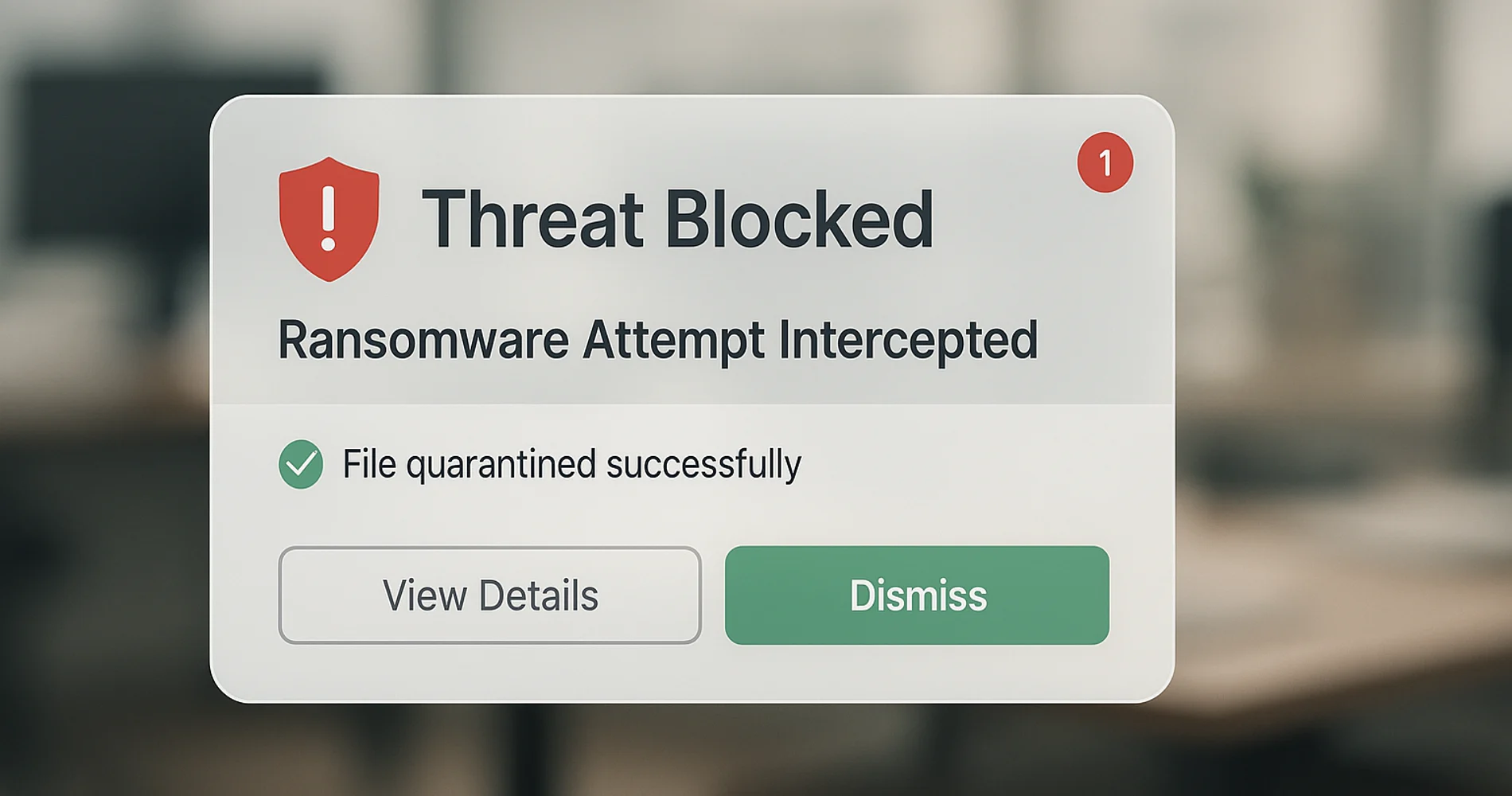
Bitdefender Labs validates over 50 billion threat queries daily across its global install base. Core protection layers — machine learning, behavioral analysis, anti-exploit, and ransomware mitigation with automatic file rollback — are active by default in every tier, including the entry-level Small Business Security.
A note on lab results: The AV-Comparatives 2026 test was run on Business Security Premium 8.26, not Small Business Security. Lower tiers share the core Bitdefender detection engine, but advanced features and the exact lab-tested configuration differ by tier. The AV-TEST 2025 award was given to Bitdefender Business Security specifically.
The practical takeaway: protection quality is not the main decision point. Bitdefender is consistently in the top tier across every major independent test. The decision should be about the console, the tiers, and the pricing. For the deeper technical comparison of how Bitdefender's detection approach differs from competitors, see our EDR comparison. If you're sorting out whether your business needs EPP or full EDR, our EDR vs antivirus guide covers that decision.
Which Bitdefender GravityZone Tier Should a Small Business Choose?
Most small businesses should start with Small Business Security unless they need advanced controls or EDR.
Bitdefender offers four GravityZone tiers for business. Small Business Security is online-only; Business Security and Business Security Premium are available online (up to 100 devices) or through a partner; Enterprise and Defense XDR tiers typically require sales or partner engagement.
| Small Business Security | Business Security | Business Security Premium | Business Security Enterprise | |
|---|---|---|---|---|
| Purchase method | Online only | Online or partner | Online or partner | Sales / partner |
| Device range | 1–100 | Online up to 100; larger via partner | Online up to 100; larger via partner | Via partner/sales |
| Anti-malware & ransomware | ✓ | ✓ | ✓ | ✓ |
| Fileless attack protection | ✓ | ✓ | ✓ | ✓ |
| Anti-phishing | ✓ | ✓ | ✓ | ✓ |
| Web Access Control | Add-on ($41.99/10 devices) | ✓ | ✓ | ✓ |
| Device Control | Add-on ($41.99/10 devices) | ✓ | ✓ | ✓ |
| Network Attack Defense | Add-on ($41.99/10 devices) | ✓ | ✓ | ✓ |
| Endpoint Risk Analytics | Add-on ($41.99/10 devices) | ✓ | ✓ | ✓ |
| HyperDetect (tunable ML) | — | — | ✓ | ✓ |
| Sandbox Analyzer | — | — | ✓ | ✓ |
| Attack forensics | — | — | ✓ | ✓ |
| EDR (cross-endpoint correlation) | — | — | — | ✓ |
| XDR | — | — | — | Add-on (Defense XDR) |
| Exchange mail server protection | — | — | ✓ | ✓ |
Which tier for which buyer
-
Small Business Security: The right starting point for most 1–100 device SMBs. Core detection is the same engine as every other tier. Covers endpoint protection, ransomware mitigation, and anti-phishing. Web Access and Device Control, plus Network Attack Defense and Risk Management, are available as add-ons ($41.99 each for 10 devices) if needed.
-
Business Security: Step up when you want Web Access Control, Device Control, Network Attack Defense, and Endpoint Risk Analytics as built-in features rather than paid add-ons. Best for organizations with 25–100+ endpoints and an IT person who will actively use those controls.
-
Business Security Premium: Adds HyperDetect (tunable machine learning), Sandbox Analyzer, attack forensics, and Exchange mail server coverage. Bitdefender describes this tier as advanced prevention without additional detection and response capabilities — it is not full EDR. Best for organizations that want advanced threat prevention and incident analysis but don't need the investigation and response workflows of Enterprise.
-
Business Security Enterprise: Bitdefender's main GravityZone EDR tier. Adds automated cross-endpoint incident correlation, threat hunting (live and historical search), investigation workflows, and one-click remediation. If a cyber insurance policy requires EDR, confirm the accepted SKU with the carrier or broker before purchasing — policy wording varies.
-
Defense XDR: Extends Enterprise with native XDR sensors for identity, network, productivity apps, and cloud. Separate from Enterprise — XDR is not included in the base Enterprise package.
How Much Does Bitdefender GravityZone Cost in June 2026?
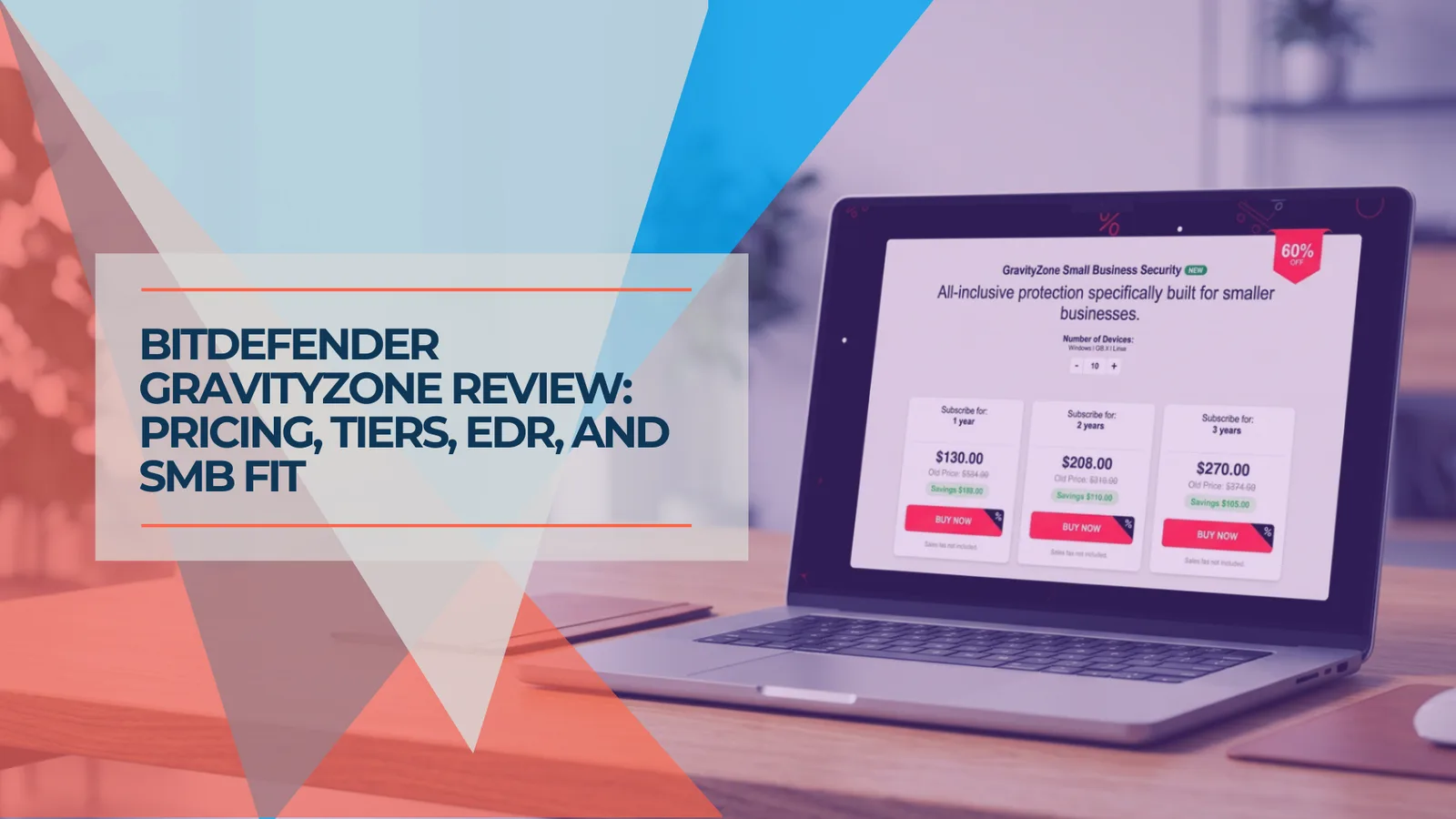
Small Business Security is currently $227.49/year for 10 devices before taxes.
| Configuration | List Price | Promo Price (30% off) | Per Device/Year |
|---|---|---|---|
| 10 devices, 1 year | $324.99 | $227.49 | ~$22.75 |
| 10 devices, 2 years | $519.99 | $363.99 | ~$18.20 |
| 10 devices, 3 years | $674.99 | $472.49 | ~$15.75 |
Pricing checked June 2026 on the Bitdefender pricing page. Two optional add-ons — Web Access and Device Control, and Network Attack Defense and Risk Management — cost $41.99 each for 10 devices.
At $22.75/device/year (promo) for the entry tier, GravityZone is significantly cheaper than CrowdStrike Falcon Go ($59.99/device/year) and SentinelOne Singularity Complete ($179.99/endpoint/year list; reseller and volume pricing varies). The pricing gap is substantial; the detection gap is narrower, but Bitdefender remains one of the strongest performers in current independent tests.
Per-device annual cost
GravityZone vs. leading EDR platforms
Entry-tier pricing for 10 devices. All three platforms lead independent detection benchmarks.
GravityZone SBS
Small Business Security, promo
$22.75
CrowdStrike Falcon Go
Online list price
$59.99
SentinelOne Complete
List price, volume varies
$179.99
All three are serious endpoint platforms, but lab scores vary by test, product version, and configuration.
The Renewal Price Jump
The promotional discount applies to your first subscription term only. When your subscription renews, it reverts to the list price. On a 30% promo, that means your 10-device renewal jumps from $227.49 to $324.99 — a 43% increase. If you bought during a 50% off promotion ($162.50), renewal at list is a 2× jump.
The practical cost lever is a multi-year subscription. A 3-year term at 30% off locks in $472.49 total ($15.75/device/year) vs. paying $324.99/year at renewal for three separate 1-year terms ($974.97 total). That's a 51% savings over three years. If you've tested GravityZone and decided it's your platform, the multi-year commitment is usually the better financial choice.
Self-serve vs. sales: Small Business Security is online-only. Business Security and Business Security Premium can be purchased online (up to 100 devices) or through a partner. Enterprise tiers typically require sales or partner engagement. All SMB tiers offer a 30-day free trial — full feature access, no credit card required.
Does GravityZone Meet Cyber Insurance EDR Requirements?
Only some GravityZone packages meet EDR requirements — confirm the exact SKU before purchase.
Many cyber insurance policies now require "EDR" or "endpoint detection and response" as a condition of coverage. Bitdefender's tier structure creates a real risk of buying the wrong package:
- Small Business Security and Business Security are endpoint protection platforms (EPP). They do not include EDR capabilities and will not satisfy an EDR requirement.
- Business Security Premium adds attack forensics, HyperDetect, and Sandbox Analyzer. Bitdefender describes it as advanced prevention "without additional detection and response capabilities." Whether a carrier accepts this as "EDR" depends on how strictly they define the term — do not assume it qualifies.
- Business Security Enterprise is Bitdefender's EDR tier. It includes automated cross-endpoint correlation, threat hunting, incident investigation, and response capabilities.
- EDR Cloud is a standalone EDR add-on that can be layered onto lower tiers.
- MDR (Managed Detection and Response) adds 24/7 human-led monitoring and response on top of EDR.
Before purchasing, ask your insurer three questions:
- Does your policy require EDR specifically, or is endpoint protection (EPP) sufficient?
- If EDR is required, does it need to include telemetry retention, investigation workflows, and response capabilities — or just behavioral detection?
- Will you accept a letter from Bitdefender or a partner confirming the SKU meets the requirement?
Get the answer in writing and keep it for renewal and audit.
Is GravityZone Better Than Microsoft Defender for Business?
GravityZone is a stronger fit for mixed-OS environments and MSP-managed setups. Defender is simpler for shops already deep in Microsoft 365.
Defender for Business is not basic antivirus. Microsoft positions it as SMB endpoint security with EDR (optimized for small businesses), automated investigation and remediation, and automatic attack disruption — all included in Microsoft 365 Business Premium at $22/user/month. For a Windows-only, Microsoft-centric environment with up to 300 users, Defender is a legitimate option that doesn't require a separate security license.
Where GravityZone has the edge:
- Mixed OS: GravityZone manages Windows, macOS, and Linux from one console with one license. Defender for Business is strongest in Microsoft-managed Windows environments, though Microsoft also supports Mac, iOS, and Android endpoints. Windows and Linux server protection require extra licensing.
- MSP management: GravityZone's multi-tenant console is built for managed service providers. Many MSPs standardize on GravityZone precisely because they can manage dozens of client environments from one pane. Defender's management through Intune is powerful but designed for internal IT teams, not outsourced management.
- Independent test performance: Bitdefender's business products score higher than Microsoft Defender in the AV-Comparatives 2026 Business Real-World Protection Test (100% vs 99.0%).
Where Defender has the edge:
- Cost for Microsoft 365 shops: If you already pay for Business Premium, Defender is included. GravityZone is an additional $22.75+/device/year.
- Integration: Defender integrates natively with Intune, Azure AD, and Microsoft Sentinel. If your entire stack is Microsoft, the management overhead is lower.
- Simplicity: For a small, all-Windows office with no MSP, Defender may be easier to adopt than a separate endpoint platform.
Don't duplicate: Running GravityZone and Defender simultaneously on the same endpoint is not recommended. Dual antivirus engines cause performance issues, false conflicts, and remediation confusion. Choose one.
Who Is Bitdefender GravityZone Best For?
GravityZone fits SMBs that want strong endpoint protection and have someone to manage the console.
Quick fit check
Is GravityZone the right choice for your business?
Based on our deployment experience across South Florida SMBs.
GravityZone works well when...
Budget matters but detection can't slip
Strongest independent test scores at the lowest per-device cost among serious EDR platforms.
You run Windows, Mac, and Linux
One console, one license, mixed-OS fleet — no separate billing or management tools.
Someone will own the console
An IT admin or MSP who configures policies and reviews alerts gets the full platform value.
Look elsewhere when...
You want zero dashboard interaction
If set-and-forget is the goal, simpler tools like Malwarebytes Teams have less console overhead.
You need a fully managed SOC
GravityZone offers MDR as an add-on, but managed-first vendors like CrowdStrike Falcon Complete are built around it.
You have fewer than 5 devices
At that scale, Microsoft Defender for Business or a consumer suite may be sufficient.
GravityZone is the right fit if:
-
You want strong protection at a competitive price. Among the endpoint platforms that consistently lead independent testing (Bitdefender, CrowdStrike, SentinelOne), GravityZone is the most affordable by a significant margin. If budget is a real constraint but you won't compromise on detection quality, this is the platform.
-
You run a mixed-OS environment. Windows, macOS, and Linux endpoints managed from one console with one license. No separate products, no separate billing. For small businesses with a mix of employee laptops and servers, this simplifies procurement and management.
-
You have an IT person — or an IT partner — who can own the console. GravityZone rewards engagement. An IT admin or MSP who configures policies, reviews risk analytics, and tunes alert thresholds will get more value than someone who installs it and walks away.
-
You're cost-conscious but not compliance-exempt. The base tier covers the endpoint protection checkbox for most general business insurance policies. If you need full EDR, Business Security Enterprise or the EDR Cloud add-on addresses that at a price still below CrowdStrike or SentinelOne.
Reconsider GravityZone if:
-
You want zero console interaction. If your ideal security product is one you install and never log into a dashboard for, GravityZone's cloud console will feel like overhead. Malwarebytes Teams is designed for that set-and-forget profile — simpler, fewer controls, higher per-device cost, but genuinely lower management burden.
-
You need a fully managed SOC out of the box. GravityZone offers MDR as an add-on, but it's not the product's core identity the way it is for CrowdStrike's Falcon Complete or SentinelOne's Vigilance. If you want human analysts monitoring your endpoints 24/7 without an internal team, a managed-first vendor may be a better fit.
-
You have fewer than 5 devices and no IT complexity. At that scale, Microsoft Defender for Business (included with Microsoft 365 Business Premium) or a consumer-grade business suite may be sufficient. GravityZone's value proposition — centralized fleet management, cross-platform coverage, policy granularity — doesn't pay off at 3-device scale.
Is Bitdefender GravityZone Worth It for Small Business?
Yes, if you need centrally managed endpoint protection and choose the right tier.
Bitdefender GravityZone is one of the strongest value options in SMB endpoint protection, based on current pricing and consistent independent test results. Its detection engine is top-tier. Its console is capable. Its pricing is substantially lower than the other platforms that match its detection quality.
The main caution is tier selection and accurate expectations:
- Small Business Security is the right starting point for most SMBs. It runs the same core detection engine as every other tier, covers up to 100 devices, and costs roughly $22.75/device/year at current promotional pricing.
- Business Security adds worthwhile controls (risk analytics, device control, web access control) for organizations with 25+ endpoints and active IT management.
- Business Security Premium is advanced prevention and forensics — but it is not full EDR. Do not buy Premium assuming it satisfies a cyber insurance EDR requirement without confirming with your carrier.
- Business Security Enterprise is the correct path when EDR, threat hunting, or cross-endpoint incident correlation is required.
The renewal price increase is real. Plan for it by committing to a multi-year term if you've validated the platform during the trial.
Known Limitations
- Bitdefender product packaging and tier names change periodically — verify current names and feature sets before purchasing
- Promotional pricing varies and does not persist at renewal
- Lab test results apply to specific SKUs and configurations; your tier's exact capabilities may differ
- Premium is not EDR; Enterprise is the EDR tier; Defense XDR is a separate path
- Small businesses without IT ownership may need MSP support for console management
For the full pricing breakdown across tiers and seat counts, see our GravityZone pricing guide (coming soon). To see how GravityZone stacks up against CrowdStrike Falcon and SentinelOne Singularity, read our 3-way EDR comparison.
Ready to Evaluate GravityZone?
GravityZone offers a 30-day free trial with full feature access and no credit card required. If your business needs help with deployment, policy configuration, or choosing between tiers, we work with SMBs across South Florida to get endpoint security running correctly from day one.
Related Resources
- Best Cybersecurity Software for Small Business — Where GravityZone fits in the full endpoint security landscape.
- CrowdStrike vs SentinelOne vs Bitdefender — Head-to-head comparison on pricing, detection, and management for SMBs.
- EDR vs Antivirus: Small Business Guide — Whether your business needs full EDR or if endpoint protection is enough.
- Malwarebytes Business Review — The set-and-forget alternative if GravityZone's console feels like too much.
- Norton Antivirus Small Business Review — Why consumer antivirus doesn't substitute for business endpoint protection.
- Cybersecurity Services — Professional security support for Miami and South Florida businesses.
Frequently Asked Questions
Related Articles
More from Cybersecurity
Norton Antivirus for Small Business: An IT Provider's Review (2026)
An IT provider's take on Norton antivirus for small business: what it does well, where it falls short, and whether it's the right fit for your setup.
15 min read
AI-Written Malware Is Here: What the Slopoly Ransomware Attack Means for Your Business
IBM X-Force confirmed the first production AI-generated malware in a live ransomware attack in early 2026. Here's what changed, why it matters, and what to do about it.
17 min read
Security by Design for Small Business: Building Defense Into Your Technology Foundation (2026)
Security by design guide for small businesses. Build protection into technology choices from day one with modern device features, network security, and strategic procurement.
17 min read